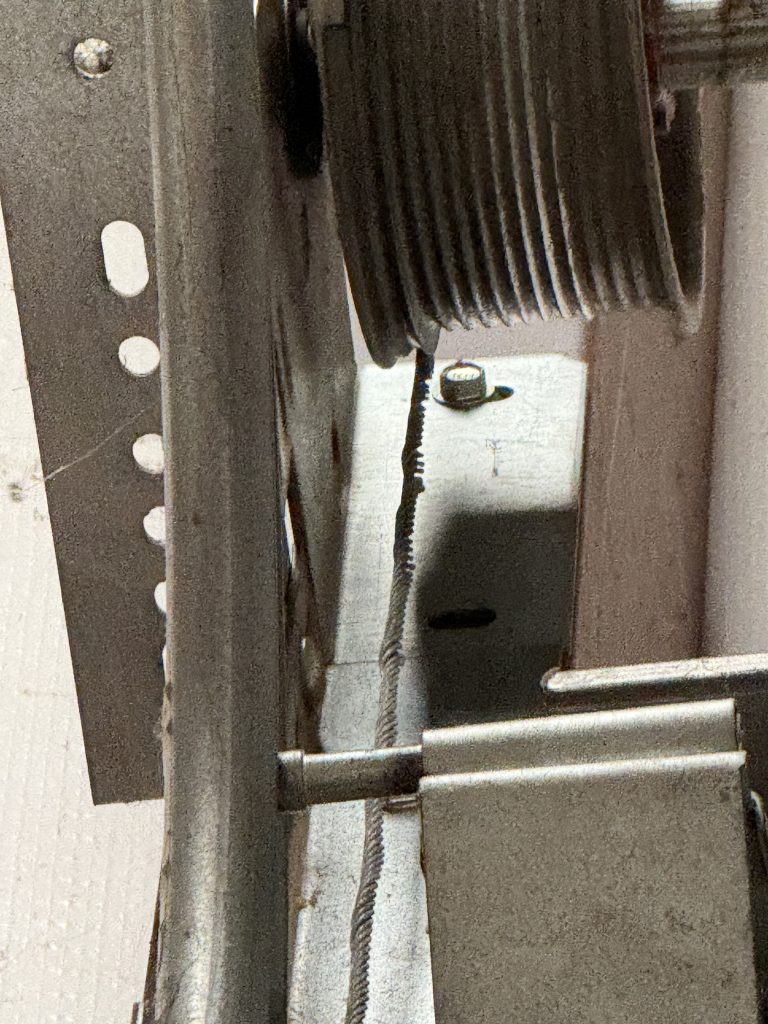
Direct Answer: A garage door lift cable frays when continuous friction, improper drum alignment, rust, or unbalanced spring tension causes the braided steel strands to rub against brackets or jump drum grooves. Frayed cables are under extreme tension and can snap suddenly, dropping the heavy door and causing catastrophic property damage or severe injury.
SAFETY WARNING: Garage door lift cables operate under extreme mechanical tension supplied by the torsion springs. Never attempt to loosen, adjust, cut, or replace frayed cables yourself. Cable failure can cause the door to fall rapidly or whip parts at high velocity. Always keep clear and call a certified technician immediately.
Understanding Cable Fraying and Drum Misalignment
Garage door lift cables are constructed from heavy-duty galvanized steel aircraft cable, designed to wind evenly around the aluminum drums at the top corners of the door. When the door operates, these cables hold the full counterbalanced weight of the panels. Over time, physical wear, metal-on-metal friction, and environmental corrosion weaken individual wire strands, resulting in visible fraying, unraveling, or rubbing against the end bearing plates and track jambs.
Common Causes vs. Professional Solutions
Identifying the root cause of cable abrasion prevents repeat failures and ensures your entire counterbalance system functions smoothly.
| Observed Issue / Cause | Operational Impact | Professional Solution |
|---|---|---|
| Cable Jumping Drum Grooves | Cable rides over drum ridges, rubbing against jamb brackets. | Re-spooling, leveling door, and resetting torsion balance. |
| Corrosion & Oxidation | Weakened strands snap individually, causing a “furry” cable. | Replacing both lift cables with heavy-duty galvanized cables. |
| Loose Track or Bracket Alignment | Cable scrapes stationary steel hardware during door travel. | Re-aligning horizontal/vertical tracks and bearing plates. |
| Unequal Spring Tension | One side bears more load, causing slack and friction on the other. | Balancing torsion springs and calibrating drum set screws. |
Visual Symptoms and Troubleshooting Checklist
Perform a visual inspection from a safe distance while the garage door is completely closed:
- Strand Separation (“Porcupining”): Look for tiny wire ends protruding from the main cable body near the top drum.
- Slack in the Cable: Notice if the cable droops or bows when the door rests on the floor or opens fully.
- Scraping or Squealing Sounds: Listen for metal grinding or squeaking near the upper header during cycling.
- Uneven Door Movement: Observe whether one side of the door rises faster or hangs lower than the other.
- Rust and Discoloration: Check for reddish-brown rust where water or salt air may collect near the floor brackets.
Why Both Cables Must Be Replaced Simultaneously
Even if only one cable shows visible fraying, professional standards require replacing both lift cables at the same time. Cables experience identical cycle wear; if one has deteriorated to the point of shredding, the opposite cable has suffered microscopic fatigue and is likely near failure. Installing a matched pair guarantees even tension and prevents dangerous door tilting.