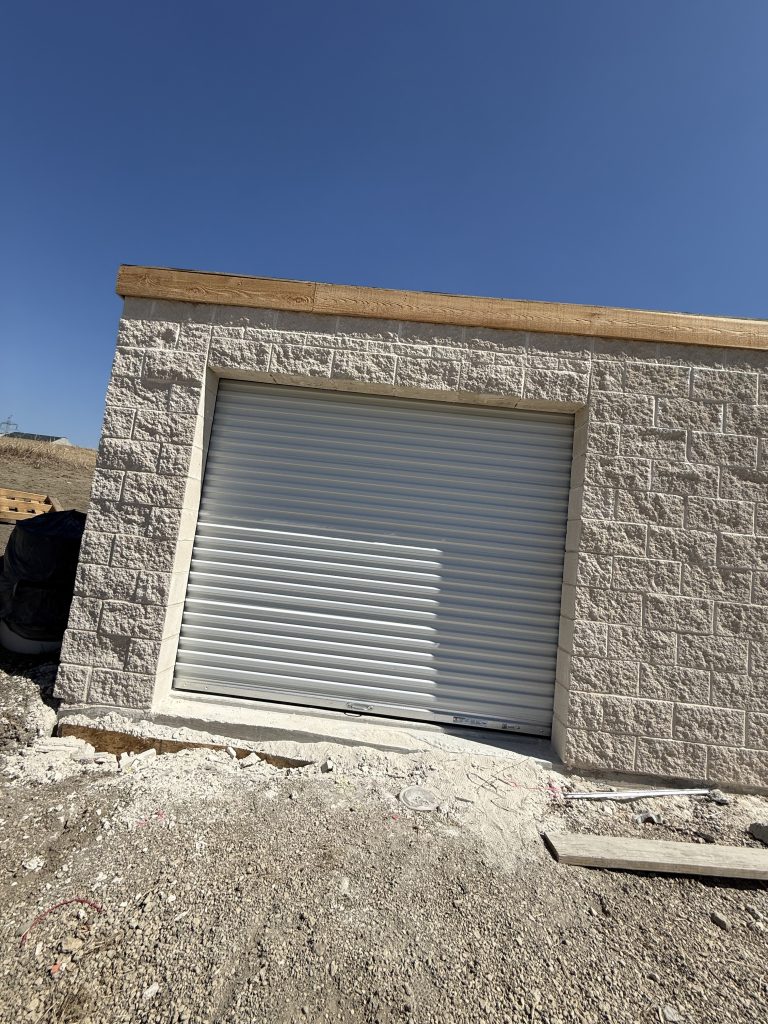
Direct Answer: Commercial roll-up doors mounted to rough or split-face masonry require heavy-duty wedge or sleeve anchors, plumb vertical guide alignments, and specialized perimeter brush or vinyl weather seals. Because concrete block surfaces are uneven, improper mounting causes guide track deflection, curtain rattling in wind, and substantial dust and draft infiltration along the door jambs.
SAFETY WARNING: Commercial roll-up sheet doors operate using powerful internal torsion springs enclosed within an overhead barrel assembly under extreme tension. Never attempt to loosen wall-mounting brackets, adjust spring tension, or dismantle guide channels yourself. Dislodging tensioned hardware can result in catastrophic structural failure and severe bodily injury. Always hire a certified commercial door technician.
Challenges of Installing Commercial Roll-Up Doors on Masonry Openings
Mounting commercial roll-up sheet doors to concrete masonry units (CMU) or split-face cinder block walls presents distinct structural challenges compared to standard wood or structural steel jambs. Concrete blocks have textured, porous, and sometimes hollow surfaces that do not provide a naturally flat or air-tight mating surface for vertical door guides.
When the masonry rough opening is uneven, standard flat-mount weather seals cannot conform to the deep mortar joints and block textures. Furthermore, vibration from daily door operation or exterior wind loads can loosen inadequate concrete fasteners over time, causing guide misalignment and operational binding.
Causes vs. Solutions for Masonry-Mounted Roll-Up Doors
| Common Issue / Symptom | Root Cause | Professional Solution |
|---|---|---|
| Visible light and drafts around vertical jambs | Uneven split-face block profile creating gaps behind flat guides | Installation of heavy-duty brush seals with aluminum retainer extrusions |
| Door curtain binds, screeches, or catches during travel | Guide tracks fastened out-of-plumb due to uneven masonry wall faces | Laser shimming, leveling, and structural re-anchoring of guide channels |
| Excessive door rattling and vibration during high winds | Loose concrete sleeve anchors or undersized wind-lock guides | Upgrading to structural through-bolts, epoxy anchors, or wind-rated guide tracks |
| Water seepage under the bottom curtain bar | Unlevel rough concrete threshold or damaged bottom astragal seal | Installing an oversized bulb seal and applying a commercial threshold barrier |
Visual Inspection and Troubleshooting Checklist
While mechanical adjustments require certified professionals, facility managers can perform regular visual inspections to identify mounting and sealing problems:
- Check Guide Track Plumb: Look for any bowing or outward bending along the steel side channels where they attach to the concrete blocks.
- Inspect Anchor Points: Check whether masonry anchors, sleeve bolts, or lag shields show signs of spalling, concrete cracking, or backing out of the wall.
- Look for Daylight: Stand inside the closed building with interior lights off. Inspect the sides, top header, and bottom sill for light penetration indicating compromised seals.
- Listen for Metal-on-Masonry Scraping: Unusual grinding noises often indicate the steel curtain has shifted off-center and is abrading against the rough masonry reveal.
Ensuring Long-Term Performance and Security
To ensure total building envelope security and thermal efficiency, commercial installations in masonry require specialized mounting techniques such as steel sub-frame tube installation, heavy-gauge perimeter brush baffling, and periodic torque testing of all masonry anchors. If your commercial door binds, rattles, or lets in exterior elements, schedule a comprehensive structural evaluation with a licensed commercial door contractor.