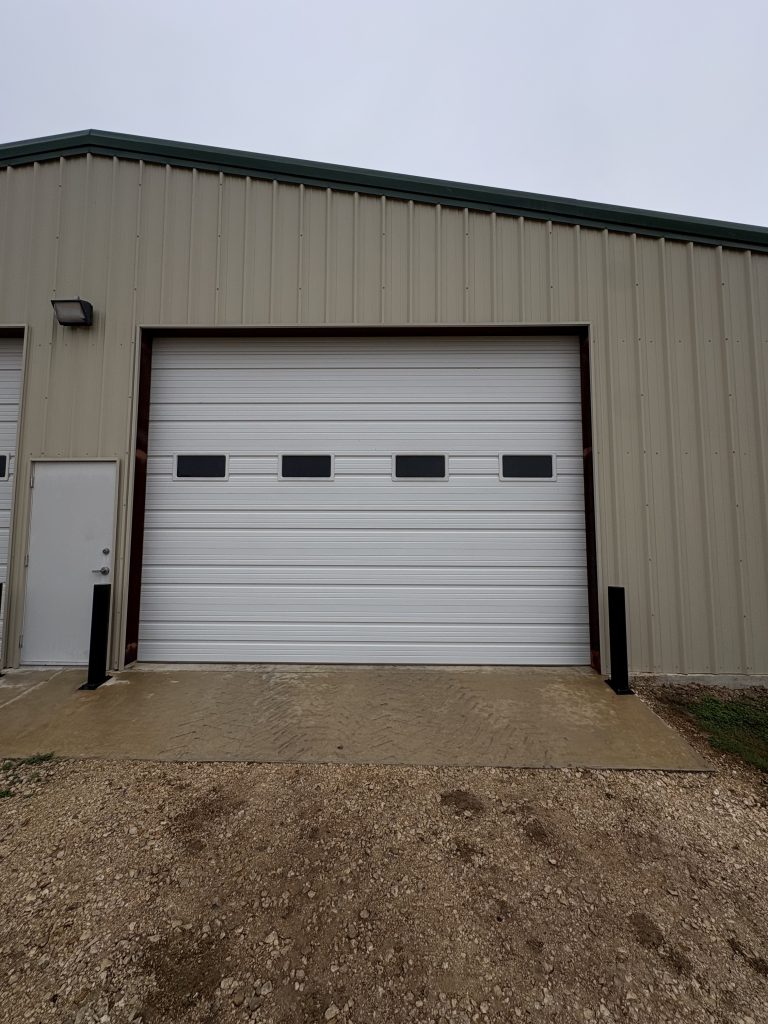
Direct Answer: Vertically stacked vision lites add localized weight distribution across sectional panels and create potential thermal break points. If torsion springs lose calibrated balance or perimeter bulb seals degrade against corrugated siding, tall commercial doors shudder during travel, bind in the vertical tracks, and allow severe drafts into the workshop or warehouse.
SAFETY WARNING: Commercial overhead sectional doors utilize heavy-duty, high-tension torsion spring assemblies, multi-strand lift cables, and heavy structural steel panels. Never attempt to adjust counterbalance springs, loosen bottom bracket fasteners, or service high-lift track systems yourself. Improper handling can cause catastrophic spring release, panel drops, and severe blunt-force trauma. Always contact certified commercial door technicians for adjustments.
Understanding Commercial Overhead Doors with Vertical Vision Lites
Sectional commercial doors installed in pre-engineered steel buildings frequently utilize a single column of vertically stacked vision lites (window inserts). This architectural design allows ambient daylight into high-bay shops while preserving security and structural rigidity across the outer stiles. However, grouping insulated glass or acrylic inserts down the door centerline shifts weight distribution, requires precise counterbalance engineering, and demands tighter perimeter weather sealing against corrugated metal jambs.
Common Performance Issues: Causes vs. Solutions
| Observed Symptom | Underlying Cause | Recommended Solution |
|---|---|---|
| Door shudders or jerks during initial vertical travel | Imbalanced torsion springs due to center-concentrated window weight | Professional spring recalibration and high-lift drum alignment |
| Drafts and light leaks around corrugated steel trim | Worn perimeter vinyl jamb seals or lack of structural reverse-angle mounting | Install heavy-duty clip-on commercial side seals contoured to metal siding |
| Fogging or water penetration around vision lites | Cracked EPDM window gaskets or panel flexing from wind loads | Replace window glazing seals and inspect panel strut reinforcement |
| Excessive motor strain or chain slippage on opener | Increased dead weight from glass inserts lacking spring assist compensation | Perform balance test and adjust commercial trolley or jackshaft operator limits |
Commercial Maintenance & Inspection Checklist
Routine visual inspections keep tall commercial sectional doors operating safely and efficiently. Operators and facility managers should follow these steps every quarter:
- Inspect Vision Lite Seals: Examine the rubber or polyurethane glazing beads around every window insert. Replace any cracked or shrunken seals to stop moisture from corroding the internal steel panel cores.
- Examine Jamb and Header Bracing: Steel buildings flex under thermal shifts and wind. Check that the door jamb angles remain rigidly anchored to the structural steel framework.
- Check Roller and Hinge Wear: Lubricate commercial 3-inch steel or nylon rollers and heavy-gauge hinges with non-silicone commercial garage door lubricant. Check for worn hinge pins near the window cutouts.
- Test Balance (Trained Personnel Only): With the door disconnected from the electric operator in the manual mode, lift the door waist-high. A properly counterbalanced door should stay suspended without drifting downward or shooting upward.
- Clean and Treat Bottom Weatherstripping: Ensure the heavy-duty EPDM bottom astragal seal rests flush against the concrete apron without gaps.
Thermal Expansion and Air Infiltration in Metal Buildings
Metal building skins expand and contract significantly across seasons. When paired with tall sectional steel doors, slight thermal bowing can push the panel edges away from the exterior vinyl jamb seals. Installing heavy commercial brush seals alongside flexible vinyl flaps ensures complete perimeter contact regardless of temperature swings.
Wind Load and Structural Rigidity
Window cutouts reduce a panel’s solid steel cross-section. For tall bay doors in high-wind zones, horizontal U-bar reinforcement struts must be installed across each panel section—especially directly above and below the vision lites—to prevent panel deflection when strong gusts hit the building exterior.