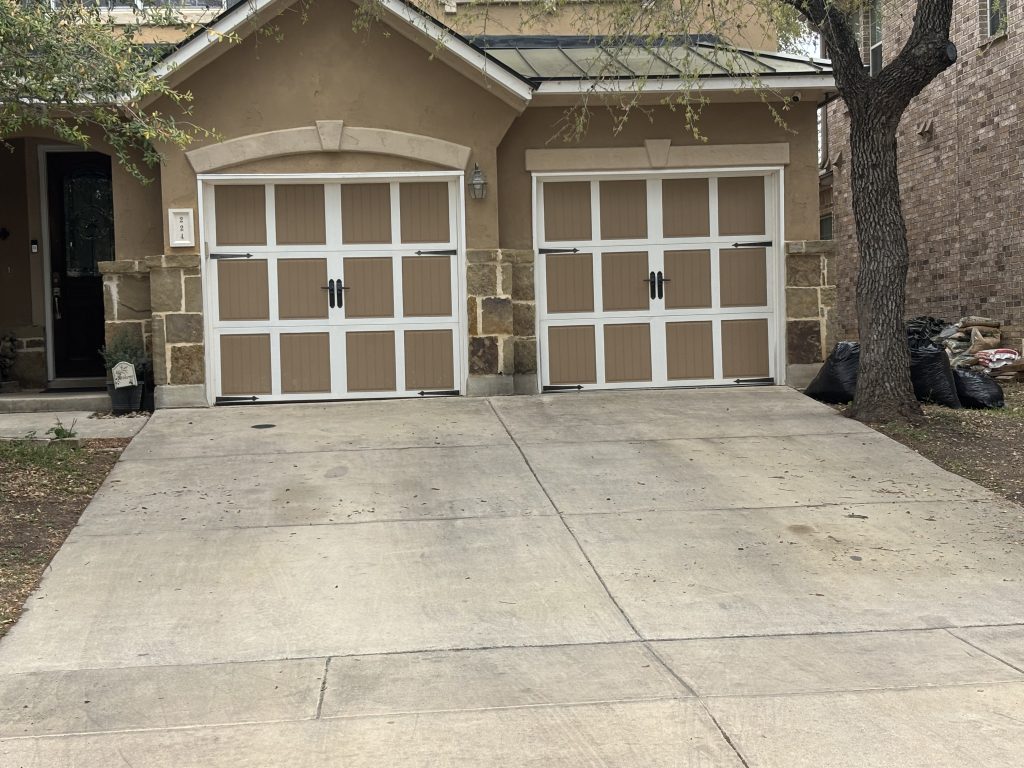
Direct Answer: A garage door scraping against an arched exterior opening is typically caused by shifted vertical track alignment, seasonal expansion of custom decorative overlays, settling masonry headers, or worn track rollers. Because sectional doors move vertically behind a curved opening, even minor millimeter track misalignments cause panel surfaces and decorative trim to rub against the exterior frame.
SAFETY WARNING: Garage door systems operate under extreme counterbalance tension via torsion or extension springs. Never attempt to adjust track brackets, loosen bottom fixtures, or modify heavy decorative sectional panels yourself. Structural realignment and spring adjustments must be performed exclusively by a certified garage door technician.
Understanding Clearance in Arched Architectural Garage Openings
Many architectural homes feature beautiful curved stone, stucco, or brick headers paired with carriage-house overlay doors. While aesthetically appealing, arched openings present unique clearance tolerances. Unlike square-framed openings with uniform margins, an arched frame narrows the clearance window at the top corners as the door sections travel upward and transition into the horizontal tracks.
Key Factors That Cause Scraping and Friction
- Track Misalignment: Over thousands of cycles, vibration can loosen track jamb brackets, shifting the vertical tracks closer to the wall exterior.
- Worn Rollers and Hinges: Deteriorated roller bearings or bent intermediate hinges allow door panels to drift outward toward the perimeter trim during travel.
- Building Settling or Foundation Movement: Natural movement in stone veneer, brickwork, or stucco can slightly compress the framed opening, narrowing factory clearances.
- Thermal Expansion of Overlays: Exterior faux-wood or composite carriage-style trim panels expand in direct sunlight, reducing clearance margins against the door frame.
Troubleshooting Checklist: Inspecting Arched Door Clearance
Homeowners can perform a safe visual inspection to identify where contact is occurring without handling high-tension components:
- Identify Wear Patterns: Check the top outer corners and vertical faces of the top two panels for scuffing, paint loss, or peeling trim.
- Inspect the Perimeter Weatherstripping: Look for pinched, torn, or flattened vinyl reverse-angle jamb seals along the arch curve.
- Listen During Operation: Squeaking, shuddering, or scraping noises near the top third of door travel indicate physical contact with the casing.
- Observe Roller Play: Look for steel or nylon rollers that wobble loosely inside the track while the door is in motion.
Causes vs. Solutions for Arched Opening Clearance Issues
| Observed Issue / Cause | Operational Impact | Professional Solution |
|---|---|---|
| Jamb Brackets Shifted Outward | Panels drag along the interior edge of the stone/stucco arch. | Precision repositioning and anchoring of vertical track setback. |
| Worn Roller Stems or Bearings | Sectional panels tilt forward during vertical travel. | Replacement with heavy-duty sealed nylon ball-bearing rollers. |
| Warpage or Delamination of Overlay | Raised decorative panels catch on header trim. | Panel re-securing, refinishing, or factory overlay replacement. |
| Improperly Sized Reverse Jamb Seal | Rubber binds against door surface, straining the opener. | Installation of low-profile, flexible contour weatherseals. |
Why Professional Realignment Is Critical
Correcting clearance behind an arched masonry frame is not as simple as pushing a track back. Adjusting vertical tracks changes the door’s resting angle, which affects cable tension balance, top fixture roller depth, and opener push-rod geometry. A certified technician utilizes specialized laser alignment and counterbalance calibration tools to ensure your door seals weather-tight without making destructive contact with exterior architectural elements.