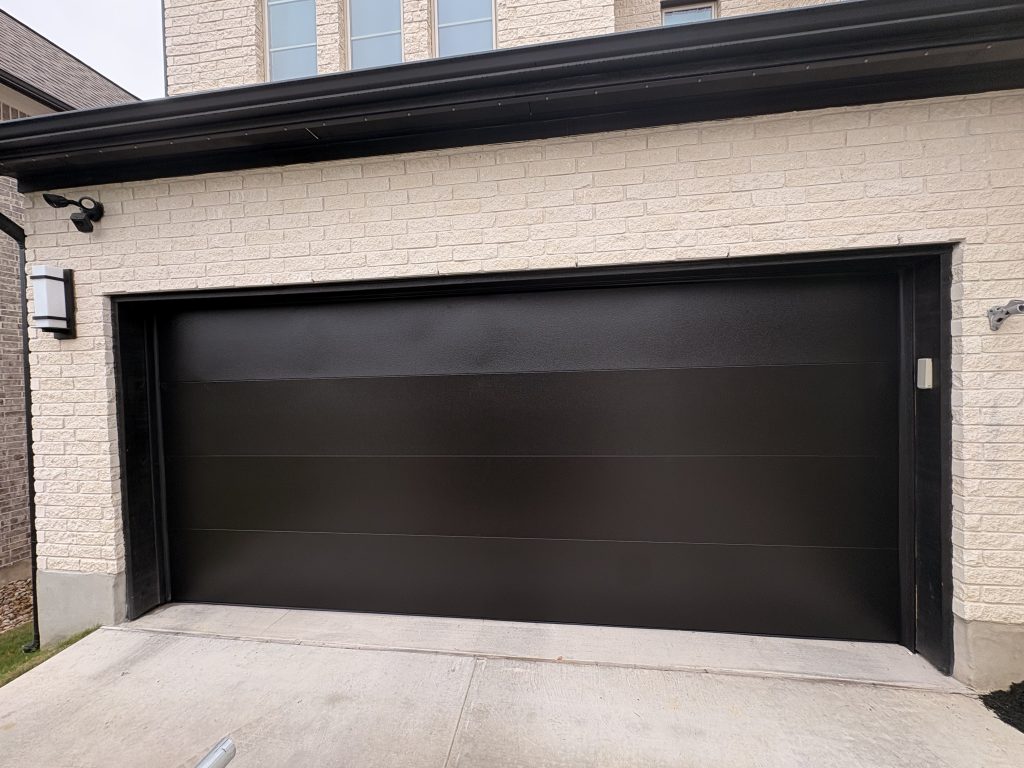
Direct Answer: A visual discrepancy across your flush garage door typically stems from a mismatched panel replacement, differences between smooth and embossed sheet metal textures, or uneven ultraviolet chalking. Contemporary flush doors lack raised ornamentation, causing even slight sheen shifts, paint lot variances, or mismatched surface textures to become glaringly apparent in natural exterior lighting.
SAFETY WARNING: Modern sectional garage doors rely on high-tension counterbalance systems capable of exerting hundreds of pounds of explosive force. Under no circumstances should you attempt to loosen hinges, adjust bottom brackets, or swap door panels independently. Panel replacement and track adjustments must always be handled by a certified overhead door professional to avoid catastrophic injury or property damage.
Why Modern Flush Panels Reveal Subtle Manufacturing and Finish Variations
Contemporary minimalist architecture favors sleek, flush-panel overhead doors. However, because these doors feature long, flat steel expanses uninterrupted by traditional carriage stamps or deep recessed panels, they accentuate even microscopic surface irregularities. When one panel deviates in finish, color reflection, or stamping profile, it creates an immediate visual disruption across the facade of your home.
1. Textured Embossing vs. Smooth Steel Faces
Manufacturers produce modern flush doors in two primary skin variants: true smooth finish and subtle stucco (pebble-grained) embossing. The textured stucco finish is engineered to mask minor surface waves (oil canning) and resist minor abrasions. If a damaged top panel is replaced with an embossed panel while the lower sections remain smooth steel, light reflects off the sections at completely different angles. The textured panel scatters light and appears matte or lighter in tone, whereas the smooth panels reflect ambient light directly.
2. Single Section Replacements and Paint Batch Mismatches
When an overhead opener malfunctions or a vehicle taps an upper panel, homeowners frequently order a single replacement section rather than an entire door assembly. Even when ordered from the original manufacturer, factory coil coatings vary between production runs. Over time, original panels also experience ultraviolet (UV) oxidation and pigment weathering. Introducing a brand-new factory-finished panel adjacent to sun-exposed sections produces an obvious color contrast.
3. Thermal Bowing and Light Deflection
Dark finishes (such as matte black, charcoal, or dark bronze) absorb intense thermal energy. While structural insulation cores minimize distortion, heat buildup can cause microscopic expansion along the exterior steel skin. If the top panel lacks identical internal reinforcement strutting or has different insulation density than the lower sections, thermal deflection will alter the angle of reflection, making panels appear mismatched during specific hours of the day.
Causes vs. Solutions: Flush Garage Door Finish Inconsistencies
| Underlying Cause | Visual Symptom | Professional Solution |
|---|---|---|
| Texture Profile Mismatch | One section shows stucco grain while others are completely smooth. | Replace incorrect section with matching factory skin profile via a certified dealer. |
| UV Oxidation & Color Fade | Older panels appear chalky or lighter than the recently installed section. | Professional multi-panel repainting using commercial exterior DTM (direct-to-metal) coatings. |
| Different Factory Dye Lots | Identical texture, but subtle undertone differences under direct sunlight. | Field recoating across all sections to harmonize the exterior sheen. |
| Missing or Misaligned Reinforcement | Top section bows outward, reflecting light differently than lower sections. | Technician installation of properly balanced structural U-bars (struts). |
Troubleshooting Checklist for Door Panel Irregularities
- Examine Texture at Eye Level: Stand close to the door joints and use a flashlight held at a 45-degree angle to verify if the steel surface has an embossed pebble grain or a glass-smooth surface.
- Inspect Manufacturer Data Labels: Check the interior end stiles of each section for factory serial numbers and production dates to confirm whether all panels belong to the same product series.
- Perform a Water Test for Oxidation: Wipe a damp microfiber cloth across both the suspect panel and an adjacent panel. If the color matches when wet, surface oxidation is creating the sheen discrepancy.
- Check for Structural Strut Placement: Inspect the interior top rail to verify that an adequate reinforcement strut is securing the top section against opener drawbar pull.
Restoring Visual Uniformity Safely
Correcting a mismatched section on a modern flush door requires precise component matching and expert counterbalance tuning. Because each panel bears significant weight and works within calibrated torsion parameters, swapping panels alters the door’s balance. Always contact an authorized garage door specialist to source matching factory panels or balance your system after maintenance.