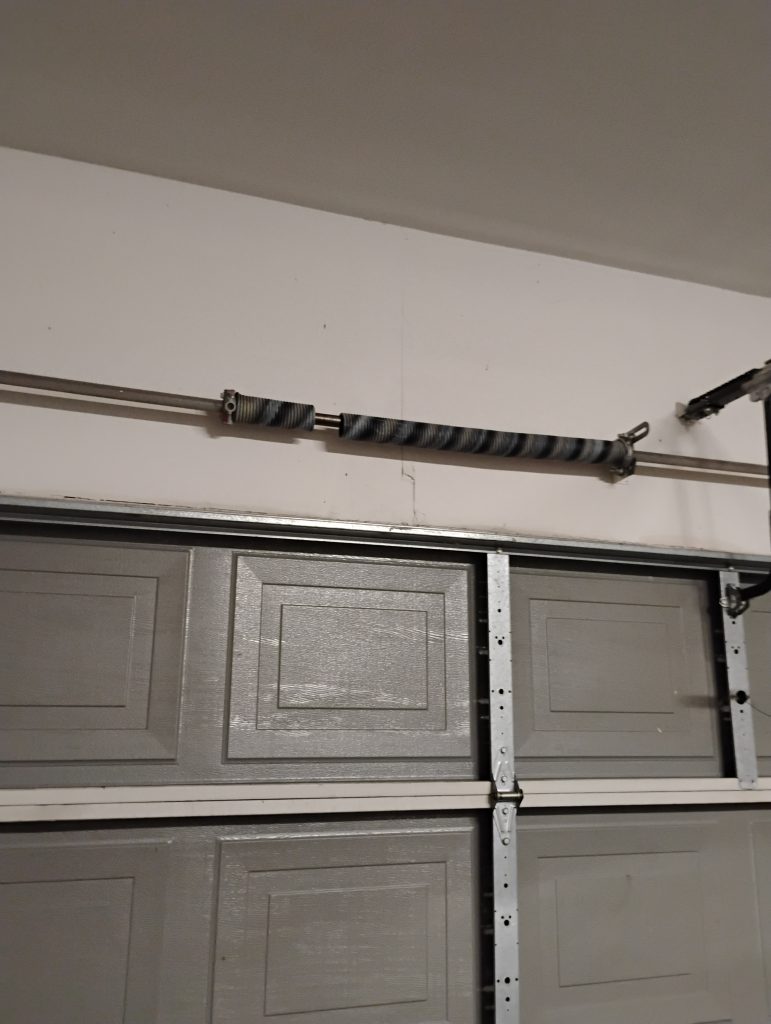
Direct Answer: A garage door torsion spring snaps due to metal fatigue caused by reaching its maximum cycle lifespan, temperature fluctuations, rust, or improper balancing. When a spring breaks, the door loses counterbalance support, making it extremely heavy and dangerous to operate. A certified garage door technician must replace it.
SAFETY WARNING: Garage door torsion springs are under extreme mechanical tension capable of causing severe injury, lacerations, bone fractures, or death. Never attempt to adjust, unwind, remove, or replace garage door springs or bottom brackets yourself. Always call a trained professional technician equipped with proper winding bars and safety tools.
Understanding Garage Door Torsion Spring Failure
Garage door torsion springs do the heavy lifting in your overhead door system. Mounted directly above the door opening on a solid steel shaft, these tightly wound coils store mechanical energy to counterbalance the door’s weight (often between 150 to 400+ pounds). Every time the door opens and closes, the spring undergoes a full cycle of stress.
As seen in the photo, when a torsion spring fails, the steel snaps cleanly across the coils, leaving a noticeable gap on the shaft. When this happens, the electric opener will struggle or fail entirely, and attempting to operate the door can burn out the opener motor or snap lift cables.
Common Causes of Broken Torsion Springs
| Root Cause | Impact on Spring | Professional Solution |
|---|---|---|
| Cycle Life Depletion | Standard springs last roughly 10,000 cycles (5–7 years of normal use) before steel fatigue causes a break. | Replace with matched standard or high-cycle (20,000+ cycle) torsion springs. |
| Rust and Corrosion | Surface rust increases friction and micro-fissures in the steel, accelerating structural failure. | Install corrosion-resistant coated springs and schedule annual professional lubrication. |
| Improper Door Balance | Unequal tension puts excessive strain on one spring, leading to premature failure. | Dual-spring replacement and comprehensive balance testing by a technician. |
| Extreme Temperature Drops | Cold weather causes steel to contract and become brittle, precipitating snaps during winter. | Professional spring rating assessment calibrated for regional temperature swings. |
Troubleshooting: How to Confirm a Broken Spring Safely
If your garage door suddenly stops working or won’t open more than a few inches, check for these visual signs without touching any tension hardware:
- Visible Gap in the Spring: Look at the shaft above your door; a broken spring displays a 1-to-3-inch gap between coils.
- Loud Bang: A snapping spring sounds like a gunshot or firecracker going off inside the garage.
- Door Feels Incredibly Heavy: If disconnected via emergency release, the door cannot be lifted easily by hand.
- Jerky or Stalling Opener: The automatic opener starts to pull the door, hums loudly, and reverses or stalls after moving 2 to 6 inches.
- Slack Cables: Loose or unspooled cables hanging off the side drums indicate lost spring tension.
Why You Should Always Replace Both Springs
Most two-car garage doors use a dual-spring configuration. If one spring snaps, the second spring has experienced the exact same number of operational cycles and will likely fail shortly after. Certified technicians always recommend replacing both springs simultaneously to restore even tension, ensure smooth balance, and save on future service calls.