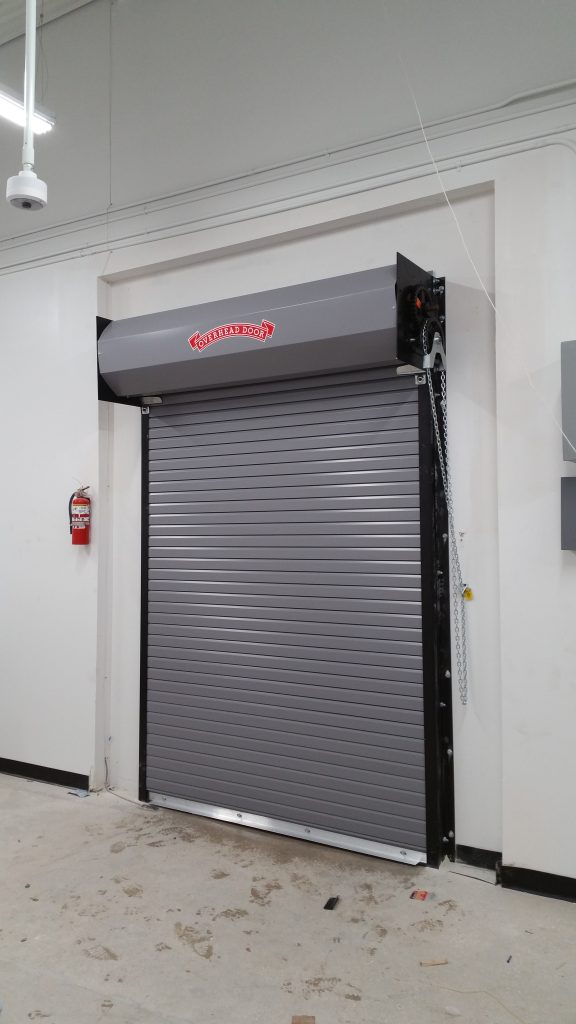
Direct Answer: A commercial roll-up door chain hoist becomes difficult to pull or sticks due to loss of internal barrel spring counterbalance, debris or damage inside the guide tracks, dry gear sprockets, or curtain slat misalignment. Routine lubrication of exposed gears helps, but spring tension loss requires immediate professional service.
CRITICAL SAFETY WARNING: Commercial rolling steel doors utilize powerful internal counterbalance springs housed under extreme tension within the barrel assembly, supporting heavy steel curtains weighing several hundred pounds. Never attempt to adjust, service, or disassemble barrel assemblies, bracket plates, or chain hoist gears yourself. Improper handling can cause catastrophic mechanical failure leading to severe injury or death. Always hire a certified commercial door technician.
Understanding Commercial Roll-Up Doors and Chain Hoists
Commercial rolling steel doors, such as the Overhead Door system shown, are engineered for high-security, industrial-grade reliability. The door curtain consists of interlocking steel slats that coil around an overhead barrel drum concealed within a protective metal hood. A manual chain hoist links to a drive sprocket, utilizing mechanical gear reduction to allow personnel to lift and lower heavy curtains smoothly.
Common Causes of Chain Hoist Resistance and Sluggish Operation
When pulling the hand chain requires excessive force, the underlying issue is rarely just the chain itself. The entire counterbalance system must work in harmony:
- Internal Spring Fatigue: Torsion springs within the barrel assembly lose tension over thousands of cycles, forcing the operator to lift dead curtain weight rather than balanced weight.
- Track Obstruction or Pinching: Forklift impacts, shifting masonry, or debris inside the vertical guide channels restrict the lateral travel of the slats.
- Lack of Drive Gear Lubrication: Exposed drive gears, bearings, and reduction sprockets accumulate dirt and metal shavings, causing friction.
- Curtain Slat Shifting: Telescoping or damaged endlocks can catch along the interior lips of the structural guides.
Causes vs. Solutions Comparison
| Observed Issue | Underlying Cause | Recommended Action |
|---|---|---|
| Chain binds or skips off sprocket | Misaligned chain guide, worn pocket wheel, or twisted links | Inspect chain alignment; lubricate loop; replace worn drive parts professionally. |
| Door is extremely heavy to lift manually | Broken or fatigued internal barrel counterbalance spring | Professional repair only: Have a certified technician reset spring tension or rebuild barrel. |
| Loud grinding noise during operation | Dry reduction gear assembly or worn drive bearings | Apply manufacturer-approved gear grease to external sprockets; replace failing bearings. |
| Curtain stops unevenly in guides | Damaged guide rails or displaced slat endlocks | Check guide channels for dents; call a technician to straighten or replace damaged track sections. |
Safe Troubleshooting & Inspection Checklist
Building managers and maintenance personnel can safely perform visual checks without putting themselves in danger:
- Visual Track Inspection: Check both left and right vertical guides for physical dents, bends, or foreign obstructions.
- Check Chain Path: Ensure the hand chain hangs freely and feeds cleanly into the chain pocket wheel without tangling.
- Inspect Wall Mounts: Verify that the structural wall angles and mounting brackets remain firmly anchored to the masonry or steel jambs.
- Listen for Irregular Sounds: Squeaking from external gears can be resolved with heavy-duty lubricant, but popping or grinding inside the hood requires immediate technical shutdown.
When to Contact a Certified Overhead Door Specialist
If your commercial door does not stay suspended at midpoint, drops unexpectedly, or requires significant physical effort on the chain hoist, stop operation immediately. Tag out the door to prevent workplace injuries and schedule an emergency service call with a commercial overhead door specialist.