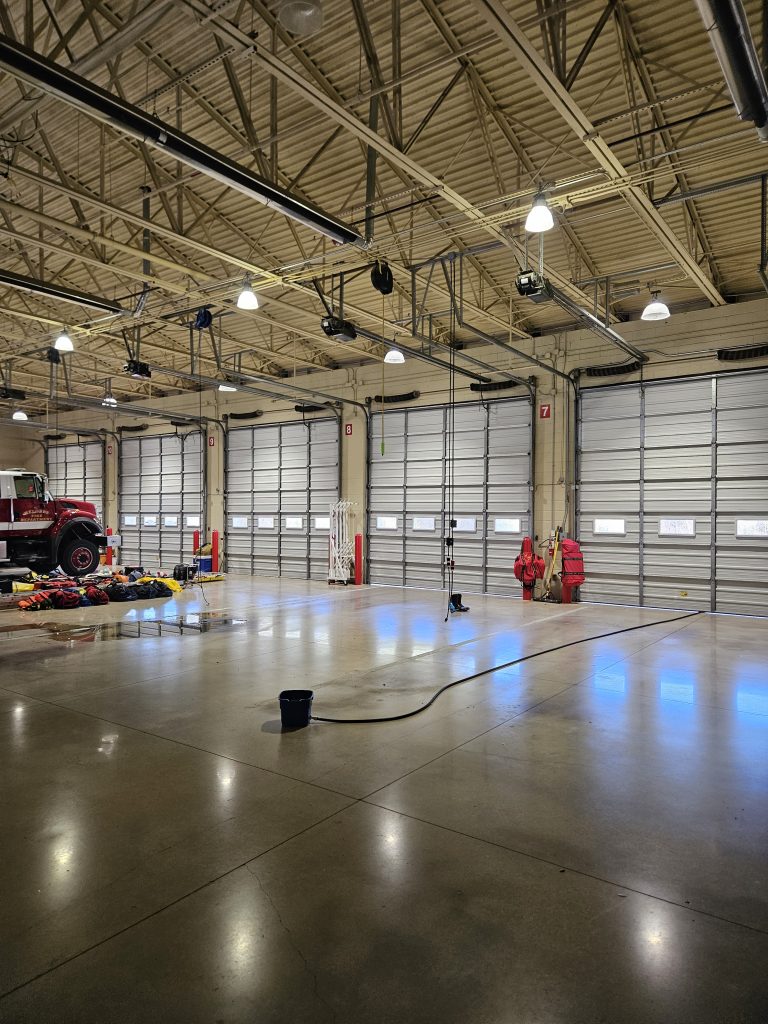
Direct Answer: Commercial high-lift overhead garage doors utilize heavy-duty vertical tracks, high-cycle torsion springs, and industrial-grade cables to lift sectional steel panels vertically before angling near the ceiling. Because emergency and industrial bays demand maximum clearance and rapid cycling, these complex systems require rigorous routine inspections and certified professional maintenance to ensure reliable operation.
⚠️ SAFETY WARNING: Commercial sectional doors and high-tension spring assemblies operate under extreme torque and support massive panel weights. Never attempt to adjust, repair, or replace commercial springs, cables, or track brackets yourself. Doing so can cause catastrophic mechanical failure, severe injury, or death. Always hire a certified commercial garage door technician.
Understanding Commercial High-Lift Sectional Doors
In high-clearance buildings such as fire stations, distribution warehouses, and fleet maintenance garages, standard-lift doors are insufficient. High-lift and vertical-lift track configurations allow overhead doors to travel straight up against the wall before turning horizontally into the ceiling structure. This preserves crucial headroom for fire apparatus, heavy equipment, and elevated work platforms.
Key Components of Commercial Overhead Doors
- Sectional Steel Panels: Reinforced, insulated panels with vision lites designed for thermal efficiency and durability.
- High-Cycle Torsion Springs: Engineered for 25,000 to 100,000+ duty cycles to withstand constant opening and closing.
- Heavy-Gauge Tracks and Rollers: Commercial 2-inch or 3-inch steel tracks paired with precision-bearing steel rollers.
- Industrial Jackshaft or Trolley Operators: High-torque electric operators equipped with emergency manual chain hoists and monitored safety sensors.
Causes vs. Solutions in Commercial Overhead Door Maintenance
| Issue / Symptom | Common Causes | Required Professional Solution |
|---|---|---|
| Slow or Hesitant Opening | Loss of spring tension, motor wear, or track binding. | Professional spring balance test, operator torque adjustment, and track realignment. |
| Door Out of Level / Crooked Movement | Uneven cable tension, drum slippage, or track obstruction. | Tension cable reset, drum inspection, and precision leveling by a technician. |
| Excessive Grinding or Squeaking | Worn roller bearings, dry hinges, or degraded torsion shaft bearings. | Commercial-grade lubrication and replacement of worn high-wear hardware. |
| Failure to Close Fully | Safety photobeam misalignment, bottom seal debris, or limit switch faults. | Optical sensor alignment, floor seal replacement, and operator limit reprogramming. |
Commercial Overhead Door Inspection Checklist
- Visual Inspection: Look for frayed lift cables, cracked hinges, dented vertical tracks, or worn weatherstripping.
- Safety Sensor Testing: Ensure auto-reverse eyes and bottom pneumatic sensing edges stop and reverse the door instantly upon detecting an obstacle.
- Emergency Manual Release & Chain Hoist: Verify the auxiliary chain hoist operates smoothly in the event of a power outage.
- Lubrication: Keep steel rollers, torsion bearings, and heavy hinges coated with high-grade non-silicone commercial lubricant.
- Professional Annual Recertification: Schedule scheduled preventive maintenance with a licensed commercial door contractor to test spring balance and structural fasteners.