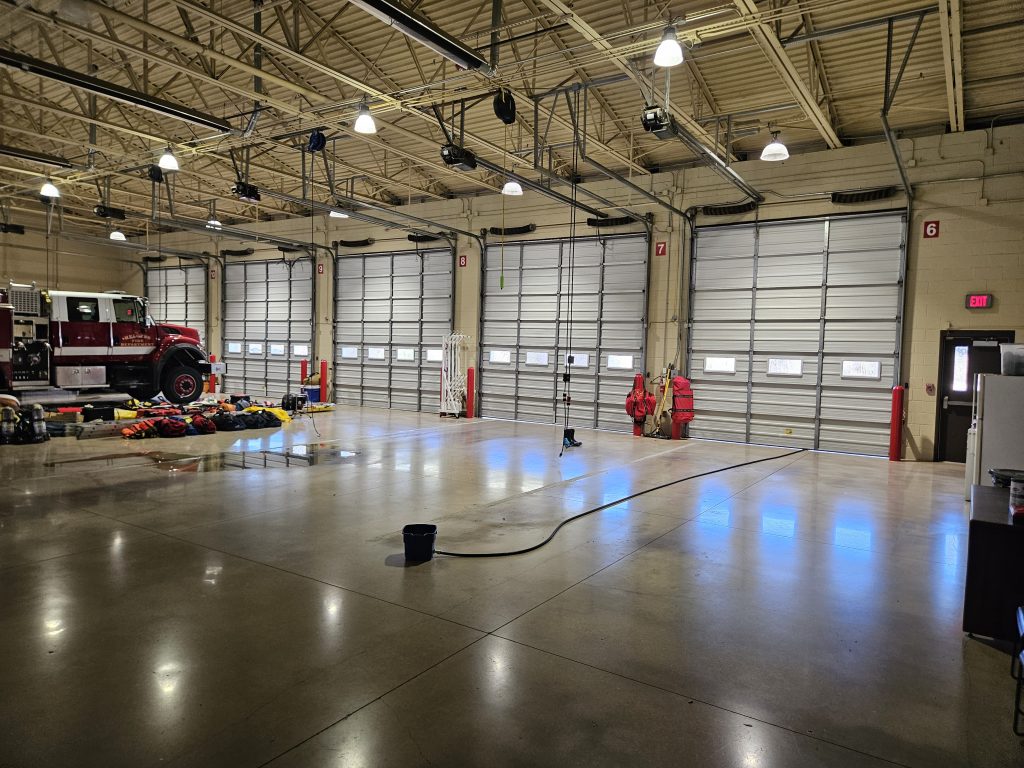
Commercial high-lift sectional overhead doors utilize specialized vertical-lift tracks, heavy-duty commercial operators, and high-cycle torsion spring assemblies designed to maximize vertical ceiling clearance for emergency apparatus and commercial fleets. Because these doors undergo intensive duty cycles under extreme mechanical tension, regular professional maintenance is essential to prevent downtime and dangerous operational failures.
SAFETY WARNING: Commercial garage doors weigh between 400 to over 1,000 pounds and utilize industrial-grade torsion assemblies under life-threatening tension. Never attempt DIY repairs, spring tensioning, cable replacement, or bottom bracket adjustments. All commercial repairs and preventative tune-ups must be completed by a licensed, professional garage door technician to avoid catastrophic property damage, severe bodily injury, or death.
Understanding Commercial High-Lift Overhead Door Architecture
Unlike standard residential garage doors that turn horizontally just above the door opening, commercial high-lift overhead systems extend vertically before transitioning toward the ceiling. This configuration ensures ample clearance for fire trucks, ambulances, freight haulers, and heavy industrial machinery.
Due to the vertical lift requirements, commercial systems rely on specialized cable drums, heavy-gauge steel track profiles (typically 2-inch to 3-inch industrial steel), solid torsion shafts, and industrial high-cycle springs rated for 25,000 to 100,000 continuous cycles.
Common Causes of Commercial Overhead Door Failures
High-cycle commercial facilities—such as municipal fire stations, logistics hubs, and automotive centers—rely on instant reliability. However, several mechanical stresses can compromise door functionality:
| Operational Issue | Underlying Cause | Professional Solution |
|---|---|---|
| Door jerks or stalls mid-travel | Misaligned vertical tracks or worn industrial steel rollers | Professional track realignment, plumb verification, and precision roller replacement |
| Slow opening or struggling motor | Spring tension fatigue or incorrect counterbalancing | Torsion balance testing, commercial spring recalibration, or high-cycle replacement |
| Slack or frayed lifting cables | Drum misalignment or sudden track obstruction | Immediate system lockout and technician cable re-spooling/replacement |
| Door fails safety reversal tests | Damaged photo-eyes, miswired sensing edges, or operator logic faults | Safety edge sensor rewiring, optic sensor calibration, and logic board diagnostics |
Commercial Operator & Hardware Troubleshooting Checklist
Commercial facility managers can perform basic visual and functional checks daily to ensure apparatus bay reliability:
- Visual Track Inspection: Check commercial tracks for physical impact dents, loose anchor bolts, or debris accumulation within the vertical channels.
- Safety Edge & Photo-Eye Verification: Ensure photoelectric eyes and pneumatic or electric safety bottom edges instantly reverse the door upon contact or obstruction.
- Manual Release & Chain Hoist Inspection: Verify the auxiliary emergency manual chain hoist operates smoothly in the event of a power outage.
- Auditory Check: Listen for grinding, popping, or metal-on-metal squealing along the overhead shaft bearings and center support brackets.
Why Emergency Facilities Require Certified Commercial Technicians
Commercial doors operate under severe loads where minor hardware misalignments can rapidly escalate into cable snaps or complete door drops. Commercial overhead door technicians utilize specialized winding bars, load-rated rigging gear, and certified testing procedures to safely balance, service, and repair high-lift commercial assemblies.