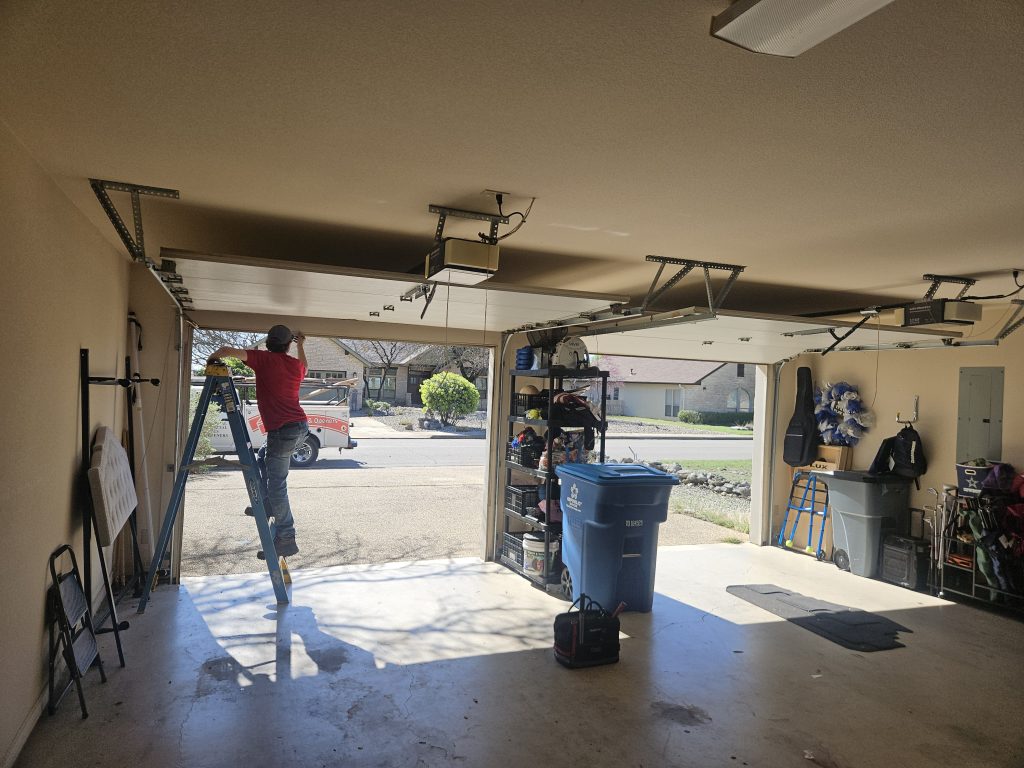
Direct Answer: A garage door that sticks or opens unevenly is typically caused by worn rollers, track misalignment, uneven torsion spring tension, or frayed lift cables. When balance is compromised, the door binds in the tracks, risking sudden collapse or motor burnout. Professional realignment and spring balancing are required to safely resolve these issues.
SAFETY WARNING: Garage door counterbalance systems—including torsion springs, extension springs, bottom brackets, and lift cables—are under extreme mechanical tension capable of causing severe injury or death. Never attempt to adjust, unbolt, or repair springs, cables, or heavy overhead panels yourself. All tension-related service must be performed by a certified garage door technician.
Understanding Overhead Door Balance and Track Alignment
Modern residential garage doors rely on a harmonized mechanical balance between the overhead track assembly, roller bearings, and high-tension torsion or extension springs. When one component falls out of tolerance, the entire door panel can bind, jerk, or grind to a halt along the ceiling tracks.
Key Signs Your Door Is Binding or Unbalanced
- The door tilts visibly to one side during opening or closing.
- Grinding, squeaking, or popping noises originate from the tracks or overhead radius.
- The electric garage door opener struggles, reverses unexpectedly, or trips its force safety limits.
- One lifting cable appears slack while the opposite cable remains taut.
Common Causes vs. Professional Solutions
| Symptom / Cause | Underlying Problem | Professional Solution |
|---|---|---|
| Uneven Lifting / Slanted Panel | Unbalanced torsion spring or uneven cable drum spooling | Tension calibration and drum resetting by a trained technician |
| Door Binds Halfway Up | Bent, pinched, or improperly spaced horizontal tracks | Laser alignment, bracket refastening, and track spacing adjustment |
| Jerking Motion / High Friction | Worn-out nylon/steel roller bearings or dry hinges | Replacement of high-cycle precision rollers and hardware lubrication |
| Opener Stalls Immediately | Broken spring or snapped lift cable | Full counterbalance replacement and system balance test |
Safe Homeowner Troubleshooting Steps
While mechanical repairs must be left to professionals, homeowners can safely perform visual checks to help diagnose the issue:
- Inspect the Tracks: Check for physical dents, debris, or visible gaps between the roller wheels and the steel channels.
- Clean the Track Channels: Wipe away built-up grime, leaves, and dried grease using a damp cloth. Never apply heavy grease inside the tracks, as it collects grit.
- Examine Rollers and Hinges: Look for cracked roller stems, missing ball bearings, or loose hinge screws that do not connect to spring components.
- Check Safety Sensors: Verify that the photo-eye sensors near the floor are aligned with steady LED indicators.
Why Professional Service is Essential
Re-leveling a door requires precision adjustments to the overhead torsion assembly while supporting the total deadweight of the door panels. Certified technicians use calibrated winding bars and specialized clamping equipment to safely reset spring torque, align track hangers, and restore smooth, quiet operation without endangering your property or household.