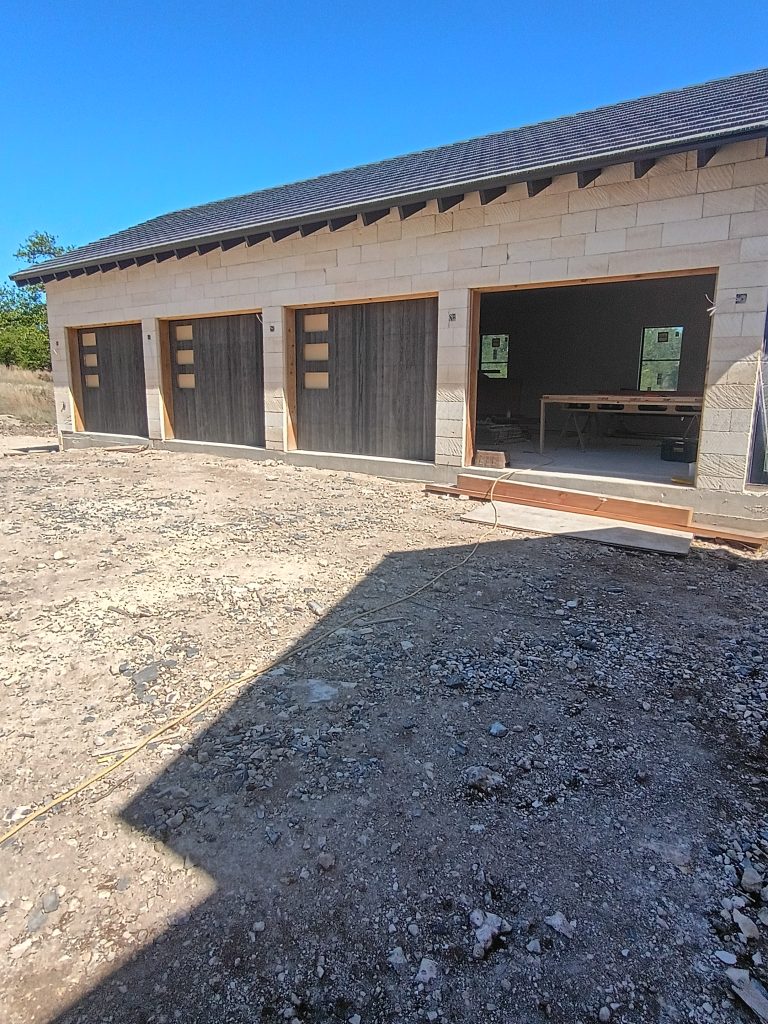
Newly installed garage doors stick and grind on active construction sites primarily because airborne masonry dust, fine stone grit, and loose gravel infiltrate the open track channels, roller bearings, and opener drive systems. Without finished exterior grading and proper perimeter jamb seals, abrasive particles adhere to lubricated parts, stalling smooth operation.
Safety Warning: Active construction sites present serious overhead hazards. Never attempt to adjust track tension, commercial-grade torsion springs, or heavy sectional door panels yourself. Counterbalance systems store immense rotational energy capable of causing severe injury or structural failure; always rely on certified garage door technicians.
How Jobsite Debris Damages New Overhead Door Systems
During the final phases of building, heavy stone cutting, masonry work, and rough site grading kick up dense clouds of silica and limestone dust. Overhead garage doors installed before driveway paving is complete are directly exposed to this abrasive particulate. The factory grease on opener rails, trolley carriages, and roller bearings acts like a magnet for airborne grit, transforming smooth lubricants into a destructive grinding compound.
Additionally, unfinished dirt or gravel thresholds sit unevenly beneath the door. When the bottom weatherstrip presses against loose rocks and uncompacted earth, the door cannot achieve level downward travel, triggering the opener’s safety force sensors and causing the panels to reverse or bind mid-cycle.
Causes vs. Solutions: Garage Doors on Active Construction Sites
Protecting newly installed architectural garage doors requires distinct preventative measures while site finishing continues:
| Identified Cause | Operational Impact | Professional Solution |
|---|---|---|
| Airborne masonry and mortar dust | Contaminates roller bearings and hinge pivots, causing loud squealing and friction drag. | Wipe down tracks clean with dry microfiber cloths; apply non-tacky silicone or Teflon-based spray lubricant. |
| Unpaved, uneven threshold grade | Bottom astragal seal pinches on rock piles, triggering false motor reversal or misaligning bottom brackets. | Keep doors closed or locked off during grading; adjust motor limit travel only after final concrete slab or asphalt is poured. |
| Masonry jamb gap exposure | Lack of completed exterior trim permits debris to blow directly inside track assemblies. | Install heavy-duty perimeter vinyl jamb seals immediately after stone cladding is finalized. |
| Contractor dry-sweeping | Sweeping concrete floors blows fine grit directly into the overhead horizontal tracks and opener chain/belt. | Use HEPA-filtered shop vacuums or sweeping compounds instead of dry broom sweeping inside garage bays. |
Site Protection and Troubleshooting Checklist
If your newly installed doors are binding, chattering, or dragging before move-in day, follow these site management steps:
- Lock Out Automated Openers: Disconnect the opener carriage release cord during heavy exterior earthmoving or stone-cutting phases to prevent grit from cycling repeatedly through the motor gears.
- Clean Track Channels Dry: Never apply standard grease or oil inside the vertical or horizontal track channels. Use a dry, lint-free rag to wipe out all powdered stone and construction dust.
- Inspect Roller Bearings: Spin each roller by hand with the door down. If bearings feel gritty or crunchy, have them flushed and lubricated with professional-grade penetrating silicone.
- Clear the Threshold Footprint: Ensure sub-base stone or temporary wood grade ramps are swept clean of loose cobbles that could crush the bottom panel retainer.
- Inspect Photo-Eye Lenses: Construction dust frequently coats safety sensors near the floor. Clean both lenses with a dry cloth to prevent phantom safety reversals.
Schedule Professional Commissioning Before Occupancy
Once final grading, flatwork, and perimeter caulking are complete, schedule a comprehensive punch-list service with a licensed garage door technician. A professional will inspect spring balance, verify level travel, clean critical components, and recalibrate opener force limits to ensure your investment operates smoothly for years to come.