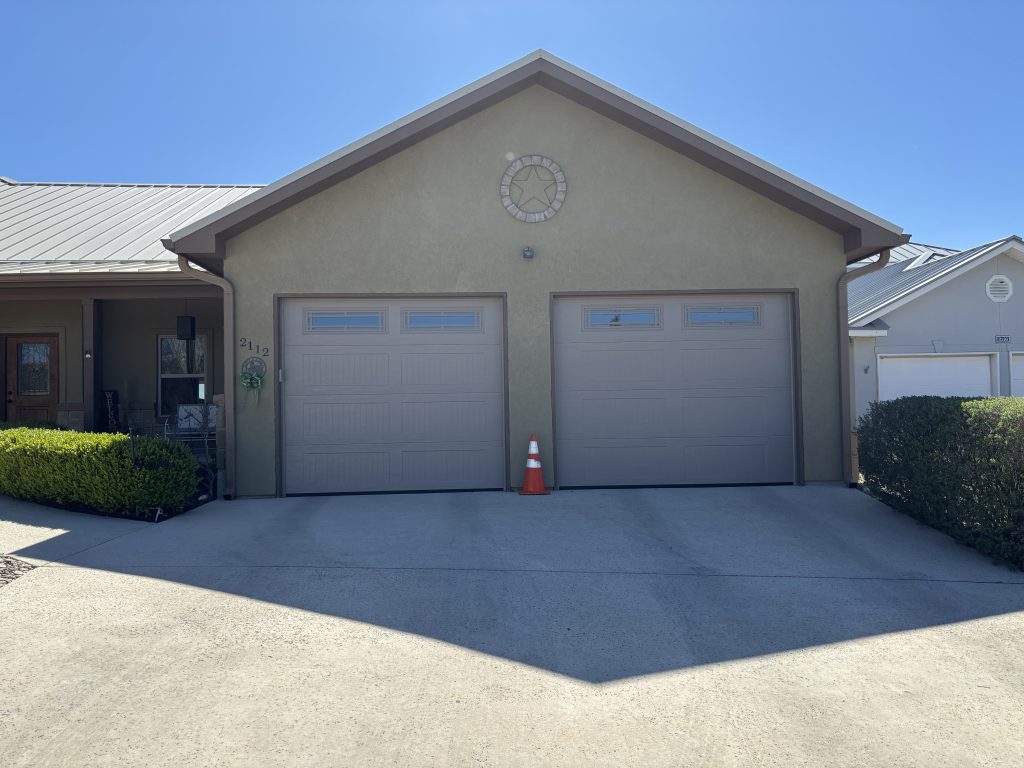
Even a low-speed vehicle bump can bend vertical tracks, misalign safety sensors, or warp lower panel hinges. If your garage door shudders, sticks midway, squeaks loudly, or displays uneven gaps along the frame, the track geometry or structural panels are likely compromised and need immediate certified inspection.
SAFETY WARNING: Never attempt to hammer out bent garage door tracks, straighten hinges under load, or loosen bottom roller brackets. The bottom brackets and counterbalance cables remain under extreme, life-threatening tension. All track realignment and structural panel repairs must be handled by trained, professional garage door technicians.
Hidden Damage Caused by Low-Speed Garage Door Collisions
Modern residential garage doors operate on precision-engineered tolerances. Even an impact at two miles per hour—such as misjudging the driveway approach or backing into the door before it fully opens—transfers hundreds of pounds of kinetic energy directly into the track assembly, rollers, and hinge pivots. While the outer face of the panel may only show a faint scuff, the hidden structural integrity of the track system can be severely disrupted.
Signs of Collision Damage on Overhead Garage Doors
After any vehicle contact around your garage opening, carefully observe the door during operation while standing at a safe distance. Key warning indicators include:
- Gapping at the Jambs: Visible daylight between the vertical weatherstrip and the closed door panels.
- Grinding or Popping Sounds: Rollers binding against bent track lips or misaligned curve transitions.
- Jerking or Stuttering Travel: The opener motor straining as the panels hit pinched track sections.
- Automatic Reversal: The opener’s internal force limiters engaging and reversing the door due to physical obstruction in the track.
- Sensor Misalignment: Photo-eye safety sensors mounted to the bottom tracks being nudged out of optical alignment.
Impact Damage: Causes vs. Professional Solutions
| Observed Symptom | Underlying Structural Cause | Professional Resolution |
|---|---|---|
| Door stops and reverses halfway down | Vertical track is pinched or bent inward, trapping roller wheels | Precision track gauge realignment and anchor re-securing |
| Panel bows outward or sags along bottom edge | Bent bottom strut or buckled internal panel reinforcement | Replacement of the affected section and bottom weatherseal |
| Loud metallic squeal during travel | Roller stems twisted out of perpendicular alignment with hinges | Hinge bracket replacement and roller stem inspection |
| Door appears crooked when sitting on floor | Uneven cable drum tension caused by displaced bottom bracket | High-tension cable reset and torsion balance calibration |
Troubleshooting and Safety Checklist After a Vehicle Bump
If your garage door has sustained an impact, follow these steps before attempting normal operation:
- Step 1: Stop Automatic Operation: Disconnect the automatic opener using the red emergency release cord while the door is fully closed.
- Step 2: Visually Inspect Tracks: Look up both vertical tracks from ground level to ensure they are plumb and free of inward crimps.
- Step 3: Check Roller Seating: Verify that all nylon or steel rollers are seated fully inside the track channels.
- Step 4: Inspect Safety Eyes: Check that the indicator LEDs on both infrared sensors are solid and not blinking.
- Step 5: Call for Professional Service: If the door resists easy manual movement, stop immediately to prevent cable unraveling or motor burn-out.