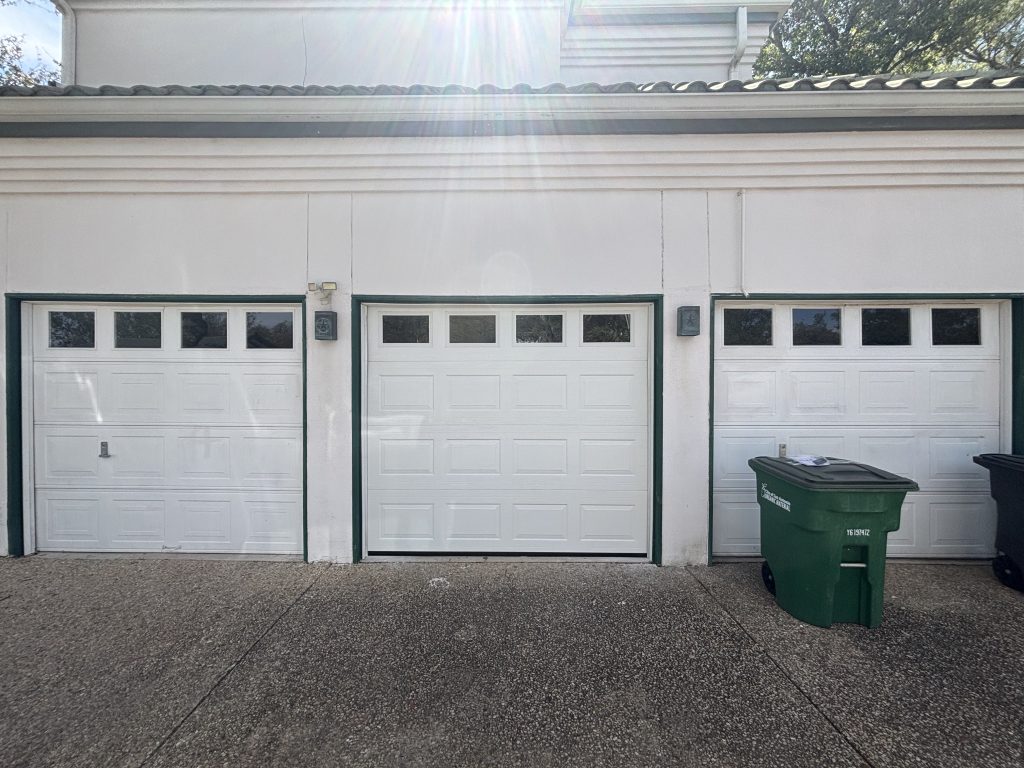
Direct Answer: Multi-bay garage doors operate on completely independent mechanical systems, meaning each door experiences unique daily cycle counts, spring tension loss, and motor strain. Uneven opening speeds, unlevel door resting positions, or varied wear patterns typically indicate uneven spring fatigue, differing opener force limits, worn rollers, or isolated track misalignments between bays.
SAFETY WARNING: Garage door counterbalance assemblies—including high-tension torsion springs, lifting cables, and bottom brackets—contain extreme force capable of causing severe injury or death. Never attempt to adjust, tighten, or replace springs and cables on your own. Always consult a certified garage door technician for counterbalance repairs.
Understanding Wear Disparities in Multi-Door Garages
Many modern homes utilize three or more single-bay garage doors rather than one massive double door. While this architectural layout improves structural integrity and curb appeal, homeowners often notice that one door starts moving slower, making more noise, or resting slightly off-level compared to adjacent doors.
1. Asymmetrical Cycle Counts and Spring Fatigue
In a multi-car garage, one bay typically houses the primary commuter vehicle. This door might run four to six cycles per day, while the adjacent bays hold recreational vehicles, lawn equipment, or project cars cycled only once a week. Because standard torsion and extension springs are rated for 10,000 cycles, the primary door’s springs will lose tension and reach metal fatigue years ahead of the neighboring doors.
2. Independent Opener Calibration
Each door utilizes its own dedicated opener unit. Variations in motor age, drive type (belt vs. chain), force limit settings, and internal gear wear will naturally cause the doors to travel at slightly different speeds and stop at marginally different heights.
Causes vs. Solutions Comparison
| Symptom / Cause | Underlying Issue | Recommended Solution |
|---|---|---|
| One door opens slower than others | Fatigued torsion spring or worn opener gear | Professional spring balance test and torque adjustment. |
| Door rests crooked or daylight shows under one side | Uneven cable stretch or settled concrete slab | Professional cable leveling and bottom seal replacement. |
| Excessive squeaking or grinding in one bay | Dry bearings, worn nylon rollers, or track debris | Apply non-silicone garage door lubricant; replace worn rollers. |
| Door reverses immediately upon touching ground | Opener down-travel or force sensitivity drift | Recalibrate opener travel limits according to manual. |
Troubleshooting and Routine Inspection for Multi-Door Setups
To keep all garage doors functioning evenly across your property, perform these safe homeowner checks regularly:
- Visual Track and Roller Inspection: Check that vertical tracks are plumb and clear of dirt. Look for cracked, wobbly, or flattened rollers.
- Lubricate Moving Hardware: Spray garage-specific lubricant on hinges, roller bearings, and spring coils twice a year. Do not lubricate nylon wheels directly or spray inside track channels.
- Safety Sensor Alignment: Ensure the photo-eye sensors on each bay are aligned, clean, and positioned 6 inches above floor level.
- Weatherseal Integrity: Inspect the perimeter vinyl trim and bottom rubber astragal for drying, cracking, or gaps that let drafts into individual bays.
When to Schedule Professional Multi-Bay Service
When one door in a multi-bay setup requires spring replacement, it is best practice to have a certified technician inspect and tune the springs and cables on all bays simultaneously. Balancing the entire system at once ensures consistent performance, prevents surprise breakdowns, and prolongs the lifespan of all your automated openers.