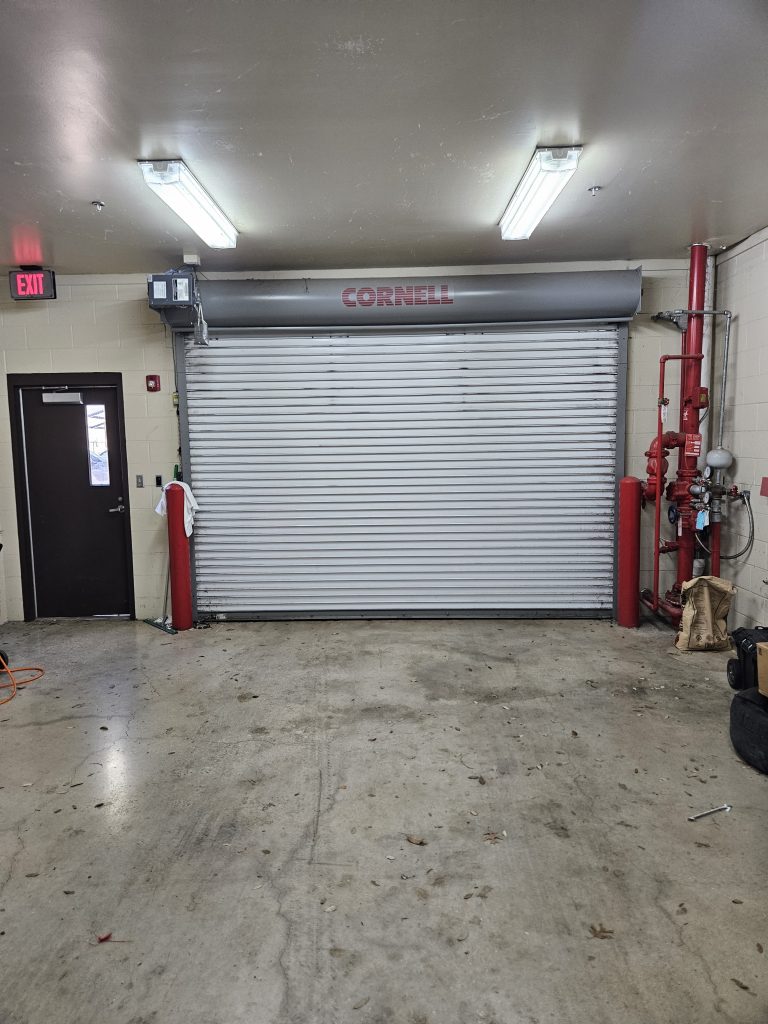
Direct Answer: A commercial rolling steel door typically stops opening due to power disconnects, tripped safety edges, misaligned side guides, or broken internal barrel counterbalance springs. Always verify electrical power and clear safety sensors first. If the motor hums or the curtain is jammed, shut down the operator immediately and contact a certified professional.
SAFETY WARNING: Commercial rolling steel doors utilize heavy multi-slat curtains and high-torque internal counterbalance springs concealed within the overhead pipe shaft. Never attempt to release, tighten, or adjust barrel springs, curtain brackets, or motor assemblies. Tampering with components under extreme tension can cause catastrophic failure, severe crush injuries, or fatal accidents. Always rely on a licensed commercial technician.
Understanding Commercial Coiling & Rolling Steel Doors
Commercial rolling steel doors (such as Cornell coiling doors) are engineered for heavy cycle use, security, and fire protection in industrial loading bays, utility corridors, and warehouse facilities. Unlike residential sectional doors that slide overhead on horizontal tracks, rolling doors coil tightly around an internal shaft inside an overhead hood. When these heavy systems fail to operate, the issue usually stems from the motor drive, the guide tracks, or the spring assembly inside the barrel.
Common Causes vs. Professional Solutions
| Symptom / Cause | Underlying Problem | Professional Solution |
|---|---|---|
| Motor hums but door won’t lift | Broken internal counterbalance spring or locked slide bolt | Replace high-tension barrel spring or disengage mechanical lock assembly. |
| Curtain stops halfway or reverses | Safety edge obstruction or misaligned guide channels | Realign guide channels, clear debris, and recalibrate travel limit switches. |
| No response from wall station | Tripped breaker, blown control board fuse, or disconnected power | Diagnose commercial operator electrical board, reset breaker, or replace fuses. |
| Door jerks or squeals loudly | Dry guide channels or damaged endlocks on slats | Inspect slat endlocks, repair warped slats, and apply non-grease industrial lubricant. |
Safe Troubleshooting Checklist for Facility Managers
Before calling for emergency service, facility managers can safely check the following items without touching high-tension components:
- Verify Power Supply: Check that the disconnect switch and primary breaker feeding the commercial operator are active.
- Check the Interlock / Slide Lock: Ensure physical security slide locks or interlock switches are fully retracted before activating the motor.
- Inspect Safety Edges and Photo Eyes: Clean dirt, dust, or debris from bottom-bar sensing edges and floor-level photo eyes.
- Check the Emergency Chain Hoist: Verify the manual chain hoist engage cable isn’t partially engaged, which locks out electric operation on many commercial units.
- Visual Inspection of Guides: Look inside the vertical side tracks for dents, forklift impacts, or foreign obstructions.
When to Call a Certified Commercial Technician
If the motor does not engage, the curtain appears crooked in the guides, or you hear grinding inside the overhead barrel, immediately lock out the control station. High-torque commercial barrel assemblies require specialized winding bars, lifting hoists, and factory certifications to service safely.