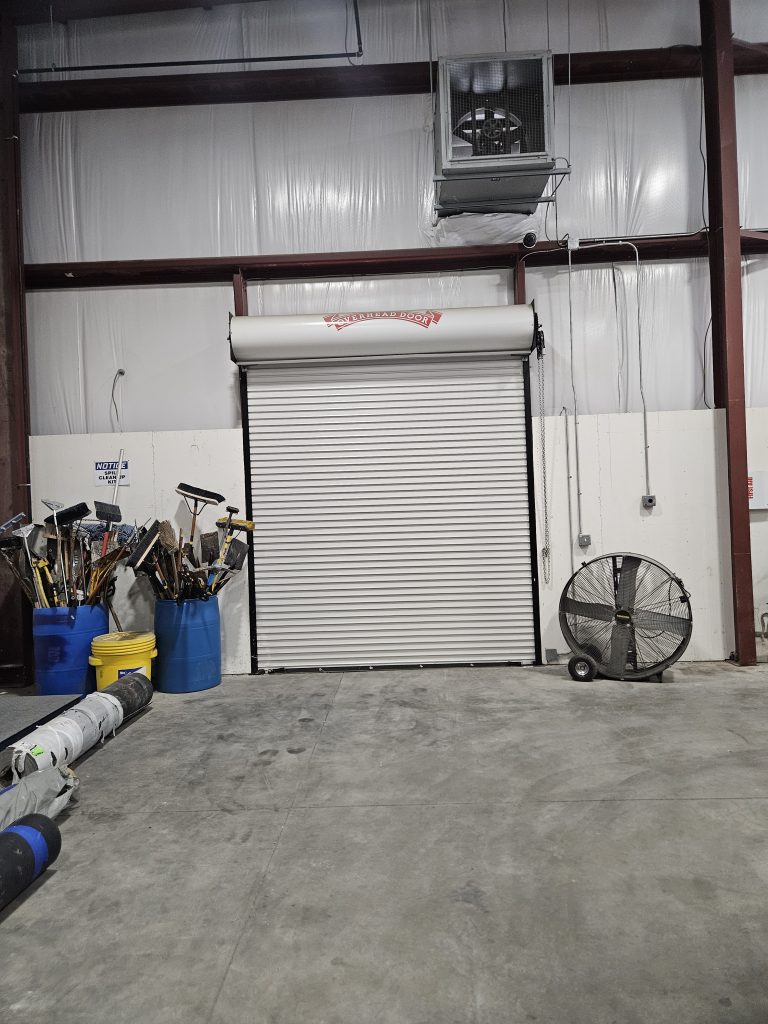
Commercial Roll-Up Door Operation and Troubleshooting Guide
Direct Answer: A commercial roll-up door typically sticks or becomes difficult to open due to debris in the vertical guide tracks, dry or misaligned curtain slats, damaged guide channels, or failing internal barrel torsion springs. Clearing track obstructions and lubricating guides can resolve minor friction, but spring tension or mechanical drive issues require certified professional service.
SAFETY WARNING: Commercial rolling steel doors use extremely heavy steel curtains and powerful internal torsion springs enclosed inside the barrel assembly. Never attempt to adjust, wind, or disassemble the barrel assembly, tension brackets, or bottom bar fasteners. Tension releases can cause catastrophic mechanical failure, severe blunt-force trauma, or death. Always schedule a licensed commercial door specialist for internal mechanical and spring repairs.
Understanding Commercial Rolling Steel Doors
Commercial roll-up sheet doors and rolling steel doors are workhorses in warehouses, loading docks, and manufacturing plants. Unlike residential sectional doors that roll back on horizontal tracks, rolling steel doors coil compactly around an overhead pipe shaft (the barrel hood assembly) when opened. Counterbalance torsion springs housed inside this barrel offset the immense weight of the interlocking steel slats.
When the door is operated via a manual chain hoist, push-up handle, or industrial electric motor, smooth movement relies on precise alignment between the curtain, the vertical guide tracks, and properly tensioned internal springs.
Common Causes for a Sticking or Jammed Roll-Up Door
When your industrial roll-up door hesitates, squeals, or completely locks up, several components may be at fault:
Causes vs. Solutions Breakdown
| Symptom / Cause | Underlying Issue | Recommended Solution |
|---|---|---|
| Rough movement or grinding sound | Dirt, industrial grit, or dried grease inside the guide tracks. | Clean guide tracks with a solvent-free degreaser and apply non-tacky silicone or commercial spray lubricant. |
| Door jams midway during travel | Impact damage or bent vertical side guides pinched by forklift traffic. | Inspect guides visually; contact a certified technician to straighten or replace damaged track sections. |
| Extremely heavy to lift via chain hoist | Internal torsion spring fatigue or broken spring inside the barrel. | Professional repair only: Have a certified technician reset spring balance or replace the barrel assembly. |
| Curtain rolls unevenly or hangs crooked | Slat separation, end-lock wear, or out-of-level mounting brackets. | Professional service to realign barrel brackets and replace damaged or separated slats. |
Safe Facility Troubleshooting Checklist
Facility staff can perform these routine visual checks and safe maintenance tasks to identify roll-up door issues:
- Inspect the Track Guides: Check along both vertical wall tracks for dents, bends, or foreign objects like brooms, warehouse debris, or packaging strapping.
- Examine the Chain Hoist Mechanism: Ensure the manual hand chain is correctly seated within the chain pocket wheel and has not jumped off the track or tangled.
- Clean the Side Channels: Wipe away accumulated dust, metal shavings, or dirt buildup inside the guides using a clean shop rag. Avoid applying heavy grease, which attracts grit.
- Look for Slat Damage: Inspect the horizontal steel slats for bowing or pinched interlocking seams that prevent smooth coiling around the upper barrel hood.
- Call a Commercial Specialist: If the curtain remains bound, makes popping sounds from the barrel, or fails to balance properly, immediately tag out the door and summon a professional.