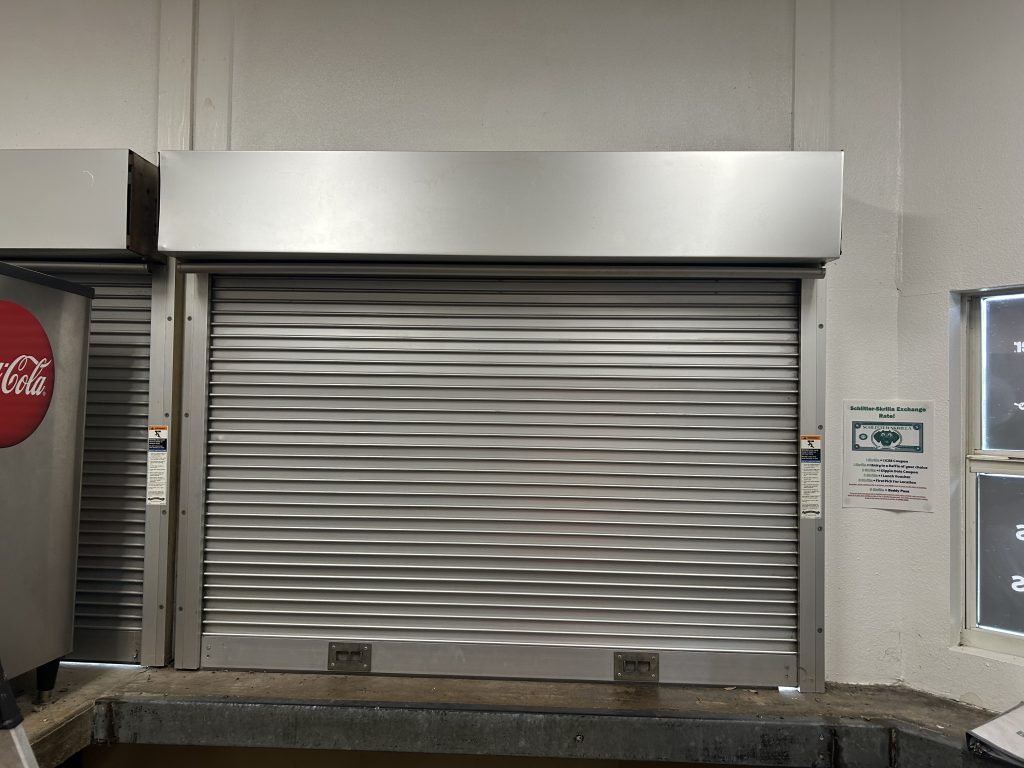
Direct Answer: If your commercial roll-up counter shutter is difficult to lift or binds in the guides, the issue typically stems from loss of internal counterbalance spring tension, debris or grease accumulation within the vertical guide tracks, damaged slat endlocks, or an unlevel sill forcing the curtain out of square.
SAFETY WARNING: Commercial counter shutters rely on tightly wound internal torsion springs concealed inside the overhead barrel hood. Never attempt to adjust, loosen, or disassemble the hood, tension wheel, or barrel assembly yourself. These components store immense mechanical tension and can cause severe hand, eye, or head injuries if mishandled. Always consult a certified commercial door technician for spring adjustments.
Understanding How Commercial Roll-Up Counter Shutters Operate
Roll-up counter doors, commonly installed at concession stands, ticket booths, pharmacy counters, and cafeteria service windows, are engineered for compact security. Unlike standard residential garage doors, counter shutters employ interlocking metal slats (usually aluminum or stainless steel) that coil tightly around an internal counterbalanced pipe shaft within an upper fascia box. When everything is properly aligned and lubricated, the shutter should lift smoothly with one hand.
Common Causes of Sticking or Heavy Counter Shutters
Because these shutters operate directly over service countertops, they are vulnerable to unique wear patterns, grease exposure, and accidental physical impacts from inventory or staff.
1. Internal Counterbalance Spring Fatigue
The torsion spring housed inside the barrel assembly offsets the physical weight of the metal curtain. Over thousands of open-and-close cycles, this spring naturally loses torque. When tension fades, the shutter suddenly feels dramatically heavier to lift and may refuse to stay open on its own.
2. Dirty, Pinched, or Dry Guide Channels
Counter shutter vertical guides feature tight clearances to prevent prying. If grease, food debris, dust, or sticky liquids contaminate these aluminum tracks, friction spikes. Additionally, if cleaning chemicals stripped the dry lubricant or if staff banged carts against the jambs, the tracks can pinch the curtain’s edges.
3. Misaligned Slats and Broken Endlocks
Each individual slat on a roll-up shutter is held in alignment by endlocks. If these endlocks shear off or wear down due to lack of maintenance, slats shift sideways (known as “telescoping”) and bite into the interior of the guide tracks, creating severe binding.
Troubleshooting Guide: Causes vs. Solutions
| Symptom / Cause | Underlying Mechanism | Recommended Solution |
|---|---|---|
| Heavy to lift / Slams shut | Internal barrel spring loss of tension | Professional spring retensioning or barrel replacement |
| Screeching or jerky movement | Grit, grease, or incorrect wet lubricant in guides | Clean tracks with mineral spirits; apply dry silicone or PTFE spray |
| Shutter jams halfway | Pinched track jambs or shifted/bent slats | Inspect track width; have a technician re-align and straighten slats |
| Curtain hangs crooked at bottom | Uneven spring counter-balance or unlevel counter sill | Check level of counter sill; recalibrate internal pipe barrel |
Safe Operational Checks for Facility Staff
Before calling for professional repairs, maintenance teams can safely perform basic visual inspections:
- Inspect Guide Clearances: Look closely inside both left and right vertical channels with a flashlight. Verify that no coins, pens, tape, or dirt build-ups are obstructing the travel path.
- Check the Sill and Bottom Bar: Ensure the counter sill is clear and level. Confirm that manual slide bolts or padlocks are fully retracted and disengaged before lifting.
- Clean the Channels: Wipe out old gunk using a clean microfiber cloth. Never apply heavy automotive grease or WD-40, as petroleum-based lubricants attract airborne flour, dust, and grime that compound binding issues.
- Check for Slat Bowing: Inspect the curtain horizontally to verify that no individual slat has bowed outward from someone leaning against the shutter.
If tracks are clean and clear but the curtain remains stiff, heavy, or crooked, stop operating it immediately. Forcing a bound shutter can snap the internal spring or bend the curtain beyond repair. Contact a licensed commercial overhead door specialist to reset spring tension and realign the system safely.