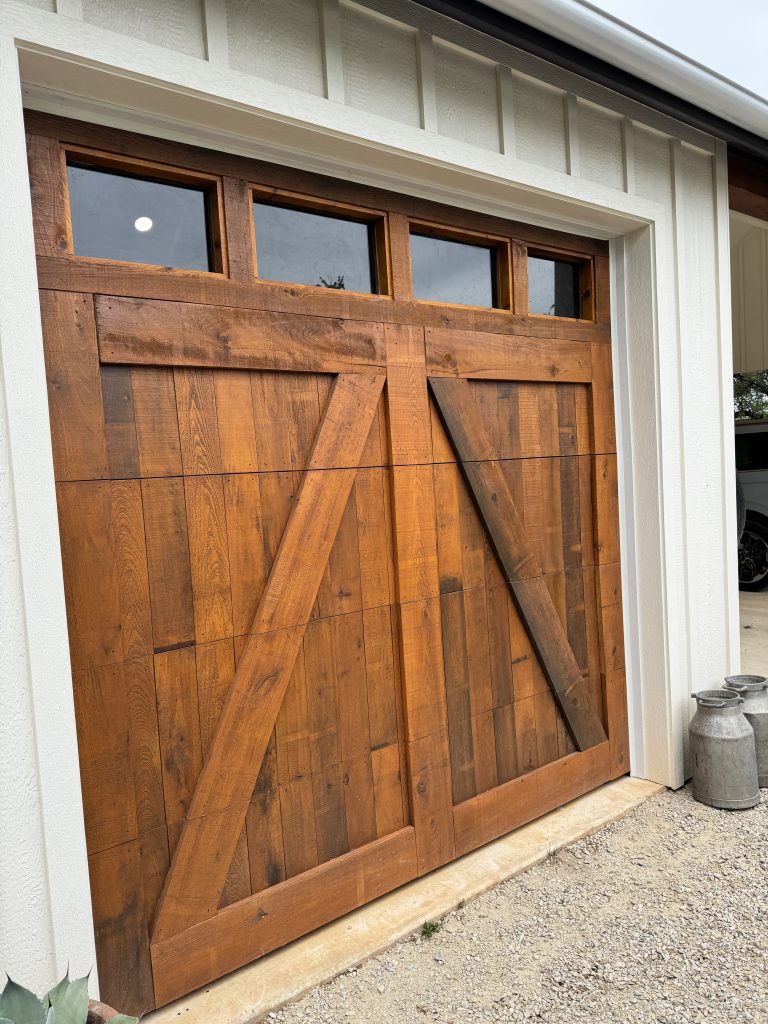
Natural wood garage doors swell and gain significant weight after rainfall when bottom edges, joints, or unsealed end-grains absorb moisture and rain splashback. This added water weight overburdens your counterbalance springs, causing the opener motor to groan, reverse unexpectedly, or fail to lift the heavy sections off the garage floor.
SAFETY WARNING: Solid wood overlay doors can weigh between 300 and 500+ pounds dry, and significantly more when waterlogged. Counterbalance torsion springs operate under extreme mechanical tension to lift this massive load. Never attempt to adjust torsion springs, loosen bottom bracket cables, or force open a waterlogged door, as snapped hardware can cause catastrophic property damage or fatal injury.
How Moisture Infiltration Disrupts Your Door’s Balance System
Unlike steel or aluminum garage doors, natural cedar, hemlock, and cypress doors are porous composite structures. When exterior wood surfaces lack adequate protective sealant, rainwater wicks into the micro-capillaries of the wood fibers. This water absorption is particularly aggressive along the bottom rail, end-grain cuts, and the seams between decorative battens and backer panels.
A saturated solid wood garage door can easily gain 30 to 75 pounds of water weight during prolonged rainstorms. Garage door torsion springs are calibrated to within tiny fraction tolerances of the door’s exact dry weight. When the door gains unexpected water weight, the spring system becomes severely underpowered, throwing the counterbalance out of equilibrium and forcing your electric garage door opener to lift dead weight it was never engineered to handle.
Causes vs. Solutions for Waterlogged Wood Doors
| Potential Root Cause | Underlying Problem | Professional Solution |
|---|---|---|
| Unsealed Bottom End-Grain | Gravel or concrete splashback wicks raw moisture into the door’s bottom edge. | Dry panel thoroughly, apply marine-grade penetrating wood sealer, and install an extended bottom astragal seal. |
| Insufficient Spring Lift Rating | Springs are calibrated strictly for dry weight with zero allowance for seasonal humidity. | Have a qualified technician recalculate wire size and wind high-cycle springs rated for humid operational weight. |
| Swollen Panels Binding in Tracks | Wood expansion increases the door’s overall thickness, causing it to pinch against the jamb seal or track. | Adjust track spacing and roller stem depth to provide adequate travel clearance for seasonal wood expansion. |
| Opener Force Limiter Tripping | The internal safety sensitivity detects excessive resistance from the heavy door and auto-reverses. | Conduct professional balance check; avoid arbitrarily turning up motor force, which can snap drive belts or cables. |
Visual Troubleshooting Checklist for Homeowners
If your stained or painted timber garage door struggles to open following wet weather, review this non-invasive diagnostic checklist before calling a certified technician:
- Inspect Bottom Rail Discoloration: Look for dark, water-stained rings, blistering clear coat, or soft spots along the bottom 6 to 12 inches of the door.
- Check Gravel and Ground Clearance: Note whether rain run-off or loose gravel splashes directly against the face of the bottom wood panel during storms.
- Listen to the Opener Motor: Pay attention to whether the motor hums, strains, or chatters before stopping; this indicates an active over-current safety trip caused by unbalanced weight.
- Inspect Vertical Track Reveal: Check if the swollen door rubs tightly against the interior perimeter stops or exterior weatherstripping when moving.
Restoring Long-Term Performance to Natural Wood Doors
Resolving moisture-induced lifting problems requires a dual approach: exterior weatherproofing and mechanical rebalancing. Once the door panels have thoroughly dried, all six panel sides—especially hidden top, bottom, and end-grain edges—must be coated in a high-solid exterior urethane or penetrating wood preservative. Finally, hire an experienced garage door professional to test the manual door balance and wind the torsion springs to accommodate the door’s real-world operating conditions.