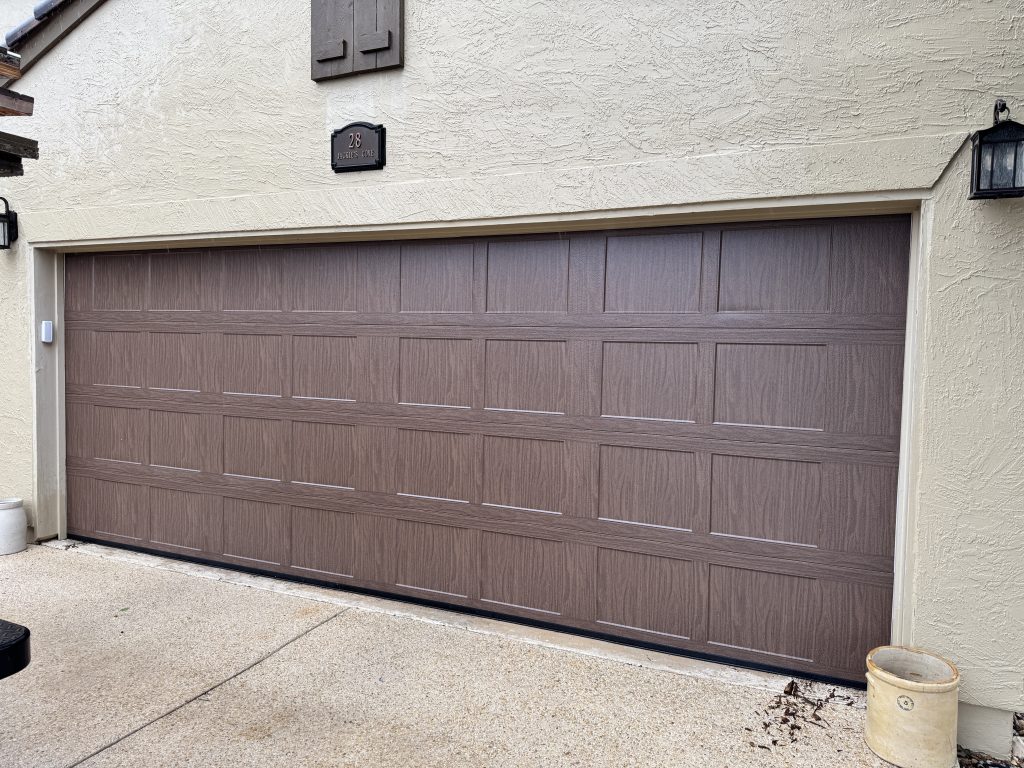
Direct Answer: Dark faux-wood garage doors bow outward in the afternoon sun due to thermal bowing, caused by significant temperature differentials between the hot exterior steel skin and the cooler interior insulation. This uneven thermal expansion forces wide panels to deflect outward, often causing the door sections to rub against jamb weatherstripping or bind within the vertical tracks.
SAFETY WARNING: Overhead garage doors rely on high-tension torsion springs, heavy gauge steel tracks, and counterbalance cables. If your door is bowing, binding, or rubbing, never attempt to loosen track brackets, hinge hardware, or spring tension yourself. Doing so can cause rapid mechanical failure, structural collapse, and severe bodily injury. Always contact a certified garage door technician.
Understanding the Bi-Metal Effect and Thermal Expansion
Modern dark-toned overhead doors, such as simulated walnut or mahogany finishes, absorb tremendous amounts of solar radiation. On a sunny day with ambient temperatures of 85°F, the dark exterior surface can reach temperatures exceeding 150°F. Meanwhile, if your garage interior is conditioned or shaded, the inner steel sheet remains near ambient room temperature.
Because steel expands when heated, the scorching exterior skin expands longitudinally while the cooler inner skin remains stable. This mechanical conflict—commonly referred to in the door industry as the bi-metal effect—forces the center of the door panels to crown or bow outward toward the street, especially across wide 16-foot and 18-foot double-car spans.
Common Causes vs. Professional Solutions
| Root Cause | Operational Impact | Professional Solution |
|---|---|---|
| Solar Heat Differential (Bi-Metal Effect) | Panels crown outward during peak sun hours; returns flat at night. | Installation of horizontal reinforcing U-bars (struts) across panel midsections. |
| Overly Tight Perimeter Trim | Bowing panels drag aggressively against the vinyl door jamb stop molding. | Readjustment and relocation of perimeter jamb seals to provide proper clearance. |
| Inadequate Back-Hang or Track Spacing | Rollers bind in tracks, straining the automatic opener trolley. | Professional track realignment and installation of extended-stem commercial rollers. |
| Missing or Undersized Horizontal Struts | Center sections flex under weight and heat without structural rigidity. | Upgrading to full-width structural steel hat-channel struts on affected panels. |
Troubleshooting Symptoms: What to Check
If your door operates normally in the cool morning but struggles later in the day, check for these warning signs:
- Scuffing on Door Faces: Look for vertical abrasion marks on the dark finish where panels scrape against vinyl stop seals.
- Opener Resistance: Listen for the opener motor groaning or reversing on descent during the hottest part of the afternoon.
- Daylight Gaps: Inspect the bottom corners or header; severe bowing can pull the edges away from the frame while the center bulges outward.
- Roller Pinching: Observe whether the roller stems are bottoming out against the track brackets due to panel expansion.
Restoring Balance and Smooth Operation
Fixing thermal bowing requires mechanical structural compensation rather than simple surface adjustments. A qualified door specialist will evaluate your door’s wind-load rating and install longitudinal horizontal struts to resist thermal deflection. Because adding steel struts increases the total deadweight of the assembly, a professional must also recalculate and recalibrate or replace the torsion springs to maintain exact counterbalance equilibrium.