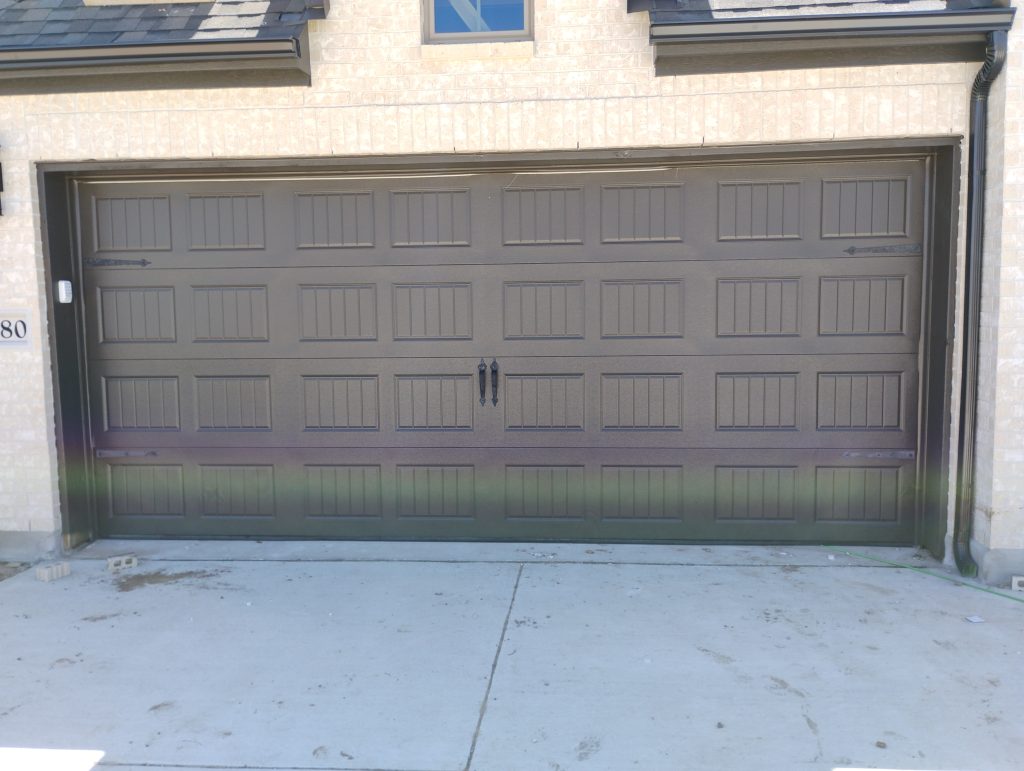
A stamped carriage house garage door creaks or pops when passing through the track radius due to dry hinge pivots, flexing embossed steel sections, or dry roller bearings under tension. As rigid stamped panels articulate around the curved track, friction in the joint hinges and rollers amplifies metal-on-metal stress sounds.
SAFETY WARNING: Overhead garage doors weigh hundreds of pounds and operate under extreme mechanical tension from torsion or extension spring systems. Never attempt to loosen, adjust, or replace bottom roller brackets, torsion assemblies, or lift cables. Improper handling can cause catastrophic injury or severe structural damage. Always contact a certified garage door technician for mechanical adjustments.
Understanding Stamped Steel Panel Flex and Noise
Modern carriage-style overhead doors combine the classic aesthetic of historic swing doors with the modern convenience of roll-up sectional engineering. The deep vertical grooves and faux-recessed panels are stamped into high-gauge steel. While this adds structural rigidity across wide double-car openings, it also causes panels to resist bending. When the door transitions from a vertical rest position into the horizontal ceiling tracks, the panel joints must articulate smoothly through a 12-inch or 15-inch radius curve. Any friction between hinges or binding rollers creates a sudden release of energy, resulting in audible pops, groans, or metallic bangs.
Common Causes vs. Recommended Solutions
| Underlying Cause | Operational Symptom | Recommended Solution |
|---|---|---|
| Dry Intermediate Hinge Pivots | Sharp squeaks and creaks right as panel joints bend over the curve. | Apply a professional non-silicone garage door lubricant to pivot points. |
| Worn or Unsealed Steel Rollers | Loud metal popping and rattling inside the track channels. | Upgrade to heavy-duty, sealed ball-bearing nylon rollers. |
| Track Radius Misalignment | The door binds momentarily, then jerks forward with a metallic clunk. | Professional track squaring, spacing, and bracket realignment. |
| Loose Center Stiffener Struts | Panel oil-canning or booming noise across the mid-section. | Professional inspection and torquing of panel reinforcement struts. |
Troubleshooting Checklist for Noisy Carriage Doors
Before calling a qualified technician, homeowners can perform a few safe, visual checks to pinpoint where the noise originates:
- Isolate the location: Stand inside the garage at a safe distance while the door cycles. Note whether the popping occurs at the top curve, halfway up, or throughout the entire ascent.
- Inspect the rollers: Look for steel rollers that slide rather than roll freely along the radius curve. A frozen roller bearing creates intense drag and loud popping noises.
- Examine decorative accents: Ensure faux handles and decorative strap hinges on the exterior are firmly secured and not catching against weatherstripping or the exterior frame.
- Check for paint friction: On newly finished dark doors, overlapping panel lips may stick slightly in warm weather, creating a peeling or popping sound as they pull apart during travel.
Preventing Unnecessary Strain on Your Opener
When panels creak and bind, the electric opener must work harder to overcome track resistance. If neglected, minor roller and hinge friction accelerates gear wear inside your motor unit and strains the drive rail. Regular professional lubrication and balance checks ensure your carriage-style door operates quietly and reliably year-round.