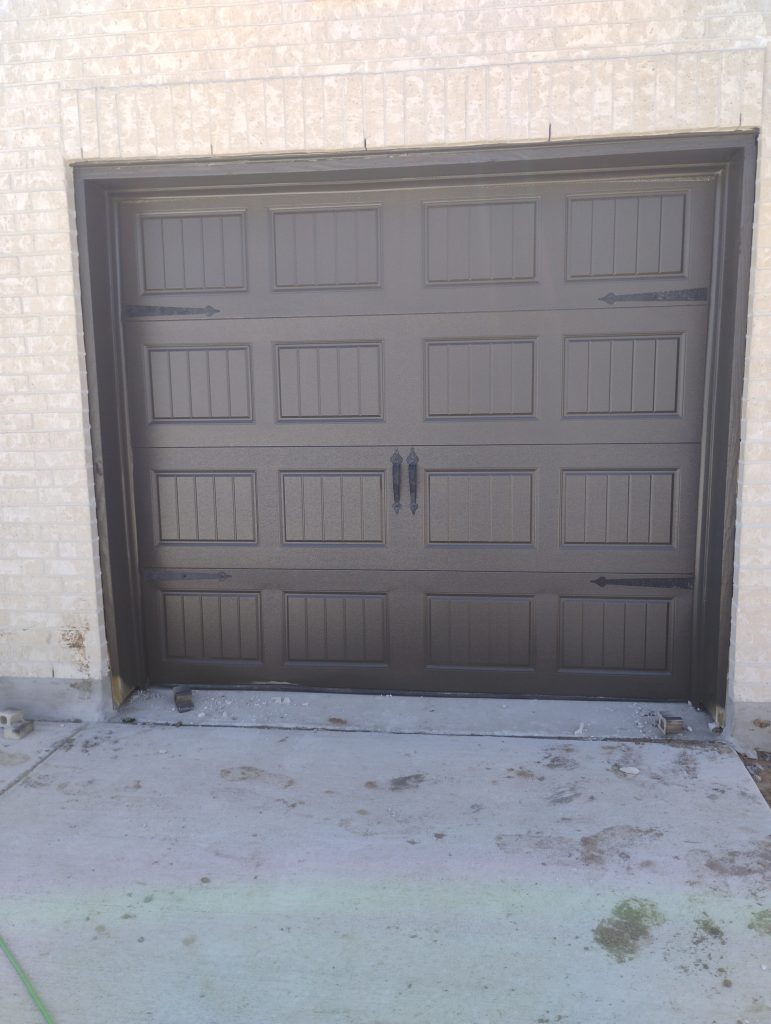
Direct Answer: Dark steel garage doors absorb significant solar heat, causing the outer metal skin to expand faster than the interior backing. This thermal bowing forces panel edges firmly against exterior vinyl jamb stops and track paths, generating excessive friction, loud popping noises, or safety sensor reversals during peak afternoon heat hours.
Safety Warning: Never loosen track fastening lag bolts, spring anchors, or bottom fixture brackets while trying to resolve thermal binding. Overhead door counterbalance assemblies are under extreme mechanical tension capable of inflicting severe blunt-force trauma. Consult a trained garage door technician to re-space track clearances safely.
Understanding Solar Thermal Bowing on Dark Carriage Doors
Modern carriage-house steel garage doors finished in dark bronze, espresso, or slate provide exceptional curb appeal. However, dark coatings absorb up to 90% of solar radiation. On south- or west-facing elevations, exterior panel surface temperatures can easily surpass 150°F (65°C).
Because the exterior steel sheet heats up and expands while the insulated core and interior steel backing remain significantly cooler, the door sections undergo a physical phenomenon known as thermal bowing or “bi-metal deflection.” The center of the panel pushes outward or arches outward slightly, forcing the side edges of the door outward against the exterior perimeter jamb seals and track rollers.
Common Symptoms of Heat-Induced Binding
Homeowners often assume their automatic opener has failed because the door operates normally in the morning and evening but struggles between 1:00 PM and 6:00 PM. Look for these specific thermal expansion indicators:
- Afternoon Opener Reversal: The garage door starts moving down, encounters excessive drag against the weatherstripping or tracks, triggers the opener’s internal force sensors, and reverses open.
- Audible Steel Popping: A loud metallic bang or snap occurs when panels pass through the track radius as built-up thermal stress suddenly releases.
- Black Scuff Marks on Vinyl Trim: Dark rubber or finish rub marks appear along the side vinyl jamb weatherstripping where the door panels scrape against the frame.
- Straining Motor Sounds: The opener motor hums noticeably louder, moves at a slower speed, or displays an excessive force diagnostic code during warm hours.
Thermal Binding: Causes vs. Professional Solutions
| Root Cause | Operational Impact | Professional Corrective Action |
|---|---|---|
| Bi-Metal Thermal Deflection | Panel bows outward, causing top or center sections to pinch exterior jambs. | Professional readjustment of vertical track spacing to provide 1/8″ extra lateral float. |
| Overly Tight Vinyl Stop Molding | Weatherstripping seals tightly against cold panels but creates heavy drag when panels expand. | Repositioning exterior vinyl stops to rest gently against the door without excessive compression. |
| Short-Stem Roller Pinning | Roller shafts bottom out inside hinges when panels widen across the opening. | Installing long-stem commercial-grade nylon rollers to allow smooth transverse movement. |
| Opener Force Limits Set Too Sensitive | Slight daytime friction trips internal safety limits designed to prevent panel crushing. | Calibrating digital travel force margins and verifying spring counterbalance balance. |
Professional Adjustments for Temperature-Sensitive Doors
Correcting heat-related garage door binding requires precise spatial tolerance adjustments. A certified technician will evaluate the door’s plumb alignment during peak heat hours. By adjusting the vertical track brackets by as little as a fraction of an inch and refitting the exterior perimeter weather seal, technicians can preserve airtight drafts seals without creating friction that overloads your opener drive gear.