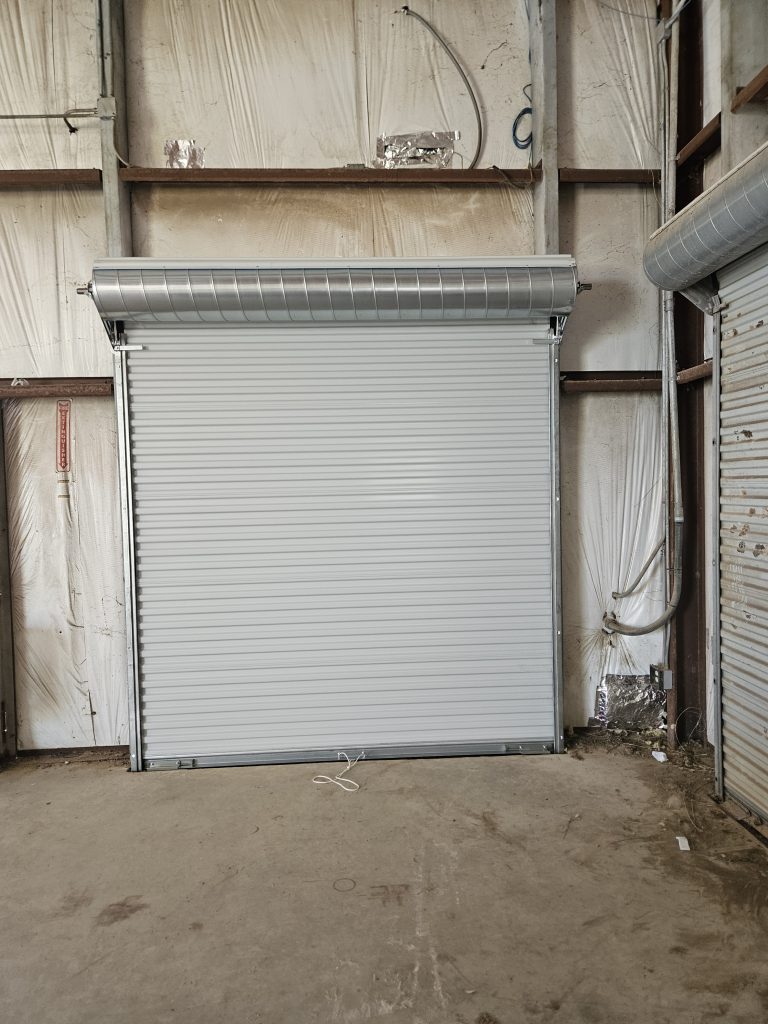
A commercial roll-up sheet door telescopes—rolling sideways off-center onto its axle barrel—primarily due to unequal internal spring tension, unlevel mounting brackets, or guide tracks that are out of plumb. When the curtain drifts laterally, it rubs against the headplates, shredding wear strips, causing guide binding, and risking sudden door failure.
SAFETY WARNING: Commercial roll-up doors house heavy-duty torsion springs wound under lethal mechanical tension inside the barrel pipe. Never attempt to loosen tension pawls, adjust headplate bolts, or force a telescoping curtain by hand. Improper handling can cause uncontrolled curtain release and severe blunt-force trauma; always leave internal assembly adjustments to a certified commercial door specialist.
Understanding Why Roll-Up Sheet Doors Telescope
Unlike sectional doors that travel along horizontal ceiling tracks, a commercial roll-up sheet door coils tightly into a suspended cylinder above the header. When installed in pre-engineered steel buildings or pole barns, the entire structural integrity depends on the perfect alignment between the support headplates, the central axle, and the vertical wall guides. If any structural element shifts out of square, the continuous corrugated steel curtain will track sideways as it retracts, creating a cone-shaped roll known in the industry as “telescoping.”
Track Plumbness and Structural Framing Settlement
Pre-engineered metal buildings naturally expand, contract, and flex under varying wind loads and temperature swings. If the vertical jambs shift even a quarter of an inch, the guide channels lose parallel alignment. As the curtain ascends, the uneven resistance forces the curtain to kick sideways. The outer edges of the steel slats will then grind continuously against the guide throats and side mounting brackets.
Internal Spring Tension Imbalance
Roll-up sheet doors utilize internal counterbalance springs anchored within the drum wheel assembly. Over thousands of operational cycles, steel springs relax. If the tension is wound unevenly across the barrel or if the tension wheel slips, one side of the curtain lifts faster than the other. This differential lift pulls the curtain diagonally, driving the coil directly into the steel support brackets.
Causes vs. Solutions for Telescoping Roll-Up Doors
| Identified Cause | Observable Symptom | Professional Solution |
|---|---|---|
| Unlevel Axle Headplates | Coiled curtain shifts toward the lower mounting bracket during opening | Laser-level mounting plates, shim steel brackets, and re-torque structural fasteners |
| Uneven Internal Spring Tension | Door pulls heavily to one side; bottom bar sits crooked off the floor | Balance internal torsion system using specialized winding bars and tension tools |
| Guides Out of Plumb or Pinched | Curtain chatters, screeches, or jams halfway up the wall channel | Re-align guide channels parallel to factory tolerances and check jamb plumbness |
| Worn or Missing Guide Wear Strips | Metal-on-metal scraping sound; shaved metal dust visible along track throats | Install heavy-duty UHMW polyethylene wear strips and smooth flared entry guides |
Step-by-Step Diagnostic Inspection for Facility Managers
Facility managers can perform a non-invasive visual inspection to pinpoint the source of curtain drift without handling high-tension parts:
- Inspect the Coiled Curtain: Look up at the open door barrel. If the edges of the roll look like an opened telescope or steps rather than a flush cylinder, lateral drift is occurring.
- Check Guide Clearances: Verify that the door curtain has equal side-to-side clearance (typically 3/8″ to 1/2″) inside both vertical guide tracks along the full height.
- Look for Metal Shavings: Check the floor directly under the guide entrances and mounting brackets for fine metal dust, which indicates aggressive friction.
- Examine the Bottom Bar: When the door is closed, verify that the bottom angle bar sits completely flat against the concrete floor without daylight under one corner.
Professional Realignment and Preventive Maintenance
Correcting a telescoping roll-up door requires unwinding, leveling the axle assembly, and re-tensioning the internal spring barrel to factory balance specifications. Technicians will also reshape the flared guide entries and replace worn polyethylene friction strips to ensure frictionless cycling. Scheduling semi-annual professional tune-ups ensures your commercial doors operate smoothly and prevents catastrophic curtain drop hazards.