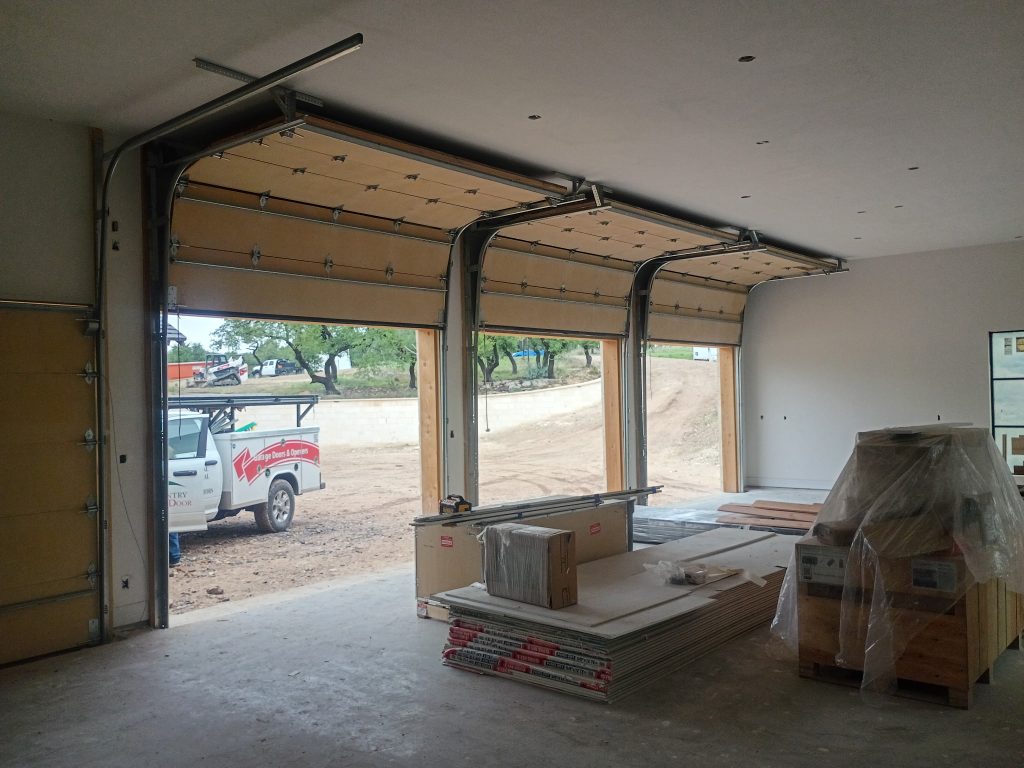
Side-by-side garage doors require a minimum center post width—typically 10 to 14 inches—to provide structural clearance for adjacent vertical tracks, torsion spring end-bearing plates, counterbalance shafts, and weatherstripping. Insufficient center mullion spacing forces hardware overlapping, track misalignment, severe roller binding, and compromised weather seals across multi-bay installations.
SAFETY WARNING: Multi-door installations support massive structural loads and utilize heavy counterbalance torsion systems under extreme mechanical tension. Modifying jamb framing, re-anchoring spring assemblies, or altering track configurations should never be performed as a DIY repair. Always call a trained garage door technician.
The Engineering Behind Center Mullion Width
When building a multi-car garage or commercial workshop with separate overhead doors, the framing between the openings is known as a center post, column, or mullion. While builders often minimize this divider for aesthetic appeal, garage door hardware demands physical room to operate correctly without component interference.
Each individual door requires roughly 3.5 to 5 inches of side clearance beyond the daylight opening for standard vertical track brackets, flag brackets, and track radiuses. When two doors sit directly adjacent, those clearance zones double on the shared post. If the dividing jamb is too narrow, the hardware will collide, bind, or fail to anchor securely to structural lumber.
Critical Hardware Mounted on the Center Column
A multi-bay center post must structurally support several high-load components simultaneously:
- Paired Vertical Tracks: Two vertical track assemblies running parallel up the post, leaving enough clearance so vibrating tracks do not touch during door cycles.
- End-Bearing Plates: Torsion spring assemblies terminate on heavy steel end-bearing plates mounted near the header. These plates support the ends of both spring shafts.
- Track Hang Brackets: The transition point where the vertical track meets the horizontal track requires heavy flag brackets bolted directly into solid framing.
- Dual Perimeter Weatherseals: Exterior vinyl stop molding or weatherstripping must fit neatly on both door jambs without overlapping or crimping against the adjacent door’s trim.
Multi-Bay Framing Clearance: Causes vs. Solutions
| Issue Encountered | Underlying Cause | Professional Solution |
|---|---|---|
| Overlapping horizontal tracks | Center post framed under 10 inches wide. | Install reverse-angle tracks or custom offset track brackets. |
| Spring shafts collide in the center | Shared center space too tight for separate torsion systems. | Utilize a continuous single torsion shaft or staggered end-bearing plates. |
| Rollers bind and grind during travel | Vertical tracks skewed inward due to cramped mounting space. | Re-plumb vertical tracks and re-anchor into reinforced back-framing. |
| Light or draft gaps along the center jamb | Perimeter seals trimmed too thin to fit adjacent openings. | Install low-profile PVC thermal stops and readjust door back-set. |
Troubleshooting Multi-Door Track Alignment
If your multi-bay garage doors squeal, scrape, or shake when opening simultaneously, inspect the center dividing post for these telltale signs:
- Check whether the horizontal tracks share a single hanging angle or sway toward each other at ceiling level.
- Inspect the center post lag screws to ensure fasteners are driven fully into structural framing rather than edge drywall or hollow voids.
- Look for rubbing marks, scratched paint, or metal-on-metal wear between the adjoining spring anchor plates and cable drums above the header.
- Verify that both tracks remain plumb; cramped framing often causes technicians to angle vertical tracks inward, creating uneven roller drag.