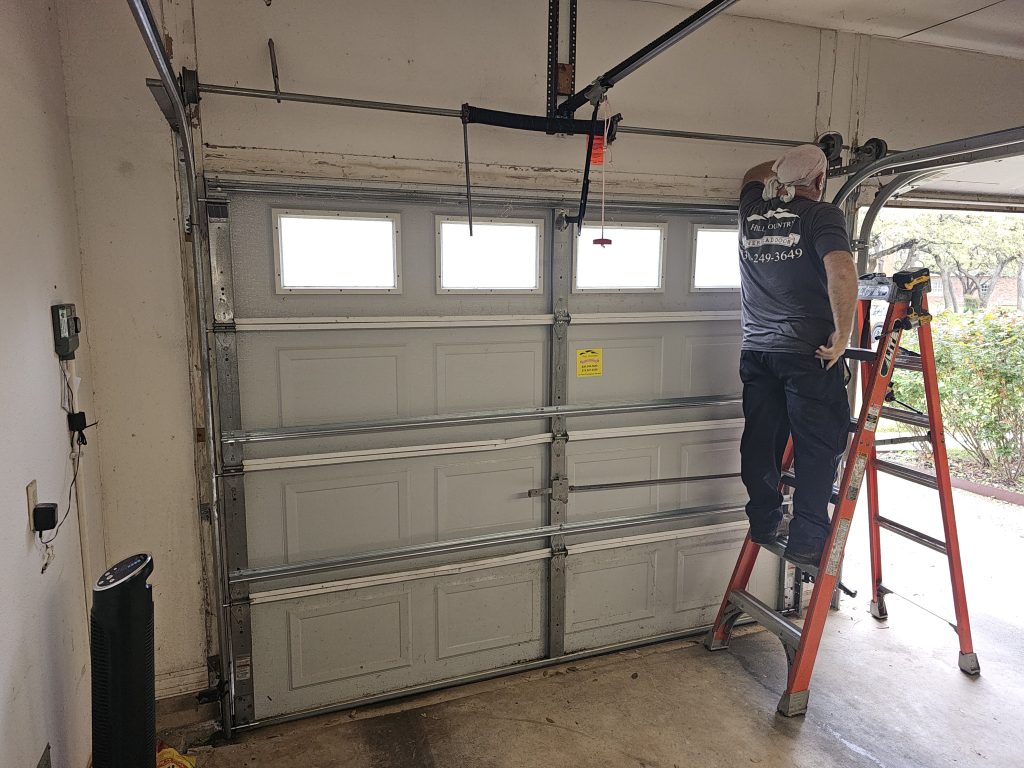
Direct Answer: Why Garage Door Cables Come Off the Drum
A garage door cable slips off its drum due to sudden tension loss, broken torsion springs, obstructed door paths, worn rollers, or loose drum set screws. When tension drops unevenly, the steel cable unspools from the grooves. Because cables carry extreme counterbalance tension, a professional technician must safely reset and balance the system.
CRITICAL SAFETY WARNING: Garage door cables, torsion springs, and bottom corner brackets operate under immense mechanical tension. Attempting DIY repairs, unwinding springs, or manually resetting cables can release destructive kinetic force, resulting in severe physical trauma, amputation, or death. Always hire a certified garage door specialist to handle cable and spring repairs.
Common Causes of Garage Door Cable Derailment
Sectional garage doors rely on synchronized tension between the torsion springs and lift cables on both sides of the door. When one component fails or binds, the tension balance is broken, causing the cable to jump out of the drum’s precision guide tracks.
1. Obstructions in the Door’s Path
If the descending garage door strikes a broom, trash can, or vehicle bumper, one side stops moving while the opener continues lowering the other side. This creates instant slack on the obstructed side, causing the cable to unravel from the drum.
2. Broken Torsion Springs
The torsion spring acts as the counterbalance for the door’s weight. When a spring snaps, all tension on the lift cables instantly vanishes, leaving them loose and tangled around the shaft.
3. Worn or Seized Track Rollers
Rollers that fail to spin smoothly can bind inside the track radius, causing the door to tilt. This uneven drag pulls one cable tighter while slackening the opposite cable.
Causes vs. Professional Solutions
| Underlying Cause | Observable Symptom | Professional Repair Solution |
|---|---|---|
| Snapped Torsion Spring | Visible gap in spring coil; door feels excessively heavy | Dual spring replacement, shaft alignment, and cable resetting |
| Door Hit an Obstruction | Crooked door panel; slack cable hanging loose | Track realignment, panel leveling, and drum re-spooling |
| Worn/Seized Rollers | Popping or grinding sounds during movement | High-cycle nylon roller installation and track lubrication |
| Loose Drum Set Screws | Drum spins freely on the torsion shaft | Drum repositioning, shaft inspection, and calibrated retensioning |
Safe Homeowner Visual Inspection Checklist
While you should never handle or adjust the cables, you can perform these visual checks to provide helpful context to your technician:
- Check Cable Condition: Look for frayed strands, kinks, or severe rust along the cable length.
- Examine the Springs: Look above the closed door for a 2-inch gap in the torsion spring coils.
- Inspect the Tracks: Check if rollers have popped out of the track or if tracks show bends.
- Assess Door Level: Observe whether one side of the door sits higher off the ground than the other.