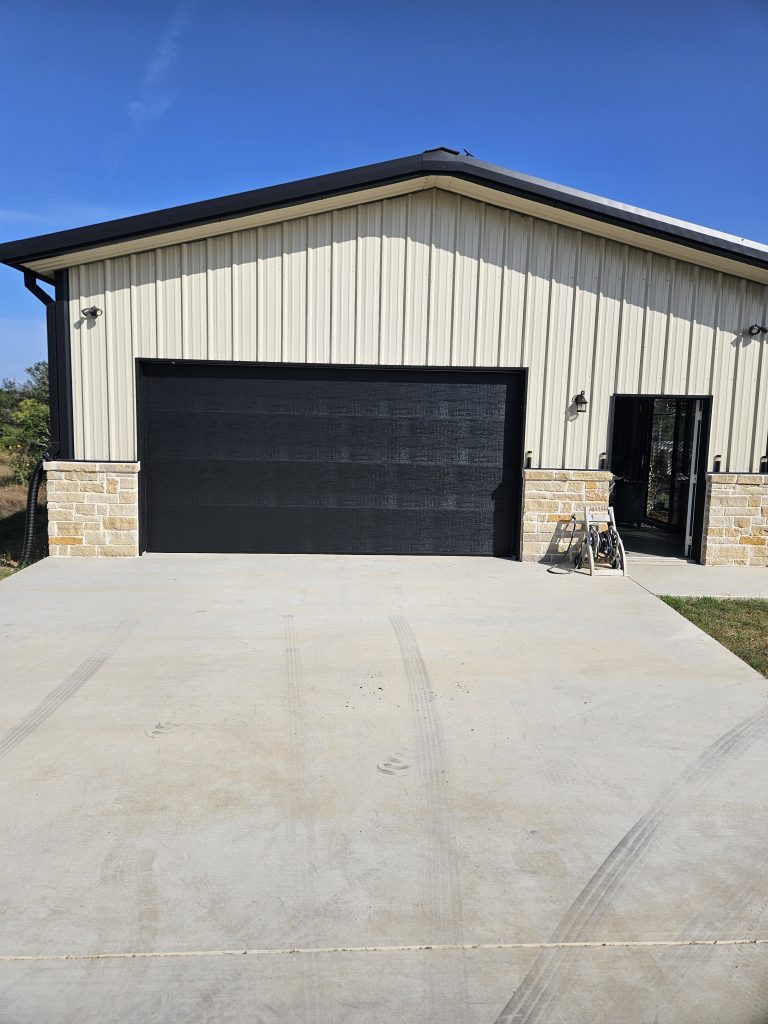
Direct Answer: Overhead garage doors on pole barns and metal workshops require specialized high-lift track configurations, reinforced jamb framing, and commercial-grade hardware to handle large spans and wind loads. Proper maintenance involves regular visual inspections of track alignment, roller lubrication, and seal replacement, while spring and cable service must always be handled by certified technicians.
SAFETY WARNING: Metal building overhead doors use heavy-gauge panels and extreme high-tension commercial torsion spring assemblies. Never attempt to loosen, adjust, or replace torsion springs, bottom brackets, or lift cables yourself. A sudden release of tension can cause catastrophic failure, severe lacerations, crush injuries, or death. Always schedule a certified professional technician for repairs.
Unique Challenges of Overhead Doors in Metal Buildings
Metal buildings and post-frame pole barns experience unique thermal expansion, vibration, and structural settling compared to traditional wood-framed homes. Installing an oversized black or dark-tone overhead door, as pictured, creates distinct aesthetic appeal while demanding precise engineering to ensure smooth, safe operation.
1. High-Lift and Vertical-Lift Track Configurations
Metal workshops typically have high ceilings to accommodate large machinery, RVs, or lifts. High-lift or full vertical-lift track assemblies keep the door hugging the wall until it nears the ceiling, preserving critical overhead space. These systems require precise cable drum sizing and calibrated torsion springs to counterbalance the door through varied transition curves.
2. Thermal Performance and Wind-Load Resistance
Large door openings represent a significant surface area vulnerable to heavy winds and temperature transfer. Heavy-duty polyurethane or polystyrene insulated sandwich panels (R-12 to R-18+) prevent extreme temperature swings inside the workshop, while integrated structural struts prevent door deflection during severe wind events.
Common Pole Barn Door Issues: Causes vs. Solutions
| Symptom / Issue | Underlying Cause | Recommended Professional Solution |
|---|---|---|
| Door jerks, binds, or drags along tracks | Building settling or misaligned vertical track brackets | Technician laser-aligns and secures tracks to steel sub-framing. |
| Loud popping or squealing during travel | Worn ball-bearing rollers or dry hinge pivot points | Lubricate hinges with non-silicone garage lube; replace worn steel rollers with heavy-duty nylon. |
| Door feels excessively heavy or opener strains | Loss of torsion spring tension or broken spring coil | Professional spring replacement and precise counterbalance balancing. |
| Drafts and light visible around perimeter | Worn jamb seals or uneven concrete approach slab | Install heavy-duty dual-fin vinyl perimeter weatherstripping and thick bottom astragal. |
Safe Homeowner Maintenance Checklist
- Visual Inspection: Monthly, check for frayed lift cables, loose track fasteners, or bent hinges.
- Track Cleaning: Wipe down track channels using a dry microfiber cloth to remove dirt, dust, and debris. Never grease the inside of the tracks.
- Hardware Lubrication: Apply a specialized garage door lubricant to roller bearings and hinge pivot pins every six months.
- Auto-Reverse Testing: Test the safety sensor eyes by placing a small object in the door’s optical path to verify instant reversal upon closing.
- Weatherstrip Inspection: Inspect the perimeter seal and bottom rubber gasket for cracking, dry rot, or shrinkage.
When to Call a Professional Garage Door Specialist
Because pole barn doors are significantly heavier and taller than standard residential doors, any mechanical failure involves massive kinetic energy. If your door is crooked in the opening, a cable has slipped off the drum, or you suspect a torsion spring failure, immediately disconnect power to the automatic operator and contact a licensed garage door specialist.