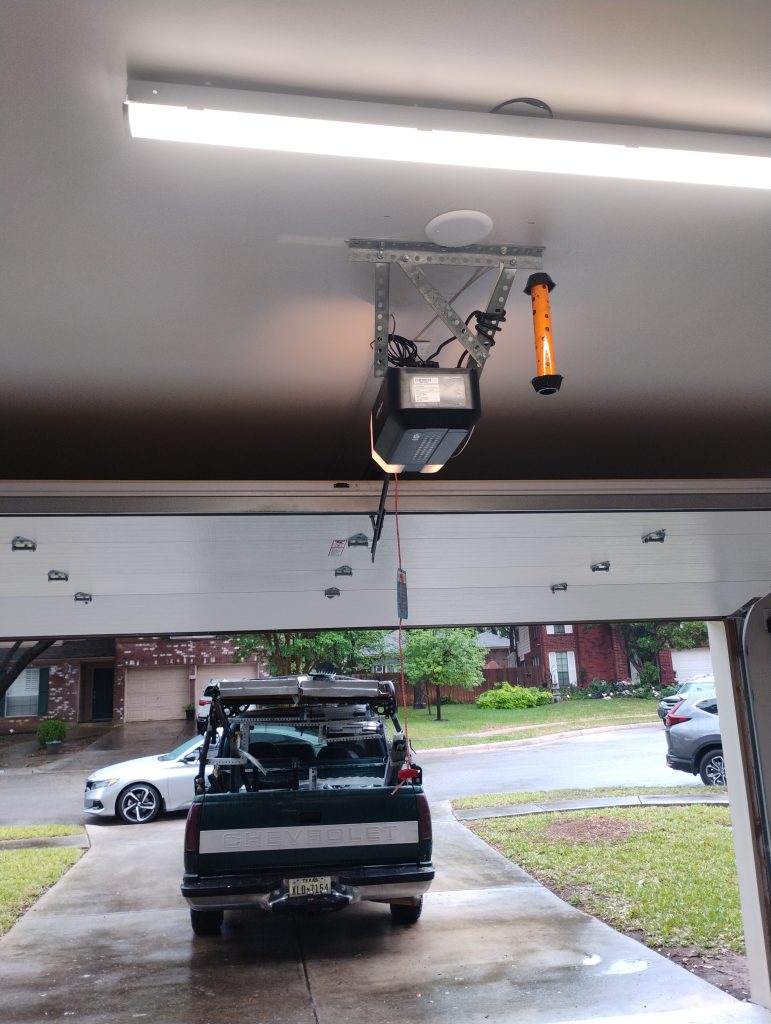
Direct Answer: A garage door opener sways side to side during operation primarily due to starting motor torque acting against unbraced vertical hanging brackets. Without a diagonal sway brace to form structural triangulation, initial rotational inertia flexes the hanger straps, stressing internal drive gears and loosening overhead fasteners over time.
Safety Warning: Never attempt adjustments to the garage door assembly while under load. Overhead door systems utilize high-tension torsion springs, heavy panels, and extreme counterbalance forces capable of causing severe injury. Never attempt DIY repairs on springs, cables, or structural mounting points; always consult a certified garage door professional.
Understanding Motor Torque and Lateral Opener Sway
When an overhead garage door opener initiates a cycle, the electric motor generates significant instantaneous rotational torque to overcome the door’s resting inertia. If the motor housing is suspended from the ceiling solely by vertical drop straps—even heavy-gauge perforated angle iron—that rotational force converts directly into lateral movement. This results in the motor unit wobbling, shaking, or swaying side to side as the trolley begins to pull or push the door arm.
The Importance of Diagonal Triangulation (Sway Bracing)
In quality overhead installations, technicians create a rigid three-dimensional support structure using diagonal cross-bracing, commonly referred to as a “kicker” or sway brace. Geometric triangles are inherently rigid; rectangles are not. A vertical drop hanging from horizontal ceiling angle iron forms a flexible parallelogram that naturally deflects under lateral force. Installing a diagonal brace connecting the vertical hanger to the ceiling bracket transfers horizontal torque directly into the structural framing of the home, eliminating lateral deflection.
Causes vs. Solutions for Opener Vibration and Sway
| Underlying Cause | Operational Impact | Professional Solution |
|---|---|---|
| Lack of Diagonal Bracing | Unit twists and sways laterally on startup and shutdown cycles. | Fabricate and bolt a diagonal slotted angle iron brace from the ceiling mount to the drop hanger. |
| Loose Lag Bolts in Joists | The entire mounting bracket shifts, risking structural detachment. | Tighten or relocate lag screws into solid structural ceiling joists or install span backing boards. |
| Imbalanced Garage Door | Excessive dead weight forces the motor to exert abnormal pulling force. | Professionally rebalance the torsion spring counterbalance assembly to achieve zero net weight. |
| Binding Rail or Trolley | The drive carriage catches, creating jerking motions along the rail. | Inspect rail alignment, lubricate trolley glide surfaces, and recalibrate travel limit stops. |
Troubleshooting Opener Stability: Visual Inspection Checklist
If your garage door motor exhibits noticeable side-to-side movement, perform the following visual checks to pinpoint the origin of the movement:
- Watch the Initial Startup: Stand safely to the side and trigger the door. If the motor twists the exact moment the drive sprocket turns, the bracket requires diagonal triangulation.
- Check Ceiling Fastener Integrity: Look at the lag bolts holding the angle iron against the ceiling drywall. If drywall dust is falling or bolts show play, the anchors have loosened from structural framing.
- Examine the Rail Connection: Verify that the horizontal opener rail is rigidly fastened to the motor housing chassis without loose bolts or cracked mounting tabs.
- Observe Door Resistance: If the door shudders along the curved track, the opener may be absorbing vibrations originating from worn door rollers or dry hinges.
When to Call a Professional Garage Door Technician
While tightening accessible bracket bolts can sometimes reduce minor rattles, chronic motor sway often masks underlying door balance issues. If the door feels heavy when manually disconnected, or if the opener bracket has pulled away from ceiling joists, schedule a service appointment immediately. Certified technicians possess the specialized tools and training to reinforce overhead framing, balance heavy counterbalance assemblies, and preserve the lifespan of your opener safely.