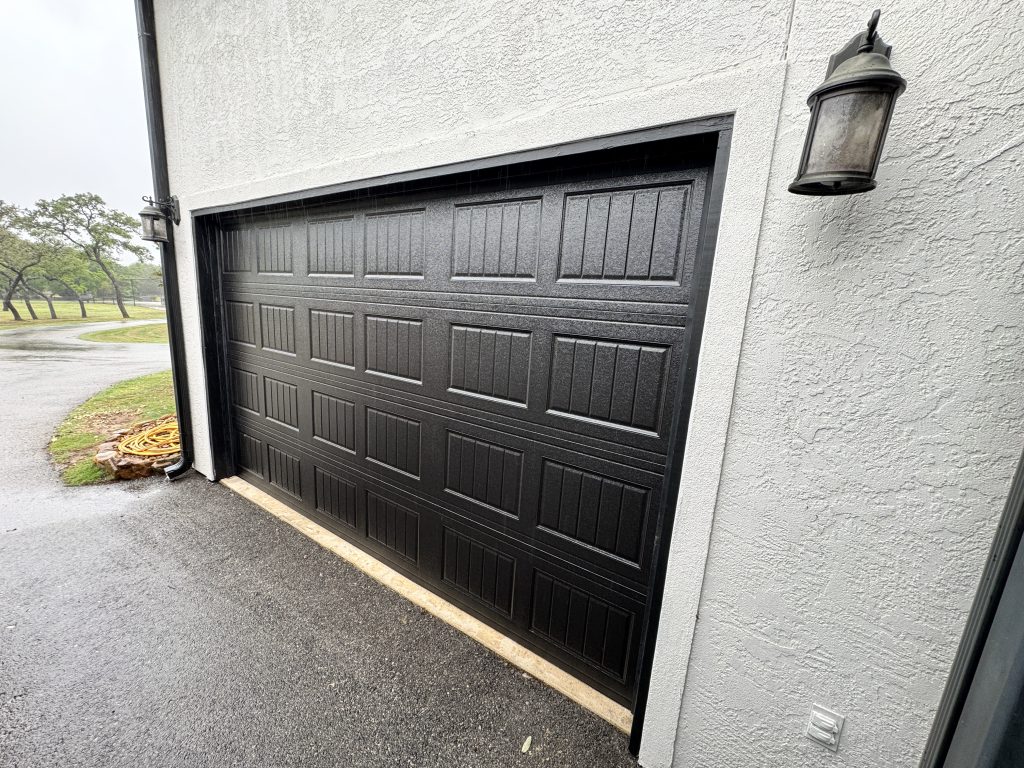
Direct Answer: Water typically seeps past the lower corners of your garage door because exterior runoff pools near adjacent downspouts, exterior perimeter stop molding stops slightly short of the driveway, or corner seal pads are absent or crushed. Even with an intact bottom rubber gasket, wind-driven surface runoff easily bypasses the bottom outer edges.
Safety Warning: Never loosen, adjust, or remove the bottom corner brackets, fasteners, or lower lift cables on your garage door. These components remain under severe mechanical tension from the counterbalanced torsion spring system. Releasing these brackets can cause violent cable backlash, severe lacerations, or catastrophic door collapse. Always hire a certified garage door professional for adjustments involving bottom fixtures.
Understanding Corner Leaks During Heavy Rainfall
Sectional steel garage doors provide exceptional structural durability and curb appeal, but the transition area where the vertical jamb meets the concrete threshold is often vulnerable to driving rain. As seen on homes where roof drainage downspouts discharge directly alongside the garage portal, surface water collects on the apron faster than the pitch of the driveway can carry it away.
Standard vinyl jamb seals run vertically along the outer door casing to deflect wind and precipitation, while a flexible U-shaped rubber astragal seals the door to the concrete apron. However, the precise intersection at the bottom corners creates a micro-gap where hydrostatic pressure and wind forces push standing water past the perimeter.
Common Causes vs. Solutions
| Cause of Corner Water Seepage | Operational Symptom | Professional or Homeowner Solution |
|---|---|---|
| Nearby Downspout Runoff | Puddles accumulating right outside the track corner after roof downpour. | Install downspout extensions or subterranean French drains diverting water 5+ feet away from the jamb. |
| Missing Jamb Corner Wedge Pads | Daylight visible in lower 1-inch corners; water trickles behind vertical tracks. | Install dense neoprene corner draft blocks at the bottom of the jamb stop molding. |
| Shrunk or Hardened Perimeter Seal | Vinyl weatherstripping pulls away or curls outward near wet asphalt. | Replace aging perimeter weatherstripping with flexible, dual-fin cold-weather seals. |
| Threshold Negative Pitch | Water rolls backward toward the interior rather than draining toward driveway. | Install an aluminum or rubber threshold barrier strip bonded to the concrete floor. |
Troubleshooting Checklist for Garage Door Water Leaks
Inspect the perimeter of your closed garage door during rainfall to pinpoint where moisture breaches the barrier:
- Check Downspout Direction: Verify whether rainwater drains onto the apron or within three feet of the structural jamb post.
- Conduct the Daylight Test: Stand inside the dark garage during daylight hours and look closely at the bottom left and right corners. Any daylight indicates a path for wind-driven moisture.
- Inspect the Perimeter Stop Flap: Ensure the vinyl exterior flap makes continuous, light contact with the exterior door face without crimping or curling backward.
- Examine the Bottom Astragal Ends: Check if the bottom rubber seal has shrunk inward, exposing several inches of bare metal retainer at either corner.
- Assess Track Clearance: Confirm that door vertical tracks sit safely above moisture levels; if water pools constantly around steel track bases, corrosion will quickly follow.
When to Call a Professional
If water infiltration requires realigning door panels, resetting track level, adjusting down-force travel limits on your electric operator, or modifying bottom brackets to seal flush against the apron, always schedule a licensed garage door technician. Adjusting tension-bearing assemblies without professional equipment introduces extreme hazards to your home and personal safety.