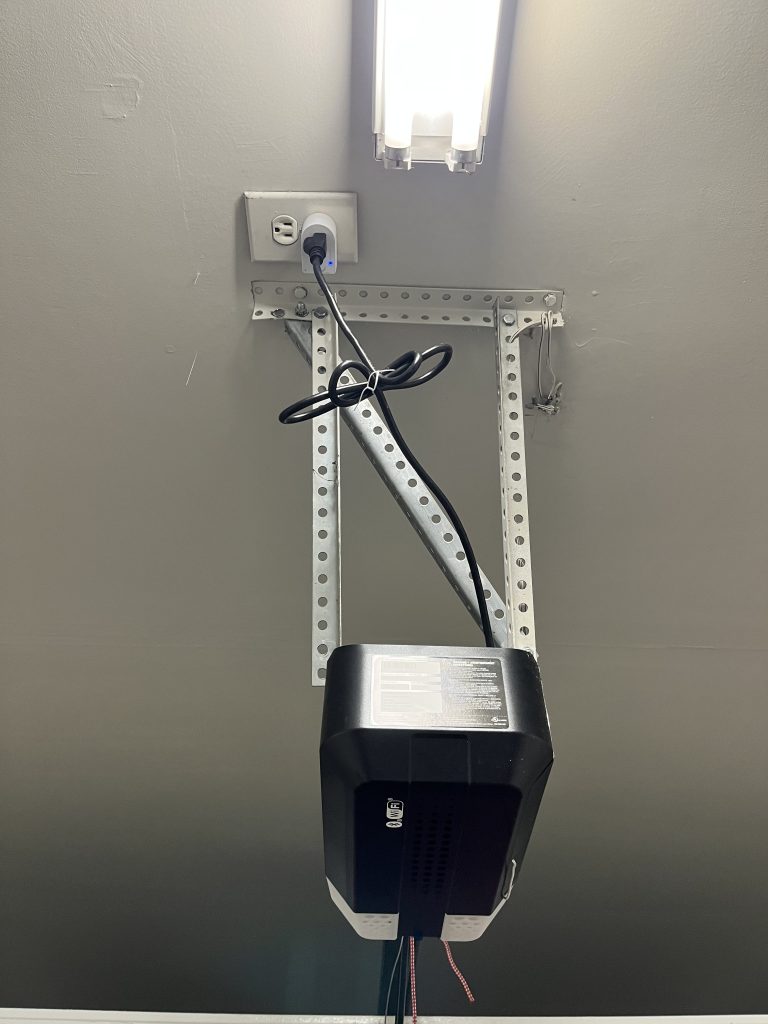
Direct Answer: A garage door opener motor sways or twists during operation primarily due to a lack of triangular sway bracing on its slotted angle iron ceiling brackets or loose lag bolts in the ceiling framing. As the motor engages, drive rail torque causes unbraced vertical hangers to flex side-to-side, which can damage the rail, sprocket, and motor casing.
Safety Warning: Disconnect power to the opener before inspecting overhead brackets or tightening hardware. Never attempt to adjust, repair, or balance the garage door’s high-tension counterbalance springs or lift cables yourself. Overhead springs store extreme mechanical tension that can cause severe injury or property damage if mishandled.
Understanding Opener Torque and Overhead Drop Brackets
Modern residential garage door openers use DC or AC motors that generate significant rotational torque to push and pull heavy door panels along horizontal tracks. When a trolley begins moving a 150- to 400-pound door assembly, that force transfers directly backward through the drive rail and into the motor chassis.
To keep the opener stationary, technicians hang the motor head using perforated slotted steel angle iron anchored into structural ceiling joists. If this drop assembly only consists of straight vertical brackets, the structure forms a weak rectangle with no lateral shear resistance. Over time, motor vibration and starting torque cause the angle iron to flex, causing visible wobbling and eventual metal fatigue.
The Critical Role of Triangular Sway Bracing
As demonstrated in professional overhead installations, rigid support requires triangulation. A diagonal cross-brace—running from the bottom corner of the motor bracket to the opposite top corner at the ceiling—converts the mount from a flexible hinge into a rigid triangle. Without this diagonal support (often omitted during rushed or DIY installations), the motor will twist every time the door starts or stops, stressing the internal nylon gears and drive belt or chain.
Fastener Loosening and Framing Attachment Issues
Overhead motor hangers must be anchored directly into solid wood ceiling joists or rafters using 5/16-inch lag screws that penetrate at least 1.5 inches into solid lumber. Fasteners driven solely into drywall, hollow metal studs, or bridging blocks will work loose under cyclical vibration. As fasteners back out, lateral sway increases dramatically, creating a rattling or clunking noise overhead.
Causes vs. Solutions for Opener Sway
| Underlying Cause | Operational Symptom | Corrective Action |
|---|---|---|
| Missing diagonal cross-brace | Motor pivots or swings side-to-side when trolley moves | Install a diagonal piece of punched angle iron between top and bottom brackets to form a rigid triangle. |
| Loose bracket assembly bolts | Clicking, rattling, or shifting of motor frame | Tighten all 3/8-inch bolts, lock washers, and serrated flange nuts securing the motor and angle brackets. |
| Lag screws missing ceiling framing | Ceiling bracket visibly separates or pulls down from drywall | Locate center of solid ceiling joists with a stud finder and reset heavy-duty lag screws directly into wood. |
| Door out of balance or heavy | Opener jerks violently upward at start of lift cycle | Have a trained technician test and rebalance the high-tension counterbalance spring system. |
Troubleshooting Opener Bracket Movement
- Inspect the Bracket Geometry: Stand below the opener and observe its profile. If the hanging drop only has vertical down-legs and no diagonal strut, structural flex is inevitable.
- Check Mechanical Bolt Snugness: Unplug the unit and manually wiggle the motor casing. If you detect play between the individual angle iron pieces, tighten the assembly bolts using two wrenches to compress the lock washers.
- Assess Ceiling Anchor Points: Examine where the horizontal header angle secures to the ceiling. Ensure the lag screws are seated flush against the metal bracket without cracking or crushing surrounding drywall.
- Perform a Door Balance Check: Pull the red emergency release cord while the door is closed, then lift the door manually. A properly balanced door should lift easily with one hand and stay put at mid-travel (roughly 3 to 4 feet off the floor). If the door feels excessively heavy, the opener motor is swaying because it is being forced to deadlift weight that worn counterbalance springs should be carrying.
When to Call a Professional Technician
While tightening loose hanger bolts on an existing bracket is a straightforward maintenance task, resolving improper drop mounting, reinforcing vaulted ceiling spans, or rectifying heavy door binding requires professional tools and expertise. If your door fails the manual balance test, never attempt to adjust the springs or cables yourself—contact an experienced garage door professional to rebalance the door and ensure your overhead motor is safely secured.