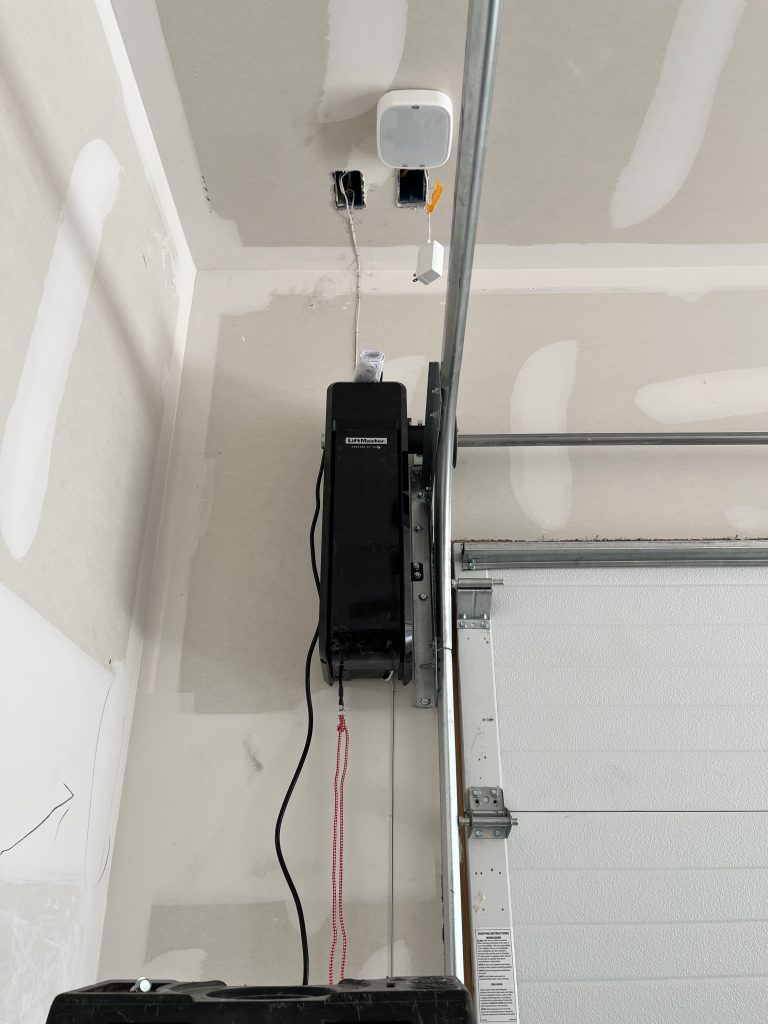
Direct Answer: A wall-mount jackshaft garage door opener connects directly to your door’s torsion bar beside the opening, eliminating ceiling rails and overhead motor boxes. It is ideal for garages with high ceilings, cathedral angles, or limited vertical clearance, freeing overhead storage space while delivering whisper-quiet, ultra-reliable direct-drive performance.
Safety Warning: Wall-mounted operators connect directly to your garage door’s live torsion tube assembly. Because torsion springs and counterbalance cables remain under extreme, dangerous mechanical tension, attempting DIY modifications, adjustments, or installations can result in severe personal injury or property damage. Always hire a certified overhead door professional for torsion system work.
Understanding Direct-Drive Wall-Mount Openers
Traditional overhead garage door openers utilize a motorized trolley suspended from the ceiling that pushes and pulls the top door panel along an overhead rail. In contrast, a wall-mount (jackshaft) operator mounts directly to the drywall or framing next to the vertical track, coupling directly with the door’s torsion shaft.
When activated, the internal high-torque DC motor rotates the solid or tubular torsion bar, spinning the cable drums to effortlessly raise or lower the door panels without the vibration, noise, or clutter of overhead metal tracks.
When Should You Choose a Jackshaft Opener?
While overhead trolley operators remain common, side-mount direct-drive units offer unique architectural and mechanical advantages:
- High-Lift and Cathedral Ceilings: High ceilings require costly overhead drop-brackets for standard openers. Jackshaft units eliminate the drop-down hardware completely.
- Maximum Overhead Storage: Without a central rail, ceiling space is completely unobstructed for overhead racks, car lifts, or oversized vehicle parking.
- Ultra-Quiet Operation: Direct drive eliminates the chain/belt vibration transferring through ceiling joists into living areas above.
- Integrated Security: Most modern wall-mount units feature automatic power deadbolts that engage whenever the door closes, physically locking the door to the track.
Jackshaft Opener Considerations vs. Traditional Trolley Openers
| Feature / Issue | Wall-Mount Jackshaft Opener | Ceiling-Mounted Trolley Opener |
|---|---|---|
| Ceiling Clearance | 100% open; zero ceiling intrusion. | Occupies 8 to 12 feet of central ceiling space. |
| Spring Compatibility | Requires standard or high-lift torsion springs. | Works with torsion and extension spring setups. |
| Cable Tension Monitor | Requires tension monitor to prevent slack cable unraveling. | Not required; trolley holds top section securely. |
| Side Room Clearance | Requires 7–9 inches of clear wall space beside track. | Requires minimal side room clearance. |
Troubleshooting and Maintenance Checklist for Side-Mount Units
To ensure smooth performance from your direct-drive opener, regular visual inspections are essential:
- Check Cable Tension: Ensure the safety cable tension monitor switch has proper contact with the counterbalance lift cable.
- Inspect Door Balance: Disengage the emergency disconnect handle and manually lift the door halfway; it should stay in place without drifting up or slamming down.
- Test the Automatic Deadbolt: Confirm the side-mounted electronic deadbolt cleanly slides into the track cutout when the door completes its downward cycle.
- Verify Power & Battery Backup: Confirm the outlet has power and the backup battery status light indicates full charge.