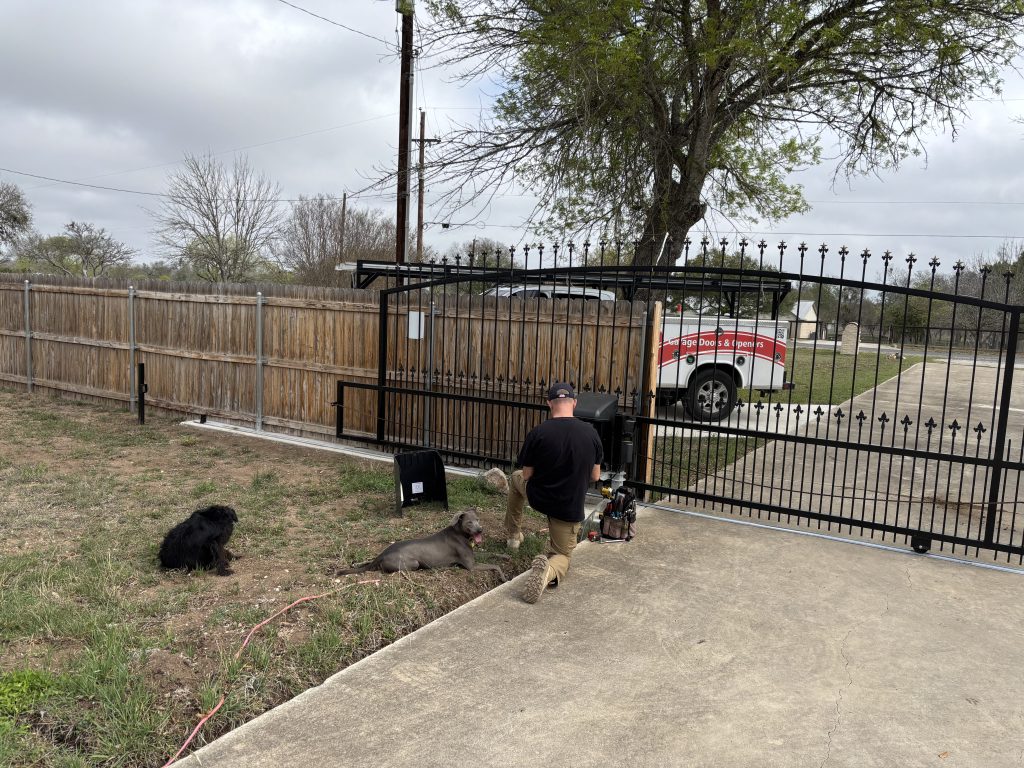
Direct Answer: An automatic sliding driveway gate typically stops halfway or reverses unexpectedly due to misaligned safety photo-eyes, physical obstructions or dirt along the ground track, worn guide rollers, or miscalibrated operator force limits. When the motor encounters mechanical resistance or broken safety beams, it reverses travel immediately as an anti-entrapment safety precaution.
SAFETY WARNING: Automatic driveway gates operate with high-torque gear-reduction motors, high-voltage wiring, and heavy sliding steel frames capable of causing severe crush injuries or entrapment. Never attempt to adjust internal operator electronics, motor clutches, or structurally realign heavy gate tracks without professional tools and certified technician training.
Understanding Sliding Gate Auto-Reverse Mechanisms
Modern driveway gate operators comply with rigorous UL 325 safety standards. These guidelines require gate motors to halt and reverse when an obstruction is detected either visually (via optical safety sensors) or mechanically (via internal force-sensing current limits). While this prevents vehicle damage and severe personal injury, minor ground settling, debris, or electrical faults can fool the operator into believing an obstruction exists.
Common Causes vs. Professional Solutions
Pinpointing why a slide gate stalls mid-cycle requires checking both electronic sensor feedback and structural rolling mechanics.
| Symptom / Cause | Underlying Issue | Recommended Solution |
|---|---|---|
| Gate stops at the exact same spot every cycle | Debris, concrete settlement, or a bent V-track pinching the bottom rollers. | Clear track debris; call a technician to level and anchor displaced track sections. |
| Gate starts moving then reverses within 2 seconds | Misaligned, dirty, or sun-blinded optical safety photo-eyes. | Clean sensor lenses, adjust infrared alignment, or install sun-hoods. |
| Motor hums and strains before shutting down | Internal drive chain binding, dry roller bearings, or failing start capacitor. | Lubricate guide assemblies and have a specialist inspect drive gears and electrical controls. |
| Gate reverses during high wind or cold weather | Motor sensitivity/force threshold set too low for weather resistance. | Have a qualified technician recalibrate electronic torque and limit settings safely. |
Homeowner Troubleshooting & Visual Inspection Checklist
Before scheduling a service call, you can safely perform several basic inspections without disassembling dangerous electrical or mechanical components:
- Inspect the Ground Track: Check the entire length of the metal V-track or pipe track for embedded gravel, compacted soil, ice, or fallen sticks that block bottom roller wheels.
- Examine Photo-Eye Safety Beams: Ensure the optical lenses on both posts are clean, free of cobwebs or insect nests, and that the LED indicator lights show a solid, unblocked alignment beam.
- Test Manual Disconnect: With the operator powered off and manually disengaged, gently push the gate along the track by hand. If it binds, grinds, or catches, the issue is mechanical alignment or bearing wear rather than an electrical motor glitch.
- Check Guide Rollers and Bracket Alignment: Ensure top guide rollers hold the gate strictly upright without pinching the frame or causing friction against top containment brackets.
Why Professional Gate Operator Service Is Crucial
Driveway gate operators utilize specialized logic boards, solar charging regulators, high-amperage relays, and adjustable safety clutches. Incorrectly increasing motor force limits to bypass mechanical binding can burn out the electric motor or create a hazardous crush hazard. A licensed gate technician will precisely balance physical track level, tune travel limit cams, and verify proper entrapment protection to ensure seamless and safe operation.