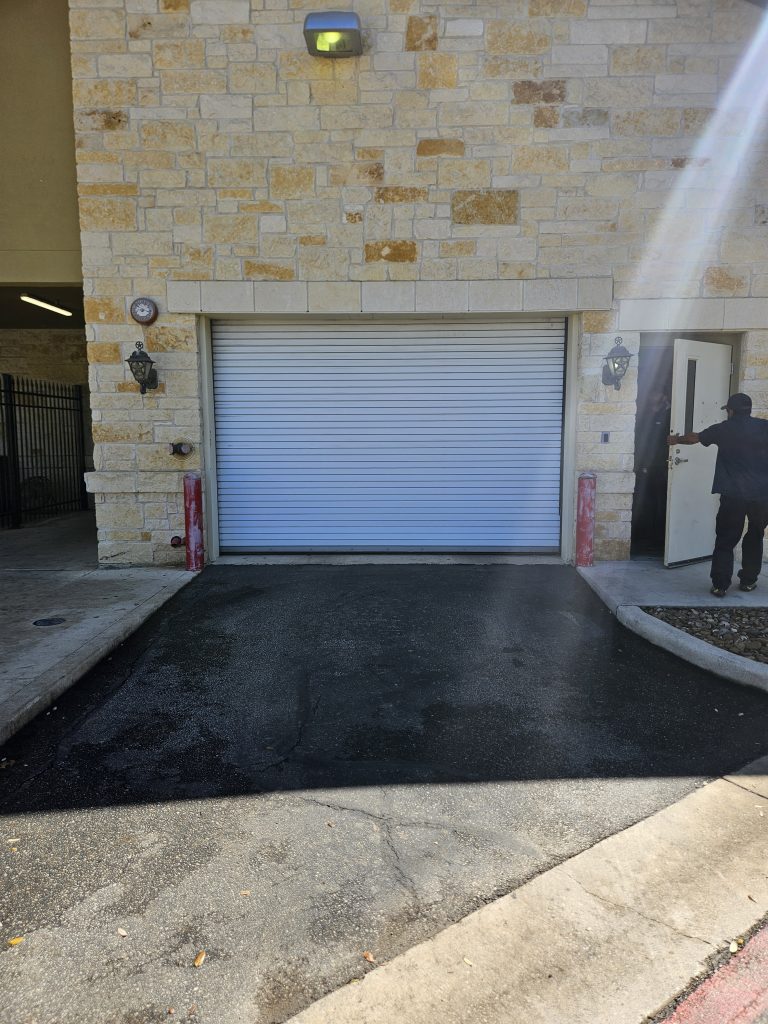
Direct Answer: A commercial roll-up garage door gets stuck or fails to open due to debris or damage in the side guides, misaligned track channels, damaged interlocking curtain slats, or broken internal counterbalance springs within the barrel. Because internal torsion mechanisms carry extreme torque, repairs must be completed by a certified commercial garage door specialist.
SAFETY WARNING: Commercial roll-up doors utilize high-tension torsion spring assemblies enclosed inside an overhead barrel. Attempting to disassemble, wind, or force a stuck roll-up door curtain can trigger sudden mechanical release, resulting in catastrophic failure, severe crush injuries, or death. Never attempt DIY repairs on counterbalance mechanisms or curtain tension brackets.
Understanding Commercial Roll-Up Door Operation
Commercial roll-up sheet and coiling steel doors operate by wrapping a continuous curtain of interlocking steel slats or continuous corrugated steel around an overhead pipe shaft barrel assembly. Counterbalance springs inside this barrel counteract the heavy weight of the steel curtain, allowing smooth motorized or manual chain-hoist operation.
Common Causes of Commercial Roll-Up Door Malfunctions
When roll-up doors are installed in high-traffic commercial exterior settings—such as loading bays, trash enclosures, or utility alcoves—they are exposed to vehicle impacts, weather elements, and structural settling. Any slight deflection in the guide channels or internal mechanical failure will prevent the door from rolling evenly.
| Issue | Common Cause | Professional Solution |
|---|---|---|
| Door Binds or Jams in Guide Tracks | Bent guide channels, impact damage, or heavy dirt/debris buildup. | Technician cleans, realigns, and plumbs side guides; replaces damaged track sections. |
| Door Rolls Up Crooked / Unevenly | Broken internal spring, uneven spring tension, or misaligned curtain wind. | Specialist resets curtain alignment and adjusts or replaces barrel torsion springs. |
| Motor Hums But Door Does Not Move | Operator gear wear, locked slide bolts, or sheared drive pin. | Technician inspects internal drive train, clears mechanical interlocks, or replaces operator. |
| Heavy Resistance During Manual Hoist Operation | Spring fatigue or loss of counterbalance tension inside the shaft. | Professional retensioning or complete counterbalance spring assembly overhaul. |
Safe Operational Checklist for Facility Managers
- Inspect Guide Channels: Visually check the vertical steel side tracks for dents, vehicle scrapes, or foreign debris that could pinch the curtain.
- Check Manual Slide Locks: Verify that exterior and interior security slide latches or padlocks are fully disengaged before running electric operators.
- Examine Photo-Eye Sensors: Ensure exterior safety edge sensors and photo-eyes are clean, unobstructed, and properly aligned.
- Listen for Unusual Grinding: Grinding or popping noises near the overhead hood indicate spring or bearing failure within the roll assembly.
- Stop Operation Immediately: If the door becomes cocked at an angle, cease motorized activation instantly to prevent the steel curtain from tearing itself out of the guides.
When to Call a Professional Commercial Technician
Due to the immense weight and stored rotational force in roll-up steel assemblies, mechanical adjustments must always be handled by trained commercial door professionals. A certified technician possesses the specialized winding bars, lifting equipment, and safety gear required to service commercial springs and heavy curtain slats safely.