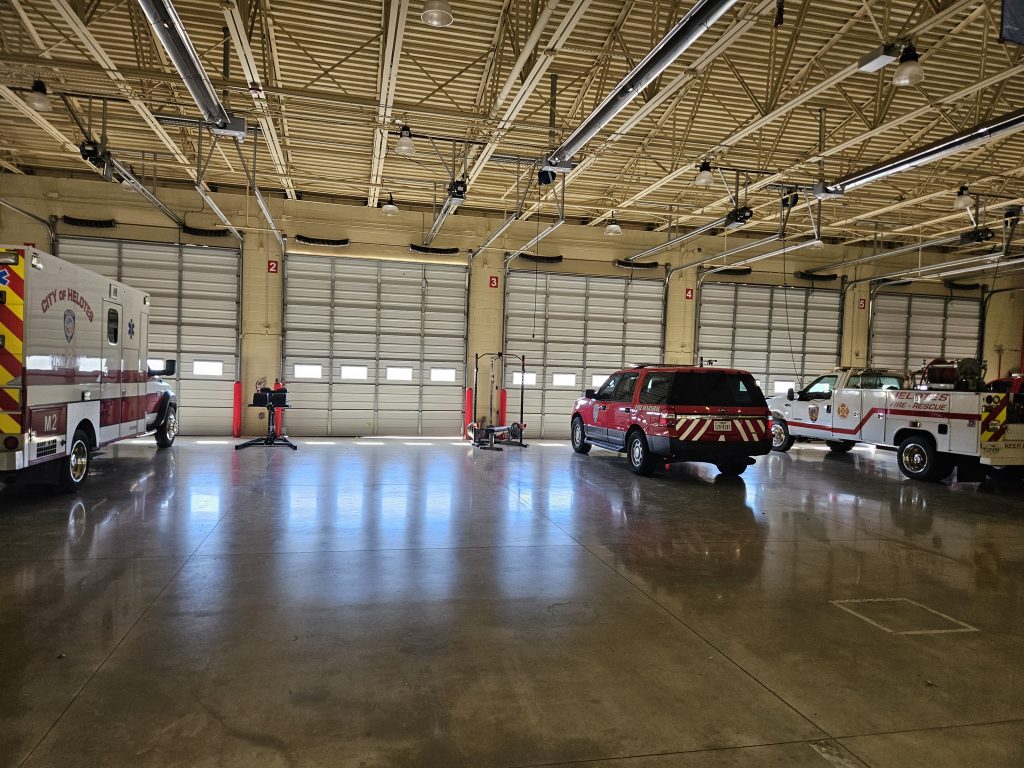
Direct Answer: Heavy commercial sectional overhead doors in emergency and fleet bays operate under immense tension and high cycling demands. Sluggish movement, sticking, or failure typically stems from torsion spring fatigue, bent vertical tracks, worn industrial rollers, or misaligned safety photo-eyes. Certified commercial technicians must perform all mechanical repairs to ensure operational reliability and life safety.
SAFETY WARNING: Commercial overhead doors in apparatus bays weigh several hundred pounds and utilize high-torque commercial torsion assemblies. Never attempt DIY adjustments on commercial springs, cables, bottom brackets, or operators. Mishandling high-tension components can result in sudden structural collapse, catastrophic spring unwinding, severe injury, or death.
Understanding Commercial Overhead Sectional Doors in Fleet Facilities
Apparatus bays—such as those in fire stations, EMS depots, and municipal transit centers—rely on heavy-duty sectional overhead steel doors designed for rapid deployment and continuous daily cycles. Unlike standard residential systems, commercial systems feature full-perimeter weatherstripping, reinforced steel ribbed panels with vision lites, high-lift or full-vertical track configurations, and commercial-grade jackshaft or continuous-duty trolley operators. Because emergency response times depend on prompt, unfailing door operation, any delay or mechanical resistance requires immediate professional diagnosis.
Common Causes vs. Commercial Solutions
| Symptom / Issue | Underlying Cause | Professional Solution |
|---|---|---|
| Slow or stalled opening | Spring cycle exhaustion or failing commercial motor capacitor. | Technician tests balance, replaces paired high-cycle springs, and inspects motor drive. |
| Grinding noise during travel | Worn steel roller bearings or track misalignment. | Replace with sealed industrial bearings and realign heavy-gauge steel tracks. |
| Door reverses automatically | Dirty, misaligned optical sensors or obstructed light curtains. | Clean optical lenses, realign transmitter/receiver heads, and test safety reversal circuits. |
| Door hangs crooked | Uneven cable spooling or snapped high-tension counterbalance cable. | Lock down door safely and install new high-strength galvanized aircraft cables. |
Visual Inspection & Safe Troubleshooting Checklist
Facility managers and bay supervisors can perform safe, non-invasive visual audits to identify potential failures before they compromise emergency response:
- Examine Photo-Eye Sensors & Light Curtains: Ensure alignment lights glow solid green or amber without flickering, and keep lenses free of dust and vehicle exhaust residue.
- Inspect Vertical and High-Lift Tracks: Check for physical impact damage from service vehicles, loose wall-mounting brackets, or metal shavings along track curves.
- Listen for Unusual Acoustic Warnings: Squeaking, scraping, or rapid clicking indicates dry bearing plates, worn roller shafts, or impending gear assembly breakdown.
- Check Counterbalance Cables: Look for frayed strands, kinks, or slack without touching or pulling on the cable lines.
The Importance of High-Cycle Commercial Maintenance
In municipal and industrial facilities, overhead doors undergo hundreds of cycles per week. High-cycle torsion springs (rated for 25,000 to 100,000 cycles) experience metal fatigue over time. Scheduled quarterly maintenance by a licensed commercial garage door specialist ensures safety edges, emergency release mechanisms, counterbalances, and commercial motors remain compliant with UL 325 and OSHA safety standards.