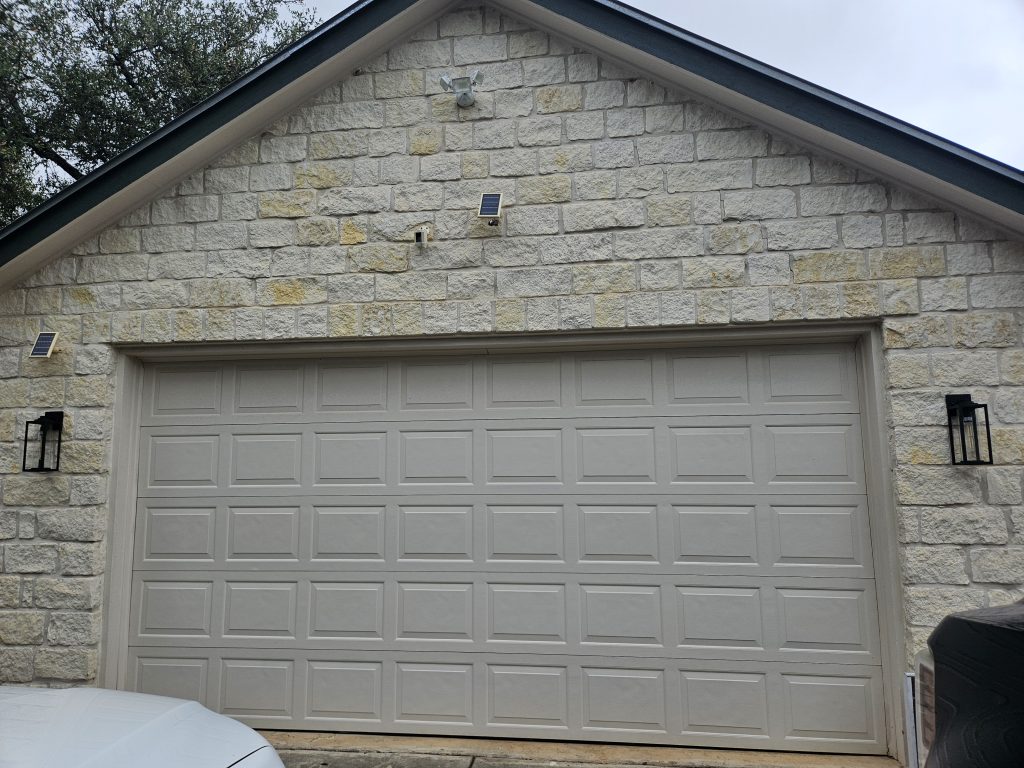
Direct Answer: A sectional garage door sticking or showing uneven gaps against a stone masonry opening typically stems from shifting perimeter jamb seals, out-of-plumb rough stone openings, worn rollers, or misaligned vertical tracks. Correcting these issues requires adjusting track spacing, upgrading to heavy-duty perimeter weatherstripping, and rebalancing the door assembly.
SAFETY WARNING: Garage door systems operate under extreme mechanical tension from torsion or extension springs and carry hundreds of pounds of overhead weight. Never attempt to adjust, loosen, or repair counterbalance springs, bottom brackets, or structural tracks yourself. Mishandling high-tension components can result in severe blunt-force trauma, lacerations, or fatal injuries. Always enlist a licensed garage door technician.
Understanding Garage Door Fitment in Masonry Openings
Stone and masonry facades provide outstanding curb appeal and durability, but they present unique installation challenges for sectional garage doors. Unlike standard wood or composite framing, natural stone openings often feature slight textural variations, uneven mortar lines, and rigid tolerances. When foundation settling or natural thermal expansion occurs, even minor track or roller misalignments can cause the door panels to bind, drag, or leave drafts around the perimeter.
Causes vs. Solutions Comparison
| Root Cause | Symptom | Recommended Professional Solution |
|---|---|---|
| Uneven Stone Jambs / Settling | Visible daylight along the edges; rubbing against trim | Realignment of vertical tracks and installation of wide-profile vinyl perimeter trim. |
| Worn or Seized Rollers | Loud squeaking, jerky travel, or door stopping mid-cycle | Replacement with sealed precision ball-bearing nylon rollers. |
| Imbalanced Spring Tension | Door hangs crooked or feels exceptionally heavy during operation | Professional torsion spring balance test and high-tension recalibration. |
| Damaged Bottom Astragal Seal | Drafts, moisture, and pests entering along the concrete floor | Installation of heavy-duty U-shaped rubber or silicone bottom weatherstripping. |
Diagnostic & Troubleshooting Checklist
Homeowners can safely perform the following visual checks to pinpoint where the door is failing to seal or operate smoothly:
- Inspect the Perimeter Seal: Check whether the vinyl flap seal is cracked, brittle, or pulling away from the stone header and jambs.
- Observe Door Travel: Stand safely inside the garage while the door cycles. Listen for metal-on-stone scraping or groaning sounds indicative of track friction.
- Check Level at Floor Contact: When the door is fully closed, inspect the bottom seal to see if daylight peaks through uneven slab dips.
- Examine Track Clearance: Ensure there is at least 1/2-inch to 3/4-inch uniform clearance between the door face and the jamb trim along the full vertical travel path.
When to Contact a Master Technician
If your garage door is catching on the exterior stone frame, reversing unexpectedly, or failing to seat level, professional service is essential. A trained technician uses specialized alignment gauges to set track setback, recalibrate opener limits, and adjust counterbalance cables safely, ensuring long-lasting weather protection and smooth operation.