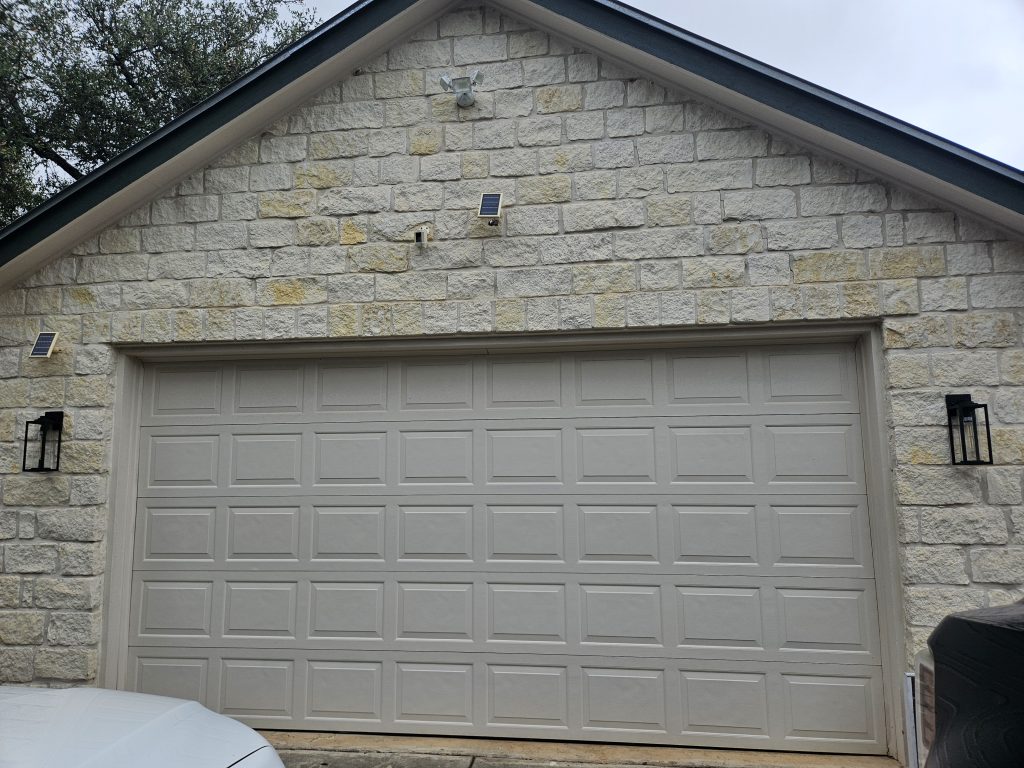
Direct Answer: A double-car raised panel garage door sticks, shudders, or sits unevenly primarily due to unequal torsion spring tension, frayed lift cables, misaligned vertical tracks, or binding perimeter weather seals against the stone jamb. Because 16-foot doors carry significant weight under extreme spring tension, professional calibration is necessary to restore safe, balanced movement.
SAFETY WARNING: Double-wide sectional garage doors weigh between 150 and 300+ pounds and operate under extreme mechanical tension generated by the torsion spring system. Never attempt to adjust, wind, or remove torsion springs, bottom brackets, or lift cables yourself. A sudden release of tension can cause catastrophic failure, severe personal injury, or death. Always hire a certified garage door professional for internal component repairs.
Understanding Double-Wide Sectional Door Mechanics
Residential homes featuring stone or masonry facades typically utilize double-wide (16ft or 18ft) steel raised-panel sectional doors. Because of the broad span, these doors are particularly sensitive to minor track shifts, settling jambs, and natural wear in the counterbalance hardware.
Perimeter Contact and Masonry Openings
In stone installations, the garage jamb is often trimmed with vinyl stop molding to create a weather seal. Over time, temperature changes or foundation settling can cause the door panels to drag against the exterior trim, resulting in groaning sounds or an opener reversing unexpectedly during travel.
Torsion Spring Balance Across Wide Spans
Double doors typically utilize one or two heavy-duty torsion springs mounted on a header shaft above the door. As springs age through thousands of cycles, they lose elasticity at slightly different rates. An imbalance of just a few pounds across a 16-foot span can cause the door to rack, cock sideways in the track, or trigger the opener’s safety reverse mechanism.
Troubleshooting Symptoms on a Raised-Panel Double Door
- Visual Gap at the Floor: One corner touches the concrete slab while the other leaves a gap, indicating cable slippage, a broken spring, or an uneven floor.
- Jerking or Shuddering During Travel: Dry roller bearings, dirty track curves, or pinched vertical tracks can prevent smooth sectional articulation.
- Opener Motor Straining: If your garage door opener hums loudly or pauses midway, the door is out of balance and too heavy for the motorized trolley.
- Scuffing on Exterior Paint: Friction marks on the outer raised panels suggest the door is rubbing against perimeter seals or stone trim.
Causes vs. Solutions
| Observed Issue | Likely Root Cause | Recommended Solution |
|---|---|---|
| Door hangs crooked when opening | Uneven cable tension or broken torsion spring | Professional spring replacement and cable resetting |
| Loud squeaking or binding during movement | Dry steel rollers or track friction | Apply silicone-based garage door lubricant to rollers and hinges (avoid track grease) |
| Drafts and light visible along masonry edge | Worn, cracked, or misaligned perimeter weatherstrip | Adjust or replace exterior vinyl trim seals |
| Door stops and reverses while closing | Blocked optical sensors or excessive travel resistance | Clean sensor lenses; schedule a mechanical balance inspection if clear |
When to Contact a Master Garage Door Technician
Homeowners can safely clean photo-eye sensors, clear debris from tracks, and apply non-greasy lubricant to steel hinges and roller stems. However, if the door fails the manual balance test (becoming too heavy to lift smoothly by hand when disconnected from the opener) or displays slack cables, cease operation immediately and contact a certified garage door technician to prevent motor burnout and structural hazard.