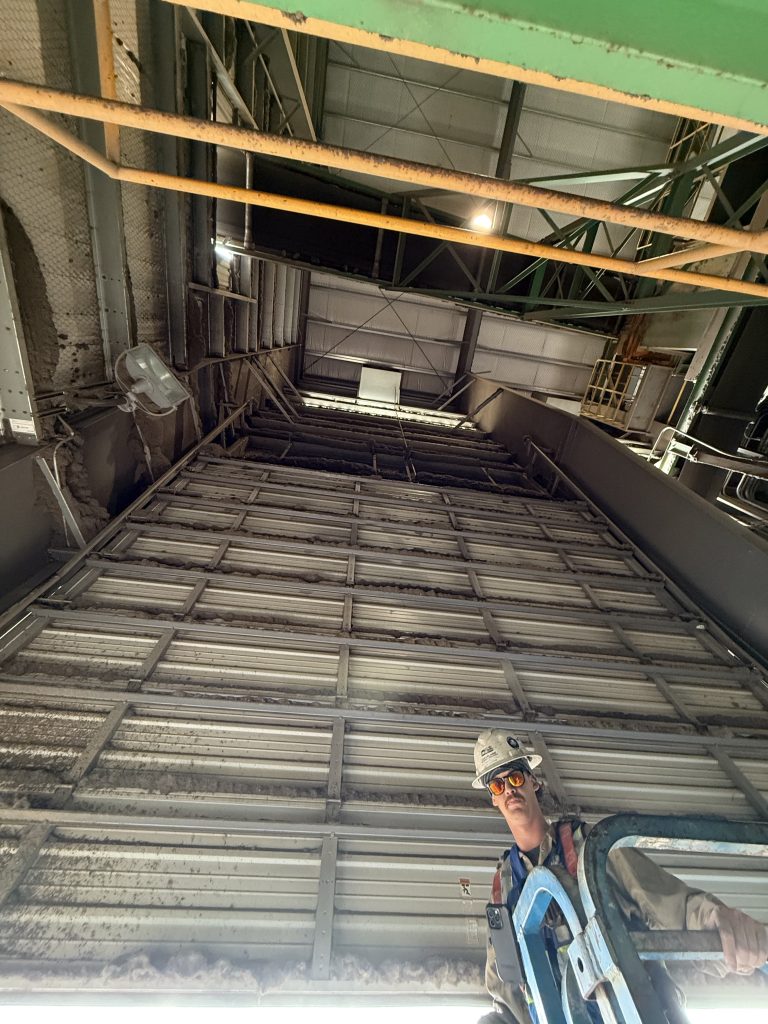
Direct Answer: An industrial vertical-lift overhead door gets stuck or operates unevenly primarily due to guide track misalignment, cable tension imbalance, worn heavy-duty rollers, or drive operator chain failure. Due to the extreme weight of commercial panels and high-tension counterbalance systems, diagnosis and repairs must always be performed by a certified commercial door technician.
SAFETY WARNING: Industrial and commercial vertical-lift doors utilize massive structural panels and high-tension counterbalance assemblies capable of exerting thousands of pounds of force. Never attempt to adjust, repair, or unjam industrial tracks, cables, or springs yourself. Doing so poses severe risks of catastrophic panel collapse, crushing trauma, or fatal injury. Always lock out electrical power and contact a certified professional technician equipped with proper aerial access and rigging gear.
Understanding Industrial Vertical-Lift Door Systems
Unlike standard residential garage doors that curve horizontally into a ceiling, industrial vertical-lift doors travel straight up the wall to maximize vertical clearance in manufacturing plants, power generation facilities, and warehouse loading bays. Because these doors operate in demanding environments exposed to dust, heat, vibration, and continuous cycles, regular structural evaluation is critical to prevent operational failure.
Causes vs. Professional Solutions
| Common Cause | Impact on Operation | Professional Solution |
|---|---|---|
| Guide Track Deflection or Damage | Panels bind within vertical tracks, causing motor overload or jamming. | Laser realignment, structural anchor reinforcement, or track section replacement. |
| Counterbalance Cable Fatigue or Stretch | Door lifts unevenly, cocking panels diagonally and jamming rollers. | Precision cable tension balancing or dual-side high-capacity cable replacement. |
| Heavy-Duty Roller Bearing Failure | Excessive friction, screeching, and uneven panel movement. | Commercial-grade sealed steel roller replacement and track lubrication. |
| Industrial Hoist / Operator Fault | Intermittent lifting, brake slippage, or sudden safety stops. | Operator limit adjustment, brake inspection, and electrical/drive chain servicing. |
Industrial Door Troubleshooting & Inspection Checklist
- Visual Inspection of Tracks: Check for physical bends, debris build-up, or loose anchor bolts along the full vertical travel height using a dedicated aerial lift.
- Examine Cable Integrity: Check both lifting cables for signs of fraying, corrosion, bird-caging, or uneven tension while the door is fully secured.
- Inspect Panel Structural Hinges: Ensure heavy-gauge steel panel hinges and roller carriers are tight and free of structural stress cracks.
- Monitor Motor Drive and Brake Assembly: Verify that the direct-drive or chain-hoist motor operates smoothly without thermal tripping or gear slippage.
- Safety Edge and Sensor Testing: Confirm that bottom pneumatic or optical safety edges immediately reverse travel upon contact with an obstruction.
Why Professional Service is Mandatory for Facility Doors
Large vertical-lift doors require specialized heavy-duty staging equipment, fall protection, and expert knowledge of commercial door physics. Certified technicians ensure that every component—from counterbalance spring drums to emergency descent brakes—meets OSHA and DASMA safety standards, preventing costly plant downtime and catastrophic workplace accidents.