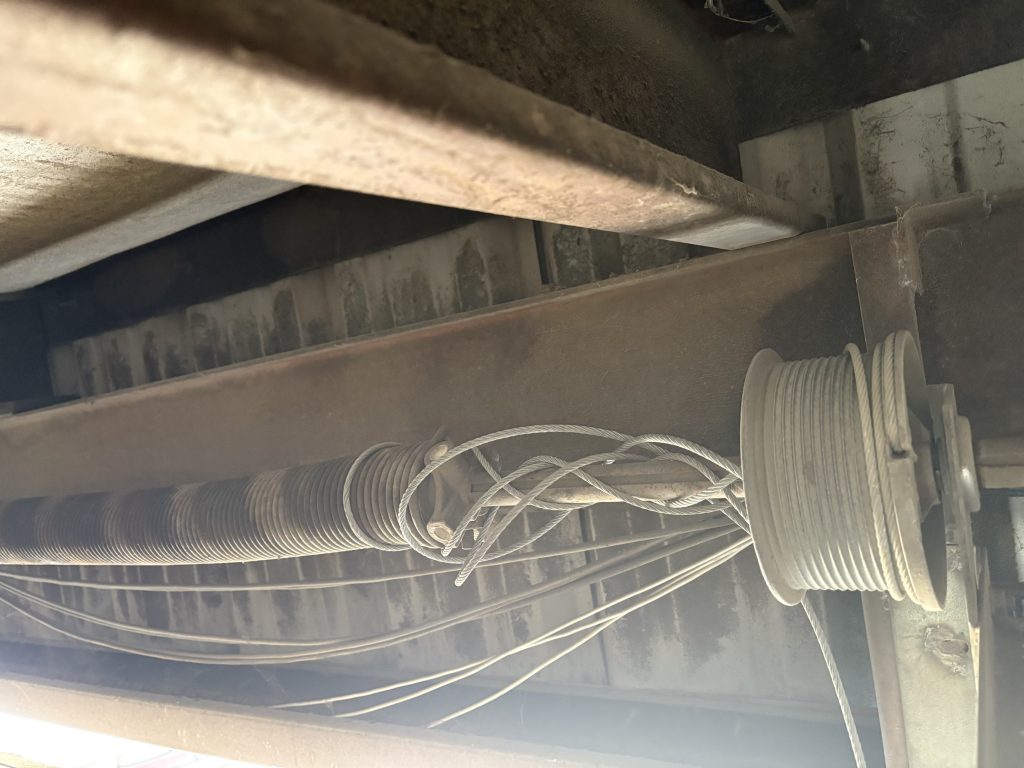
Direct Answer: A garage door cable tangles around the torsion spring shaft when tension is suddenly lost, causing the wire rope to jump off the drum grooves and wrap erratically around the rotating shaft. This issue typically stems from broken springs, hitting an obstruction while closing, worn drum grooves, or incorrect cable tension.
SAFETY WARNING: Never attempt to untangle, cut, or adjust garage door cables or torsion springs yourself. Garage door counterbalance systems operate under extreme, life-threatening tension. Loosening or touching these components without specialized equipment and training can cause violent spring unwinding, panel collapse, severe bodily injury, or death. Always contact a certified garage door technician.
Understanding Thrown and Tangled Torsion Cables
The torsion assembly on your garage door is an intricately balanced mechanical system. Steel lift cables wrap neatly around grooved aluminum drums located at each end of the torsion shaft. When everything works properly, the torsion springs transfer counterbalancing torque through the shaft to the drums, lifting the heavy door evenly. However, if the cable loses tension even for a fraction of a second during operation, it can jump out of the drum’s precision grooves, resulting in the violent ‘bird’s nest’ tangle seen wrapped around the shaft and spring cone.
Common Causes of Tangled Garage Door Cables
When cables slip off the drum and spool around the shaft, it is usually a symptom of an underlying mechanical failure within the door system:
- Door Impact or Obstruction: If the garage door strikes an object on the way down, the door stops while the opener continues turning the shaft, causing slack that lets the cable jump the drum grooves.
- Broken Counterbalance Spring: When one torsion spring snaps, the sudden loss of torque creates an extreme imbalance, instantly slackening the cable on that side.
- Worn or Damaged Cable Drums: Corroded set screws, stripped drum grooves, or loose shaft collars can cause the drum to slip or track the cable improperly.
- Improper Initial Cable Tension: If the cables were installed with uneven tension, one side will become slack before the other during travel.
- Seized Rollers or Track Misalignment: Rollers that bind or jam inside bent tracks hold the door open unevenly, generating slack in the lifting lines.
Causes vs. Professional Solutions
| Root Cause | Visible Indicator | Professional Solution |
|---|---|---|
| Closing on an Obstacle | Cable loose on one side; door crooked in opening. | Lock down door, release spring tension, re-seat cable in drum grooves, and re-torque springs. |
| Broken Torsion Spring | Visible gap in spring coils; heavy door; loose cable. | Replace both torsion springs and install matched, high-cycle aircraft cables. |
| Frayed or Twisted Cable | Broken strands, bird-nesting, or bunched steel wire. | Replace entire cable assembly with heavy-duty galvanized aircraft cable. |
| Slipped or Worn Drum | Drum spinning freely on shaft; grooving damage. | Replace damaged cable drums, align shaft bearings, and torque set screws to spec. |
What to Do If Your Garage Door Cable Jumps the Drum
If you discover your garage door cable wrapped around the torsion spring shaft, take the following precautions immediately:
- Stop Using the Door Immediately: Do not press the wall button or remote. Attempting to power the opener will bend the torsion shaft, tear out brackets, or burn out the opener motor.
- Do Not Pull the Emergency Release Cord: If the door is stuck partially open, pulling the red disconnect cord can cause the heavy door to free-fall instantly without spring support.
- Keep Clear of the Torsion Assembly: Stay away from the overhead torsion area, as tangled cables can snap or release unexpectedly.
- Schedule a Professional Repair: A licensed technician must secure the door with locking pliers, safely unwind remaining spring tension using winding bars, replace damaged cables, and re-tune the door balance.