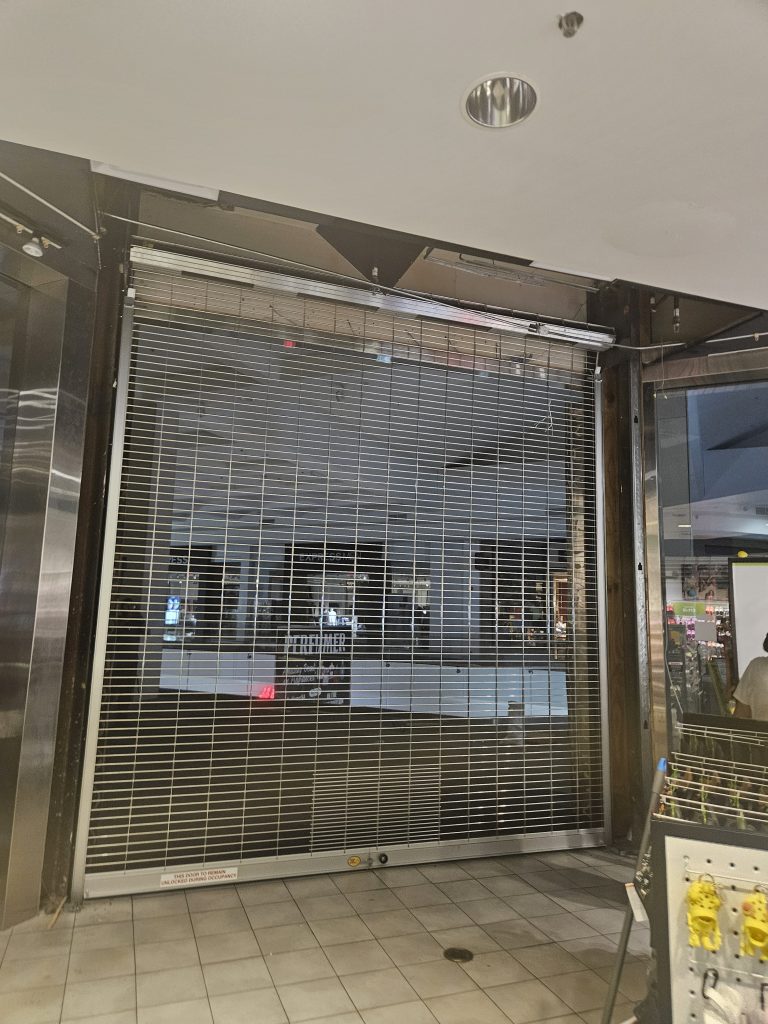
Direct Answer: A commercial roll-up security grille typically gets stuck due to bent side guides, misaligned curtain links, debris in the track channels, or loss of tension in the internal counterbalance barrel assembly. Because commercial grilles utilize high-torque torsion springs enclosed within the pipe shaft, diagnosis and repairs require certified commercial overhead door technicians.
SAFETY WARNING: Commercial security grilles utilize heavy curtain assemblies balanced by high-tension internal torsion springs inside the overhead barrel. Never attempt to adjust, unbolt, or repair the spring counterbalance or motorized drive system yourself. Sudden tension release can cause catastrophic curtain drops resulting in severe blunt-force trauma, lacerations, or fatal injuries. Always contact a certified commercial technician for servicing.
Understanding Commercial Rolling Security Grilles
Rolling security grilles are ubiquitous in shopping centers, airports, and commercial storefronts. Built from aluminum or stainless steel rods interconnected with durable links, they provide after-hours security while maintaining visibility and air circulation. Despite their open appearance, these systems carry substantial weight and operate under precise mechanical tolerances.
Core Components of a Storefront Roll-Up Grille
- Curtain Assembly: Horizontal aluminum rods linked together to form a flexible, secure barrier.
- Guide Tracks (Side Rails): Vertical extruded channels that guide and hold the curtain securely in place.
- Counterbalance Barrel Shaft: The overhead pipe housing heavy-duty torsion springs engineered to offset the door’s total weight.
- Bottom Bar & Locking Mechanism: Structural bottom rail fitted with cylinder slide locks or padlocking provisions.
- Operator or Chain Hoist: Manual push-up, chain gear, or motorized operator system controlling daily open/close cycles.
Common Causes of Commercial Grille Malfunctions
Due to high daily operational cycles, retail security grilles experience unique mechanical wear. Below is an overview of why these doors fail and the professional actions required to restore operation.
| Failure Symptom | Underlying Cause | Professional Solution |
|---|---|---|
| Grille sticks midway during travel | Pinched track channels or broken end-locks | Realign guide rails, clear obstruction, and replace worn end-retention clips. |
| Grille feels excessively heavy to lift | Counterbalance spring fatigue or broken spring | Professionally balance or replace internal barrel torsion springs. |
| Crooked or uneven curtain roll | Tension imbalance across the barrel or bent rod links | Level curtain, replace deformed rods, and recalibrate counterbalance tension. |
| Motor hums but door will not move | Engaged manual slide lock or faulty limit switch | Inspect interlock switches, disengage locks, and adjust motor limits. |
Safe Operational Checks for Business Owners
While mechanical repairs must be left to professionals, store managers can perform basic visual checks to diagnose issues before calling for service:
- Check Side Track Clearances: Ensure merchandise racks, signage, or debris are not obstructing the vertical guide channels.
- Inspect Slide Locks: Verify that bottom bar slide bolts are fully retracted before activating manual or motorized operation.
- Check for Link Deflection: Visually inspect the aluminum rods for bowing or separation that could bind within the side guides.
- Listen for Grinding Sounds: Note any metal-on-metal screeching or rattling coming from the overhead coil box.