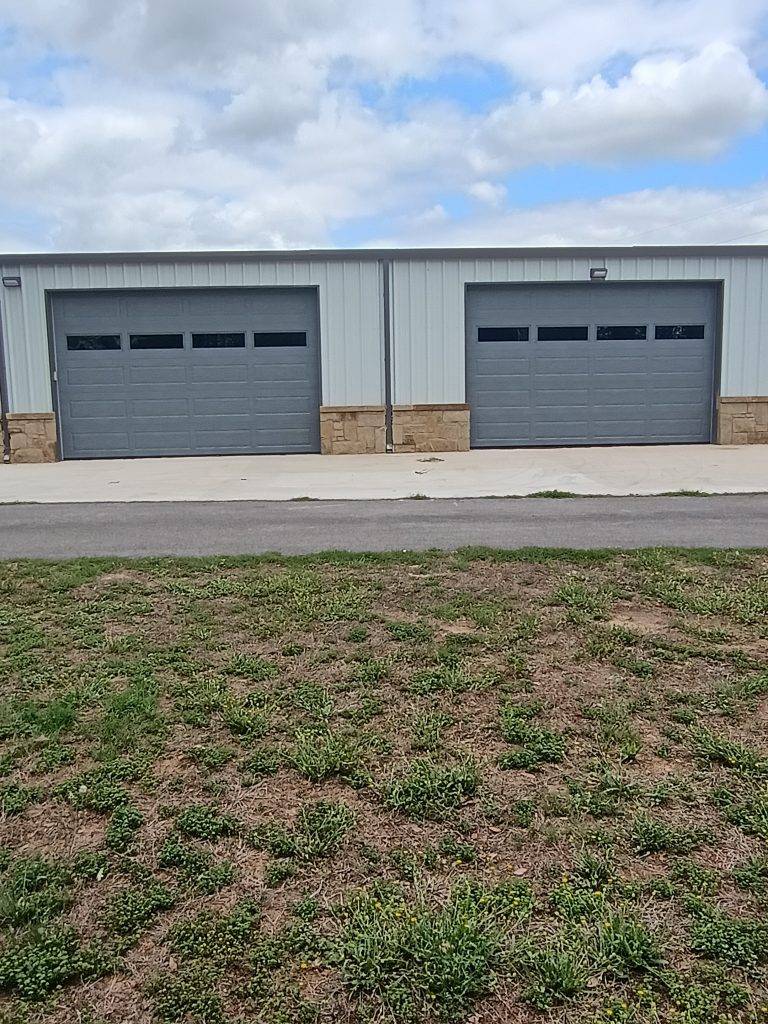
A wide garage door that bows or sags in the center when fully opened overhead typically lacks adequate horizontal reinforcement struts, has unbalanced torsion springs, or is experiencing structural deflection under its own deadweight. Windows in upper panels remove rigid steel core strength, requiring heavy-duty U-bar stiffeners to prevent permanent panel warping.
WARNING: Garage door torsion springs and lift cables are under extreme rotational tension capable of causing catastrophic injury or death. Never attempt to loosen hardware, adjust counterbalance systems, or install reinforcement struts on an energized door assembly. All structural stiffener additions and spring recalibrations must be performed by a certified professional garage door technician.
Understanding Structural Deflection on Wide Overhead Doors
When two-car or commercial-width garage doors (typically 16 to 18 feet wide) transition from vertical to horizontal on the overhead tracks, gravity exerts full downward force across the width of each section. Without the support of a vertical jamb, wide panels naturally experience center deflection. When door designs incorporate long decorative window inserts—such as slim contemporary glass panes across the upper sections—the solid structural integrity of the steel skin and polyurethane foam core is interrupted. This loss of rigidity makes the panel significantly more prone to bowing or sagging in the middle.
The Critical Role of Reinforcement Struts
To counteract center sag and prevent steel fatigue, manufacturers specify steel reinforcement struts (also known as U-bars or hat channels). These galvanized steel channels run the full width of the door panel on the interior side. High-load doors with glass lites require specialized strut placement immediately above or below the window frames to evenly disperse the weight across the vertical end stiles and track rollers.
If an installer omits these struts, or if an undersized strut was fitted to cut costs, the panels will visibly droop in the horizontal tracks. Over time, cycling a bowing door causes metal fatigue, cracked hinge points, popped roller stems, and binding within the horizontal track curve.
Causes vs. Solutions for Garage Door Deflection
| Underlying Cause | Observable Symptom | Professional Solution |
|---|---|---|
| Missing or Undersized Struts | Visible dip or V-shape sag across the middle when resting overhead. | Install engineered 2-1/4″ or 3″ horizontal steel U-bars across affected panels. |
| Weight from Window Inserts | Upper window section binds against the header or flexes noticeably during movement. | Add structural bracing around window stiles and upgrade roller carrier assemblies. |
| Out-of-Level Horizontal Tracks | Door tilts or racks to one side, twisting the middle panels. | Laser-level and recalibrate track hangars, back-hangs, and sway braces. |
| Under-Tensioned Springs | Opener strains to pull the door; panel sections buckle under drawbar pressure. | Recalculate total door deadweight (including struts) and install matched torsion springs. |
Troubleshooting Overhead Door Center Sag
- Inspect Panel Alignment While Open: Stand directly beneath the center of the opened door and sight along the bottom edge of each section. A visible dip greater than 1/2 inch indicates excessive deflection.
- Check for Existing Struts: Verify whether horizontal steel channels are bolted to the interior face of the door, especially across sections containing glass windows.
- Look for Stress Creases: Examine the interior and exterior sheet metal around the hinges and window corners for hairline cracks, paint chipping, or metal buckling.
- Do Not Manually Add Weights or Braces: Bolting aftermarket metal to an existing door adds deadweight, throwing the torsion spring assembly out of balance and creating an immediate safety hazard.