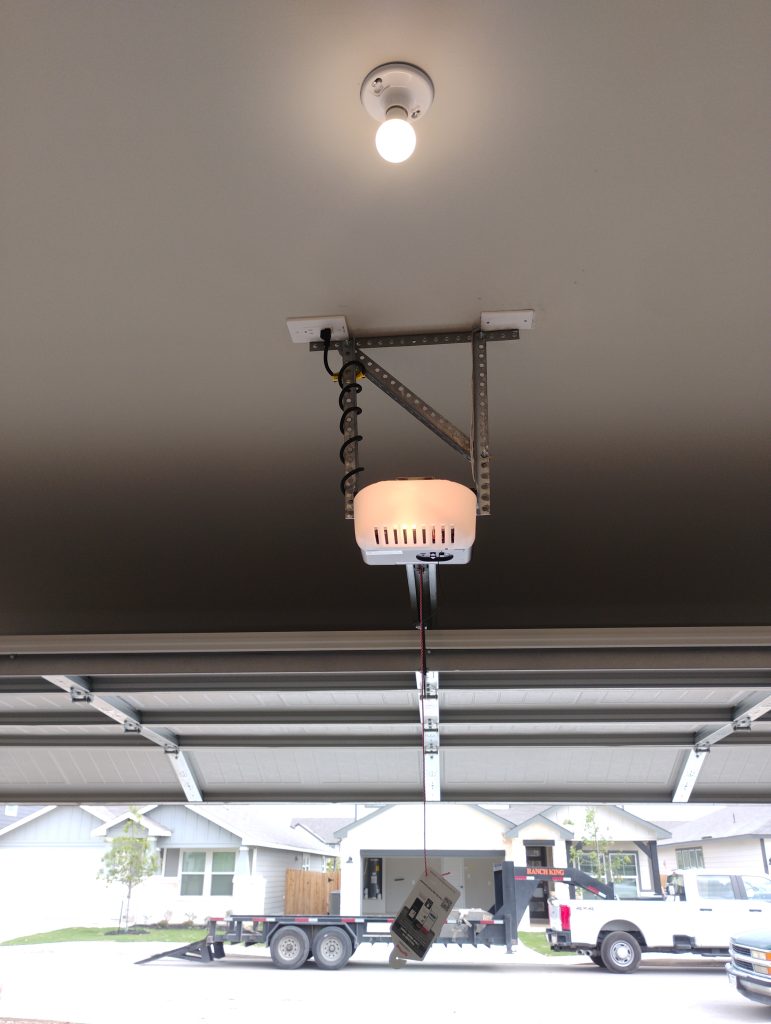
Direct Answer: Garage door opener power cords are wrapped around metal hanging brackets to quickly take up slack when ceiling outlets are positioned too close or poorly aligned. While intended to keep cords away from moving rails and trolleys, tight wrapping around sharp metal can damage insulation, creating electrical hazards and vibration wear over time.
SAFETY WARNING: Never attempt to modify structural garage door brackets, cut power wiring, or adjust tensioned garage door springs and cables. Garage door components are under extreme mechanical tension and high electrical loads; always consult a certified garage door technician or licensed electrician for modifications.
The Hazard of Coiling Power Cords Around Metal Brackets
In many modern residential builds, the ceiling receptacle for the automated garage door opener is mounted directly adjacent to or slightly offset from the central framing joists. To prevent the standard 3-foot to 6-foot heavy-duty factory cord from dangling into the path of the travel rail, trolley arm, or upper door section, installers often coil the cord tightly through and around the punched angle iron. While this keeps the cord from interfering with door operation in the short term, it introduces hidden safety risks.
1. Sharp Edge Abrasion and Heat Buildup
Punched angle iron features stamped, slotted holes that frequently have sharp, unchamfered edges. Every time the opener starts, runs, and stops, subtle motor torque causes micro-vibrations across the hanger framework. Over months and years of daily cycles, these vibrations cause the sharp steel edges to cut directly into the thermoplastic cord jacket, risking short circuits, breaker trips, or electrical arcing.
2. Code Compliance and Extension Hazards
National electrical codes prohibit running power cords through walls, ceilings, or permanent building structures as a substitute for fixed branch wiring. While wrapping a cord externally around support iron is not strictly an in-wall run, tightly weaving, knotting, or zip-tying an electrical cord around conductive metal framing can violate manufacturer warranty guidelines and UL listing standards.
Causes vs. Solutions for Opener Cord Management
| Observed Condition | Underlying Cause | Professional Recommended Solution |
|---|---|---|
| Cord coiled multiple times around angle iron | Outlet installed too close to motor head without cable management clips | Secure with insulated, non-abrasive cable management clips away from raw metal edges |
| Nicked or flattened cord insulation | Vibrational friction against stamped steel edges | Replace damaged cord/operator; isolate wiring using protective wire loom tubing |
| Cord pulled taut into ceiling receptacle | Hanger angle positioned further away than cord reach | Have an electrician relocate the ceiling outlet closer to the motor position |
Troubleshooting and Inspection Checklist
Homeowners inspecting their ceiling-mounted opener should follow these non-invasive safety checks:
- Inspect Outer Sheathing: Look closely at the segments of wire contacting the metal angle iron to ensure the outer vinyl insulation shows no cuts, thinning, or exposed copper.
- Check Clearance: Ensure the hanging wire does not drop lower than the top of the opener chassis where it could snare the emergency release rope or moving trolley.
- Verify Plug Security: Check that the plug fits firmly into the ceiling receptacle without tension pulling it sideways out of the socket.
- Schedule a Professional Inspection: If you suspect electrical wear, contact a certified garage door specialist to remount the opener bracket assembly and safeguard all wiring.