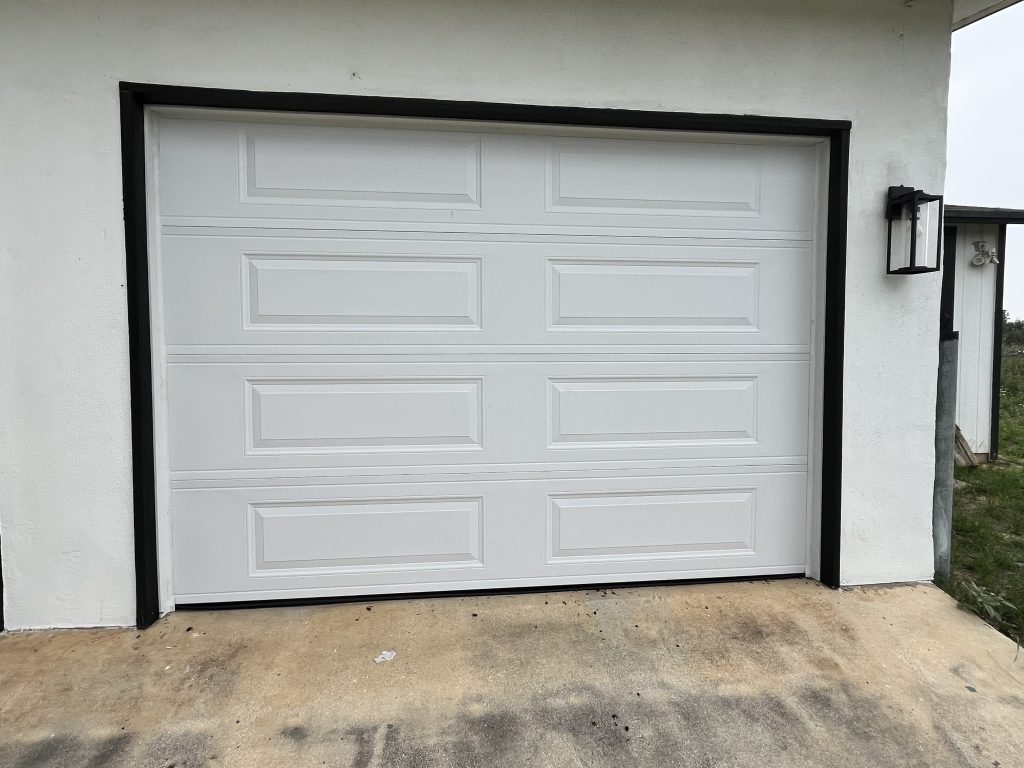
Direct Answer: Gaps under your garage door occur when a concrete slab settles, cracks, or heaves unevenly over time, exceeding the compression depth of standard factory bottom rubber seals. Misaligned vertical tracks, worn bottom brackets, or incorrect opener downward travel limits also prevent the bottom edge from seating uniformly across the floor.
Safety Warning: Never attempt to adjust, loosen, or remove the bottom corner brackets of your garage door. These brackets are under extreme tension from the lift cables and counterbalance springs; releasing them can cause severe injury or fatal impacts. Always have a trained professional service bottom fixtures and track alignment.
Understanding the Gap Under Your Garage Door
Residential sectional overhead doors are engineered to sit level against a flat, level concrete threshold. However, ground settling, freeze-thaw cycles, and concrete curing frequently create low spots, crowns, or sloping variations across the opening. When a rigid steel door panel descends, standard flexible vinyl or EPDM bottom astragal seals often lack the thickness or elasticity to contour around these depressions, leaving visible light gaps where water, wind-driven debris, and rodents can enter.
Common Causes vs. Professional Solutions
Identifying the root cause of threshold gaps ensures you choose the proper fix rather than masking a structural or mechanical issue.
| Underlying Cause | Visible Symptom | Professional Solution |
|---|---|---|
| Concrete Slab Settling or Heaving | Daylight visible beneath center or corners despite door closing fully | Install an oversized bulb-type or heavy-duty EPDM bottom seal and rubber threshold strip |
| Opener Travel Limit Set Too Short | Even gap across entire width; door stops just above the slab | Recalibrate opener down-travel and close-force sensitivity settings |
| Track Vertical Alignment Issues | One corner touches hard while the opposite side hangs open | Level track assembly, adjust cable spooling, and re-square door framework |
| Brittle, Flattened Bottom Weatherstripping | Cracked, hardened, or permanently creased rubber retainer seal | Replace with weather-resistant heavy-duty tubular or U-shaped astragal |
Troubleshooting Bottom Seal Gaps: What to Check
- The Flashlight Test: Turn off the garage lights during the day or have someone shine a bright light along the bottom outside edge at night to map the exact locations and depth of light gaps.
- Examine the Concrete Contour: Lay a long 6-foot carpenter’s level across the floor where the door lands. Look for crowns in the center or sunken ruts created by vehicle tire traffic.
- Check Seal Flexibility: Inspect the bottom gasket. If it has hardened from UV exposure or cold weather, it will not expand into shallow depressions when closed.
- Verify Down-Force Travel: Ensure your automatic garage door opener drives the door down until the bottom rubber visibly compresses without forcing the door sections to buckle.
When to Call a Professional Garage Door Technician
If the gap is caused by uneven cable tension, out-of-level tracks, or a sagging bottom retainer, do not attempt to pry or realign these components yourself. Counterbalance cables operate under immense kinetic energy. A certified technician can safely level the door assembly, replace degraded retainers with high-profile commercial-grade rubber seals, or install heavy-duty floor thresholds that eliminate gaps permanently without risking mechanical failure.