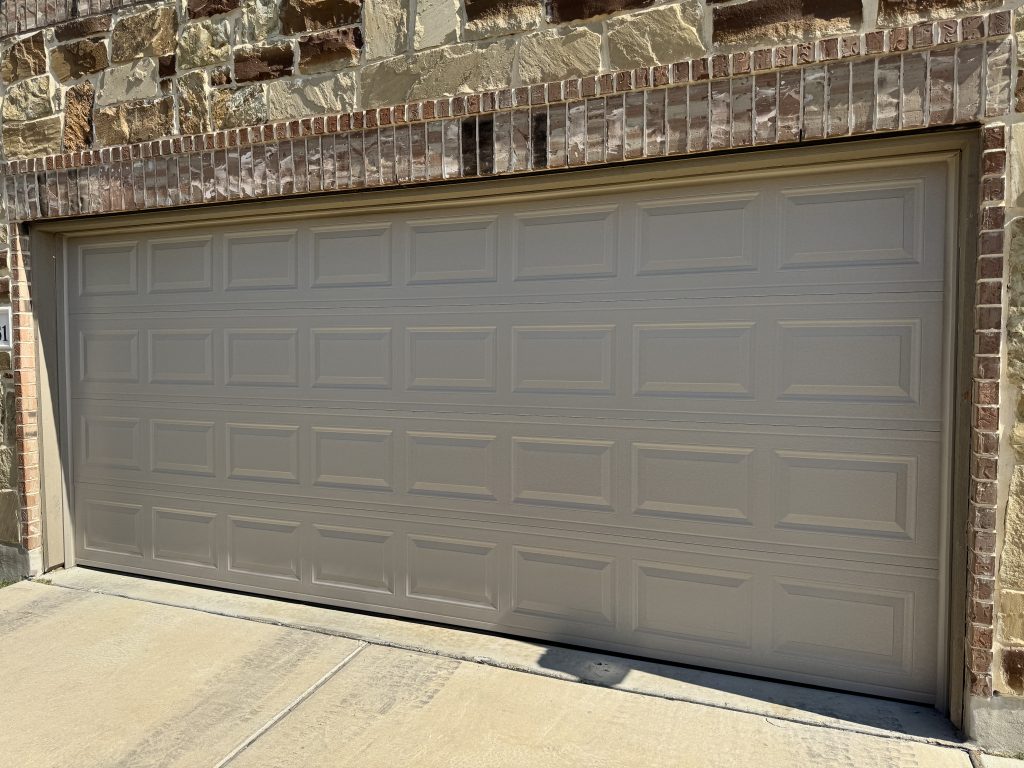
A wide double garage door bows or sags in the middle primarily due to missing or fatigued horizontal reinforcement struts, weakened torsion springs, or worn center hinges. Over a wide 16-to-18-foot span, gravity exerts immense leverage on steel panels, causing center deflection that binds tracks, strains openers, and risks total panel collapse.
SAFETY WARNING: A bowing or sagging double-car garage door carries significant structural tension and uneven counterweight loads. Never attempt to adjust torsion springs, loosen center hinges, or install heavy steel reinforcement struts without specialized equipment. High-tension components can snap suddenly, causing catastrophic door collapse, severe crushing injuries, or death. Always consult a certified garage door specialist.
Why Wide-Span Sectional Doors Are Prone to Center Sagging
Residential two-car garage doors span between 16 and 18 feet in width. Unlike single-car doors, wide-span sectional overhead doors carry massive panel weight that gravity constantly pulls downward, particularly when resting horizontally overhead in the tracks. Without proper structural engineering, steel sections naturally buckle along the center vertical axis.
1. Missing or Insufficient Horizontal U-Bar Struts
Long panel spans require full-width steel reinforcement struts (often called U-bars or hat channels) attached horizontally to the interior of the top and intermediate sections. If an installer omitted these struts or used inadequate gauge steel, the door lacks the horizontal rigidity necessary to remain straight when open.
2. Torsion Spring Imbalance and Cable Tension Loss
Torsion springs must provide precise, balanced lift across the entire width of the door. When one spring fatigues faster than the other, or if drum cable tension is asymmetrical, the door lifts crookedly. This uneven torque twists the panel joints, forcing the center sections downward and creating a visible belly or sag during cycling.
3. Fatigued Center Hinges and Roller Wear
The center vertical stiles and stamped steel hinges bear continuous cyclic stress every time the door transitions from vertical to horizontal. Over thousands of cycles, metal fatigue widens screw holes and bends hinge knuckles, allowing panels to flex out of alignment.
How to Identify Garage Door Bowing: Troubleshooting Checklist
- Examine the Door Overhead: When the door is fully raised, stand underneath (clear of moving parts) and look down the horizontal plane. A noticeable V-shaped dip indicates absent or failing reinforcement struts.
- Inspect the Top Edge When Closed: Look at the top section against the exterior lintel or header. If daylight peaks through the center while the outer edges touch the weatherstripping, the top panel is bowing.
- Listen for Opener Groaning: If your electric opener jerks, stalls, or hums loudly as it pulls the top section through the radius curve, panel flex is likely pinching the rollers inside the tracks.
- Check Center Stile Rivets and Screws: Inspect the vertical metal backer ribs on the center of the door for popped rivets, hairline metal tears, or stripped fasteners.
Causes vs. Solutions for Garage Door Center Bowing
| Underlying Cause | Visible Symptom | Professional Solution |
|---|---|---|
| Missing top reinforcement strut | Top section bends inward when opener engages | Install heavy-gauge steel U-bar strut and operator bracket |
| Torsion spring fatigue or improper wire size | Door feels heavy; drags or twists in the center | Recalculate door weight and install matched high-cycle torsion springs |
| Loose or cracked center section hinges | Panels gap open at intermediate horizontal joints | Replace damaged hinges and reinforce center structural stiles |
| Track spread or uneven horizontal hanging | Panels jam near the top radius; center drops | Re-plumb and brace horizontal track hangers with back-hang angle iron |
When to Seek Professional Repair
Operating a sagging double garage door will quickly strip your opener gears, bend track brackets, and ruin sectional panels beyond repair. Because adding steel struts changes the total deadweight of the door, torsion springs must be professionally re-engineered and re-tensioned to maintain safety and balance.