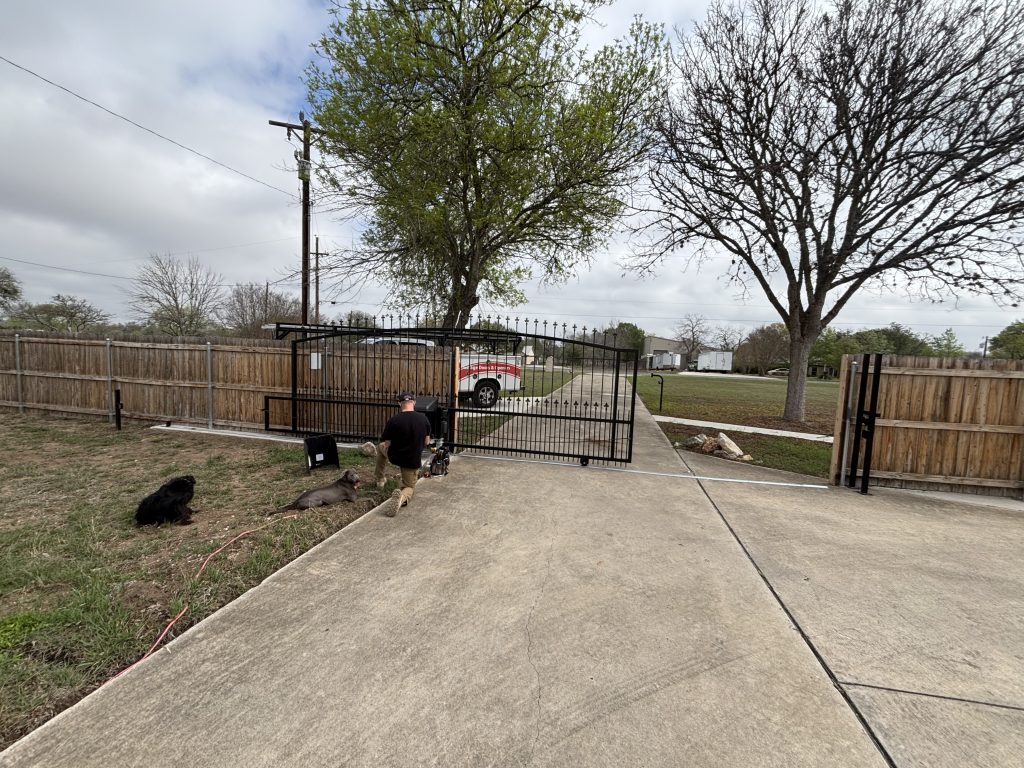
Direct Answer: An automatic sliding driveway gate often fails to open or close smoothly due to track debris, misaligned guide rollers, dirty safety photo-eyes, or motor drivetrain wear. Clearing surface debris provides immediate relief, but mechanical binds, chain tensioning, and internal motor diagnostics require service by a professional technician to ensure safe operation.
SAFETY WARNING: Automatic sliding gates are heavy, motorized structures capable of generating tremendous crushing and shear force. Never place hands near guide rollers, drive sprockets, or moving pickets. To prevent severe entrapment, crushing injuries, or electrical shock, always have a certified gate and door technician perform mechanical adjustments and electrical repairs.
Understanding Automatic Sliding Gate Operation
Modern residential sliding gates rely on a harmonious balance between physical balance, low-friction guide hardware, and precise motorized operator limits. When any component in the mechanical path encounters resistance, the motor’s built-in safety entrapment sensor triggers, causing the gate to stop, reverse, or refuse to travel.

Common Causes vs. Recommended Solutions
Use the comparison table below to identify potential reasons why your sliding driveway gate is hesitating or stopping mid-cycle:
| Issue / Cause | Observable Symptom | Recommended Solution |
|---|---|---|
| Obstructed Track or Debris | Gate bumps, grinds, or reverses over a specific spot | Clear stones, leaves, and dirt from the ground track channel. |
| Safety Beam Misalignment | Gate opens fully but refuses to close; clicking sounds at motor | Clean lenses; request technician alignment and wiring inspection. |
| Roller & Bearing Seizure | Loud squeaking, excessive drag, motor strains or trips breaker | Professional replacement of sealed ball bearing cantilever or V-groove wheels. |
| Drive Chain or Belt Slack | Jerky start/stop movement, sagging chain rubbing against ground | Professional tension calibration and sprocket alignment. |
| Limit Switch Failure | Gate over-travels or stops short of full open/close positions | Technician adjustment or replacement of magnetic/mechanical limit sensors. |
Safe Troubleshooting Checklist for Homeowners
Before calling for service, you can safely perform these basic inspections without contacting high-voltage components or pinch hazards:
- Inspect the Track: Walk the entire length of the gate line and remove sticks, gravel, or packed mud from the track.
- Clean the Optical Safety Sensors: Wipe dust, spiderwebs, or moisture off the photo-eye sensor lenses located near the base of the gate posts.
- Check Remote & Keypad Batteries: Weak transmitter batteries often transmit weak radio signals that drop connection mid-travel.
- Test the Manual Key Release: Familiarize yourself with the operator’s manual emergency release key to disengage the motor during power outages.
- Check for Physical Obstacles: Ensure overgrown shrubs, tree limbs, or fence posts are not rubbing against the sliding frame.
Why Professional Service is Critical
Unlike standard garage doors, outdoor sliding gates endure harsh weather, ground shifting, and high wind resistance. Attempting DIY repairs on structural guide posts, internal operator circuit boards, or tensioned drive chains can result in sudden mechanical collapse or severe personal injury. A certified technician ensures UL 325 safety standard compliance, protecting both your property and loved ones.