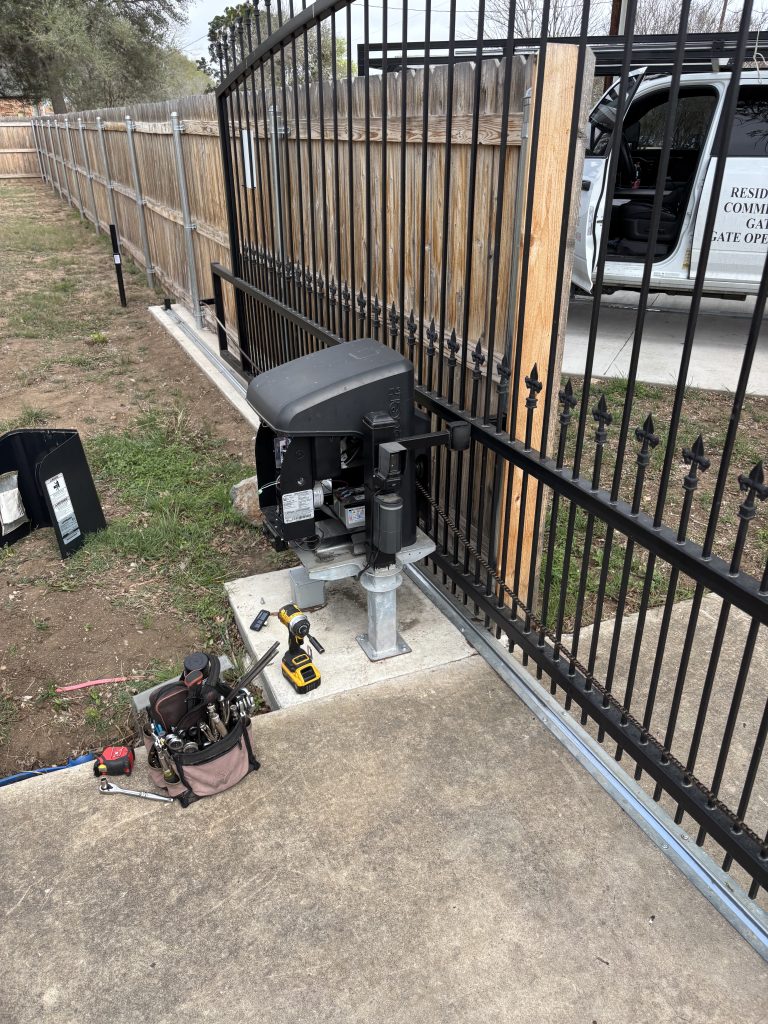
Direct Answer: An automatic sliding gate opener relies on an electric motor, internal gear drive, and tensioned chain to traverse along a ground track. If your gate fails to open or the chain slips, common culprits include tripped photo-eyes, loose chain tension, track debris, or internal limit switch failure requiring professional service.
SAFETY WARNING: Automatic sliding gates operate under substantial mechanical tension and electrical load. Never place hands near moving sprockets, attempt DIY adjustments on tensioned drive chains, or service internal high-voltage electronics. Gate entrapment or sudden chain release can cause severe crushing injuries or death. Always consult a certified gate automation technician.
How an Automatic Sliding Gate Operator Works
Slide gate operators utilize a high-torque DC or AC electric motor mounted securely to a reinforced concrete pad. As shown in field service setups, the motor engages a drive sprocket linked to a heavy-duty roller chain bolted to the gate frame. When activated by remote, keypad, or vehicle loop detector, the motor pulls the gate horizontally along an inverted V-track or cantilever system.
Causes vs. Solutions for Sliding Gate Failures
| Symptom | Underlying Cause | Recommended Professional Solution |
|---|---|---|
| Motor hums but gate doesn’t move | Chain jumped sprocket or jammed roller track | Realign chain, clear debris, and service drive gear assembly |
| Gate stops and reverses midway | Misaligned safety sensors or obstructed track | Clean optical sensors, test obstruction force, and inspect V-track |
| Chain sags excessively or slips | Stretched chain links or loose tension brackets | Professional chain tensioning or full chain replacement |
| No response from remote or keypad | Blown control board fuse or dead backup battery | Inspect transformer voltage and replace backup battery cells |
Diagnostic & Troubleshooting Checklist
- Check the Optical Sensors: Clean dirt, spiderwebs, or moisture from safety photo-eye lenses facing across the driveway.
- Inspect Ground Track: Ensure small stones, mud, leaves, or ice are not blocking the bottom roller path.
- Verify Power and Breakers: Confirm that the GFCI outlet or dedicated sub-panel breaker supplying the gate operator has not tripped.
- Listen for Motor Engagement: Note whether the motor clicks, hums, or remains completely silent when triggered.
When to Call a Professional Technician
Because automated sliding gates weigh hundreds of pounds, internal mechanical failures or electrical shorts present severe safety hazards. Professional technicians use specialized torque instruments, chain tensioning tools, and diagnostic meters to calibrate limit switches, program safety loops, and ensure compliance with UL 325 safety standards.