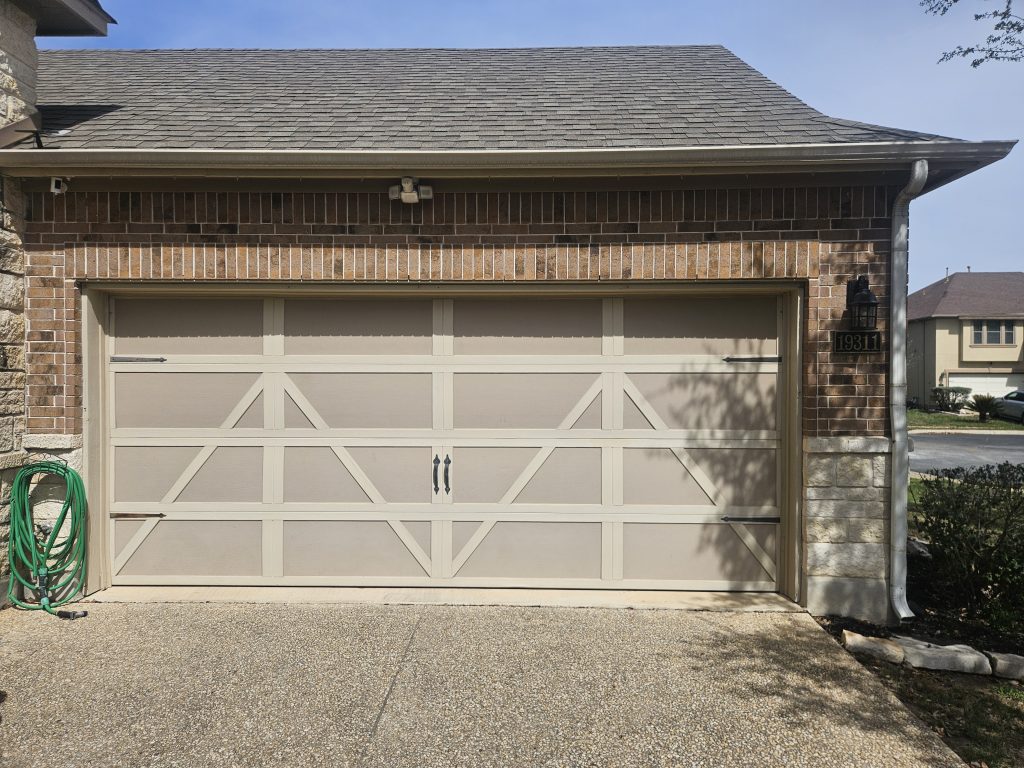
Direct Answer: Carriage house garage doors combine rustic, swing-out aesthetics with modern overhead roll-up functionality. Featuring decorative crossbuck overlays and decorative handles/hinges, they enhance curb appeal significantly. Regular maintenance involves cleaning the panels, lubricating moving track hardware, and having high-tension spring assemblies inspected annually by a certified garage door technician.
SAFETY WARNING: Garage door counterbalance systems (including torsion springs, extension springs, and bottom lift cables) operate under extreme mechanical tension. Attempting to adjust, remove, or repair these components without professional training and specialized tools can result in catastrophic failure, severe personal injury, or death. Always contact a certified garage door professional for mechanical repairs.
Understanding Carriage House Garage Doors
Carriage house garage doors (often called carriage-style doors) are designed to replicate the historic look of vintage carriage house barn doors that swung outward. Modern versions, such as the two-car steel door shown above with decorative crossbucks (X-bracing patterns) and faux magnetic/bolted handles and strap hinges, provide the timeless charm of traditional architecture while utilizing standard overhead track systems.
Key Features of Carriage-Style Overhead Doors
- Overlay Trim Boards: Composite, steel, or wood overlays attached to the base panel create classic architectural patterns like X-bucks, V-bucks, or vertical stiles.
- Decorative Hardware: Faux exterior handles, knockers, and strap hinges mimic traditional swinging door ironwork.
- Insulated Base Construction: Multi-layer steel construction with polyurethane or polystyrene insulation provides thermal efficiency while supporting the weight of exterior trim.
Common Carriage House Door Issues vs. Solutions
| Issue / Symptom | Underlying Cause | Recommended Solution |
|---|---|---|
| Panel sagging or slow lifting | Added weight of overlays straining worn torsion springs | Professional spring re-balancing or high-cycle spring upgrade |
| Noisy opening/closing operation | Dry hinges, worn steel rollers, or dry tracks | Apply non-silicone garage door lubricant; professional roller replacement |
| Trim overlay peeling or warping | Moisture intrusion, sun exposure, or failing adhesive | Surface cleaning, re-caulking, or panel replacement by a specialist |
| Door stops before reaching the floor | Misaligned photo eyes or incorrect opener force limits | Clean and realign optical safety sensors; check travel limits |
Routine Maintenance and Visual Inspection Checklist
Homeowners can perform simple visual checks and cosmetic care safely without touching tensioned hardware:
- Clean Panel Surfaces: Wash exterior panels and composite trim twice a year using mild soap, water, and a soft cloth to prevent grime buildup and discoloration.
- Check Decorative Hardware: Ensure faux handles and strap hinges are securely fastened and not rubbing against door jambs during operation.
- Inspect Perimeter Weatherstripping: Verify that the bottom rubber astragal and side vinyl seals form a tight seal against rain, debris, and pests.
- Listen for Irregular Noises: Grinding, squeaking, or popping sounds indicate that mechanical components need professional inspection and tuning.