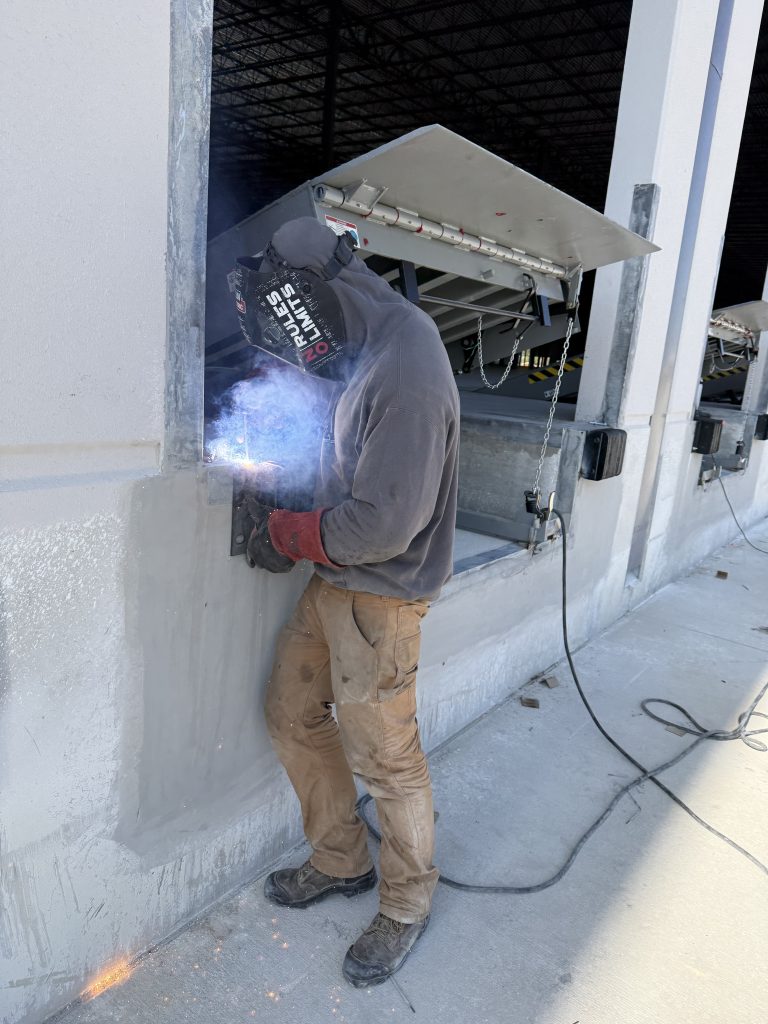
Commercial Loading Dock Leveler and Door Frame Welding Repairs
Direct Answer: Heavy forklift traffic, shifting freight, and constant mechanical vibration can fracture loading dock curb angles, leveler hinges, and dock door perimeter steel. Professional on-site structural welding reinforces the dock pit frame, prevents concrete spalling, aligns the dock leveler mechanism, and ensures seamless, safe transitions for heavy industrial material handling equipment.
SAFETY WARNING: Loading dock equipment, hydraulic and mechanical dock levelers, and heavy commercial overhead door assemblies support thousands of pounds and operate under extreme mechanical tension. Never attempt structural welding, spring adjustments, or pit modifications without certified industrial training. Improper repairs risk catastrophic structural collapse, severe crushing injuries, or fatal accidents. Always call a licensed commercial dock and door technician.
Understanding Dock Leveler & Frame Deterioration
Loading dock bays serve as the high-impact threshold between your warehouse and transport trailers. Daily forklift impact causes severe stress on embedded steel curb angles, leveler hinge welds, and base plates. Over time, these welds crack or detach from concrete anchors, causing uneven plate alignment, sticking overhead doors, and hazardous operating conditions.
Key Signs Your Dock Opening Requires Structural Welding
- Loose or Broken Curb Angles: Gaps forming between the concrete edge and the embedded steel channel.
- Hingeline Cracks: Cracked or sheared weld beads along the rear piano hinge of the dock leveler deck.
- Overhead Door Track Misalignment: Track jambs pulling away from the dock wall due to sheared structural welds.
- Excessive Deck Shaking: Noticeable wobble, sinking, or loud clanging when forklifts roll across the leveler lip.
Troubleshooting Loading Dock Structural Issues
Facility managers can perform routine visual audits to determine when professional intervention is required:
- Inspect Weld Seams: Look for hairline fractures or rust bleeding through cracked welds along the curb channel.
- Check Leveler Flushness: Ensure the dock leveler rests completely flush with the surrounding concrete floor when parked.
- Examine Concrete Pit Walls: Look for broken concrete around anchoring studs behind the welded steel plates.
- Clear Debris: Keep the dock pit free of dirt and debris to allow full visual inspection of base welds and springs.
Causes vs. Solutions for Loading Dock Structural Damage
| Root Cause | Structural Impact | Professional Repair Solution |
|---|---|---|
| Repeated Heavy Forklift Impact | Broken weld joints and loose curb angles around pit opening. | Structural MIG/Stick welding to secure channel and embed new anchor studs. |
| Trailer Backing Impact | Bent dock bumpers and warped jamb channels preventing door seal. | Torch cutting damaged sections, realigning steel, and welding heavy reinforcement plates. |
| Metal Fatigue & Vibration | Sheared leveler hinge loops and broken lip-locking mechanisms. | Rebuilding hinge assemblies with high-tensile structural weld beads. |
| Concrete Spalling Behind Steel | Anchors pulling out under load, loosening dock door track mounts. | Epoxy anchor injection combined with welded plate gussets. |
Why Certified Professional Service is Crucial
Welding near loading dock systems involves high-load structural steel, electrical wiring for hydraulic units, and high-tension counterbalanced springs. Professional technicians possess structural welding certifications and proper lock-out/tag-out procedures to rebuild your dock bays securely, meeting OSHA and ANSI safety standards.