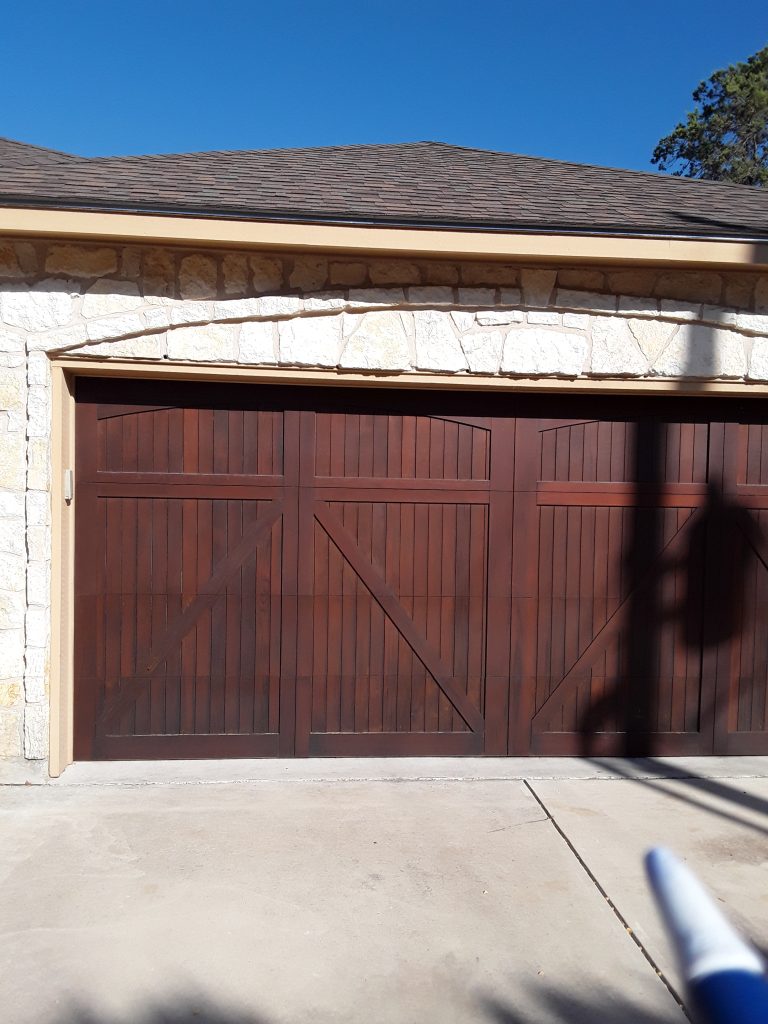
Direct Answer: Custom wood garage doors provide unmatched architectural beauty but add substantial weight compared to standard steel doors. When a wood door struggles to open, sticks, or strains the opener, it is typically caused by fatigued torsion springs, moisture absorption increasing door weight, misaligned tracks, or an inadequately rated motor.
SAFETY WARNING: Solid wood garage doors can weigh anywhere from 300 to well over 800 pounds. The torsion spring assembly holds extreme mechanical tension to balance this mass. Never attempt to adjust, repair, or replace torsion springs, lift cables, or bottom brackets yourself. Mishandling high-tension components can lead to catastrophic failure, severe crush injuries, or death. Always contact a certified garage door specialist.
Understanding Custom Wood Garage Door Dynamics
Custom carriage-house and horizontal-slat wooden garage doors feature dense hardwoods or overlaid composite materials set into robust framing. Because timber naturally expands, contracts, and absorbs ambient humidity, the overall operating weight and panel dimensions fluctuate with the seasons. Without properly matched counterbalance systems, even slight moisture gains can overburden garage door openers and strain roller tracks.
Causes vs. Solutions for Wood Garage Door Issues
| Symptom / Cause | Impact on Door System | Recommended Solution |
|---|---|---|
| Moisture Absorption & Weight Gain | Door exceeds original spring torque calibration, straining opener. | Professional spring retensioning or upgrade; reseal and refinish wood exterior. |
| Fatigued Torsion Springs | Door feels excessively heavy and fails the balance test. | Professional replacement with high-cycle, heavy-duty commercial-grade springs. |
| Wood Warping or Swelling | Panels rub against jambs, weatherstripping, or bind in track radius. | Professional track realignment, perimeter seal adjustment, and hinge servicing. |
| Undersized Opener Motor | Motor hums, hesitates, or automatically reverses under heavy load. | Upgrade to a 3/4 HP or 1-1/4 HP equivalent DC belt-drive or wall-mount jackshaft opener. |
Homeowner Inspection and Safe Troubleshooting Checklist
While mechanical repairs must remain in professional hands, homeowners can perform non-hazardous visual checks to diagnose issues early:
- Visual Finish Inspection: Examine the bottom and side edges of the wood panels for flaking stain, cracked sealant, or water intrusion.
- Safety Sensor Alignment: Ensure photo-eye sensors are clean and properly aligned if the door reverses immediately upon closing.
- Track Obstruction Check: Inspect vertical and horizontal steel tracks for debris, dried grease, or visible physical dents.
- Hardware Auditing: Visually inspect roller hinges for loose carriage bolts or cracked hinge leaves along the panel joints.
- Listen for Straining: Pay attention to popping sounds from the header bracket or groaning noises from the electric operator.
Long-Term Preservation of Wood Carriage Doors
To preserve structural integrity and prevent unnecessary strain on your mechanical lifting system, reapply exterior-grade UV and water-resistant sealant every two to three years. Pair this routine with an annual multi-point inspection by a licensed technician to balance spring tension and lubricate steel bearings.